

Political upheaval, weak investment behind revenue shortfall: Finance Minister
Published :
Updated :
 For all latest news, follow The Financial Express Google News channel.
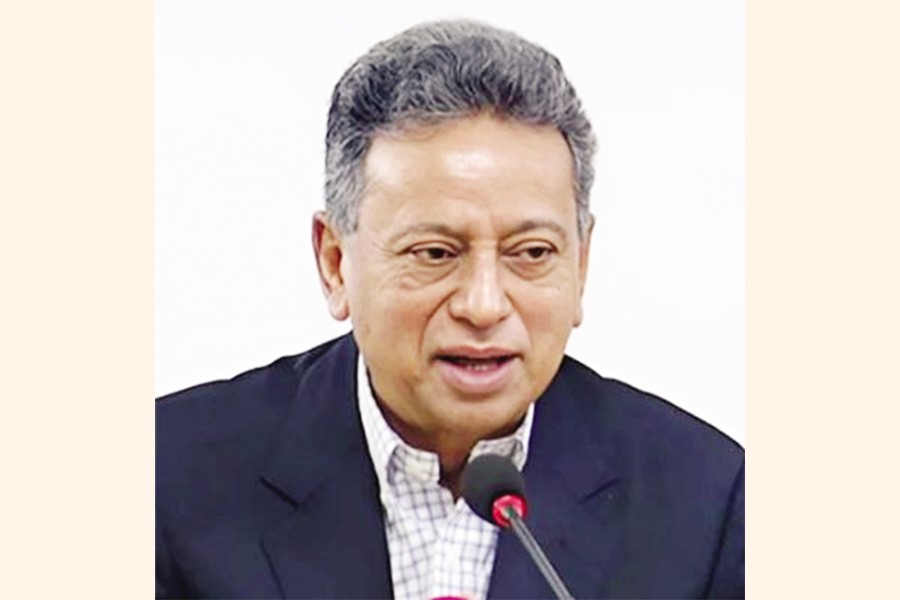
Finance Minister Amir Khosru Mahmud Chowdhury on Tuesday blamed political uncertainty, weak investment, sluggish trade and industrial activity, and supply-chain disruptions for the government’s failure to meet revenue targets over the past two fiscal years.
He told parliament that a combination of 11 factors, including declining purchasing power, business losses, lower industrial output and falling corporate profits, had weighed on revenue collection in FY2024-25 and FY2025-26.
Replying to a question from reserved-seat lawmaker Nilofar Chowdhury Moni during a question-answer session in the Jatiya Sangsad, the minister said revenue collection up to April in FY2025-26 reached Tk 326,928.16 crore against a target of Tk 431,461.27 crore, achieving 75.77 per cent of the target.
The National Board of Revenue (NBR) was assigned a revenue target of Tk 503,000 crore for the fiscal year.
In FY2024-25, revenue collection stood at Tk 370,875.04 crore against a target of Tk 463,500 crore.
Mr Chowdhury said economic activity remained subdued following the political transition, while supply-chain bottlenecks, high production costs and weak business confidence further constrained revenue growth.
He said prolonged high inflation, which hovered near double digits for an extended period, eroded consumers’ purchasing power and reduced the taxable surplus income of middle-income earners and salaried employees.
Disruptions in industrial production, weakened supply chains and sluggish wholesale and retail trade also reduced business earnings, hurting corporate tax collection, he added.
The minister said shortages of gas and electricity prevented many industries, including the ready-made garment sector, from operating at full capacity, leading to lower production and profitability.
Higher lending rates and the depreciation of the taka against the US dollar further increased operating costs, squeezing profits of large corporate taxpayers, one of the government’s major sources of income tax revenue, he said.
On the trade front, imports of goods subject to 25-per-cent and 10-per-cent customs duties fell by 18 per cent and 37 per cent respectively in FY2025-26 compared with the previous year, reducing customs revenue.
Mr Chowdhury also said government measures aimed at keeping fuel prices stable—including cuts in duties and taxes on petroleum products and the withdrawal of VAT on imported liquefied natural gas (LNG)—had affected revenue collection.
Tax incentives for capital machinery imports and a decline in luxury vehicle imports also contributed to the shortfall, he added.
The finance minister further said the economic disruption caused by the July-August 2024 student-led mass uprising and the subsequent change in government led to prolonged stagnation in economic activities, disrupted supply chains and weakened business operations, resulting in lower corporate earnings and tax payments.
However, he said ongoing automation of tax administration and stronger anti-evasion measures by the NBR were helping improve revenue collection and narrow the gap in recent months.
newsmanjasi@gmail.com