

Published :
Updated :
 For all latest news, follow The Financial Express Google News channel.
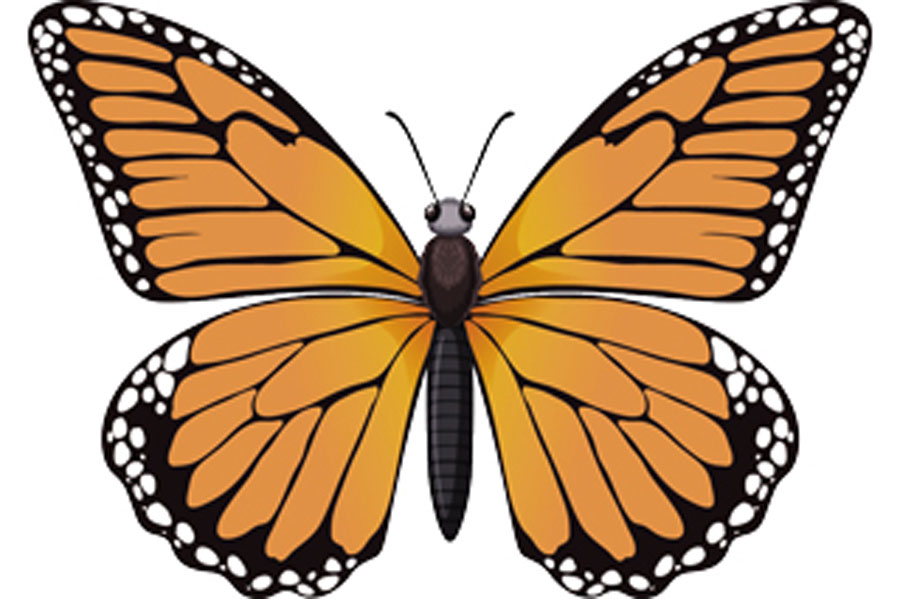
Most people view butterfly, a unique creation in the living world, as an aesthetic treat to the eye or a source of entertainment. But whoever could think of a butterfly fair instead of a show of the most decorated wingy creature! And that too an annual affair!
Yes, the Jahanrirnagar University has made it an annual event on its academic calendar. This year's was the 15th such fair with the slogan, "Urle akashe projapati, prokiti paye notun gati' (If butterflies are on their wings, Nature acquires a new dimension). This succinctly captures the true value of the colourful tiny creatures in the grand scheme of coexistence of living beings including the human.
They may be small and fragile creatures having a short lifespan, but in that short existence they serve their purpose of coming to this world. The beautiful patterns of their wings are so varied and unique for each subspecies that they ask human beings to 'watch me', 'no, me, please' type of contest. This may be for the gratification of the human eye. But when their lifespan vary from just two days to nearly a year and their adult lifehood is around two weeks on an average, it is important to know what their contribution is to the worlds of flora and fauna.
Butterflies are busy like bees but they flutter about faster than the latter from one flower to the other to drink nectar. Unlike bees, they have no hives for storing honey but in the process of making rounds, they do a world of good. The pollen grains their legs, antennae and fine hair come in contact at the time of sending their proboscis deep inside a flower to collect nectar is transferred from anthers to stigma, a crucial part of the female reproductive structure of a flower. This is vital for fertilisation, leading to seed and fruit development.
There are as many as 17,500 types of butterflies in the world. Without them and bees, many of the crops, flowers and fruits would not be able to regenerate their own kinds. This shows that their contribution to human and other animals' foods is substantial. Where foods are concerned, economy follows close behind. Butterflies thus help production of crops and fruits for the human species. But in return human beings are inadvertently doing enormous harm to this species. Pesticides and chemical fertilisers used indiscriminately are proving a threat to their existence. Therefore, use of organic fertilisers would be the right option. After all, Nature does not tolerate too much tinkering with the normal process of the life cycle of fauna and floral world.
Humans must respect the principle, 'live and let others to live'. It is quite evident that in the interest of their existence, people must not cross the limit where inter-species relations are upset, tipping the balance. If food security for human beings is important, so is for all other species including the smallest of creatures. Economy is important but any bias attitude towards food production can spoil the entire system unless the natural selection is allowed to carry on normally. Manipulation only makes matters worse.
It is good to know that the Jahangirnagar University's butterfly fair draws a very good number of children who take part in various competitions including painting of butterflies. Butterfly enthusiasts are apprised of the role the beautiful creatures play in rebalancing the relations between humans and the rest of the members of the world of fauna.
nilratanhalder2000@yahoo.com