
As geopolitical rivalries, cyber threats and climate-induced disasters increasingly blur the boundaries between traditional and non-traditional security, the Bay of Bengal Initiative for Multi-Sectoral Technical and Economic Cooperation (BIMSTEC) is seeking to strengthen collaboration to ensure regional security, said a spokesman for the BIMSTEC on Sunday.
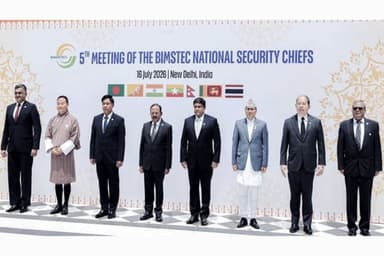
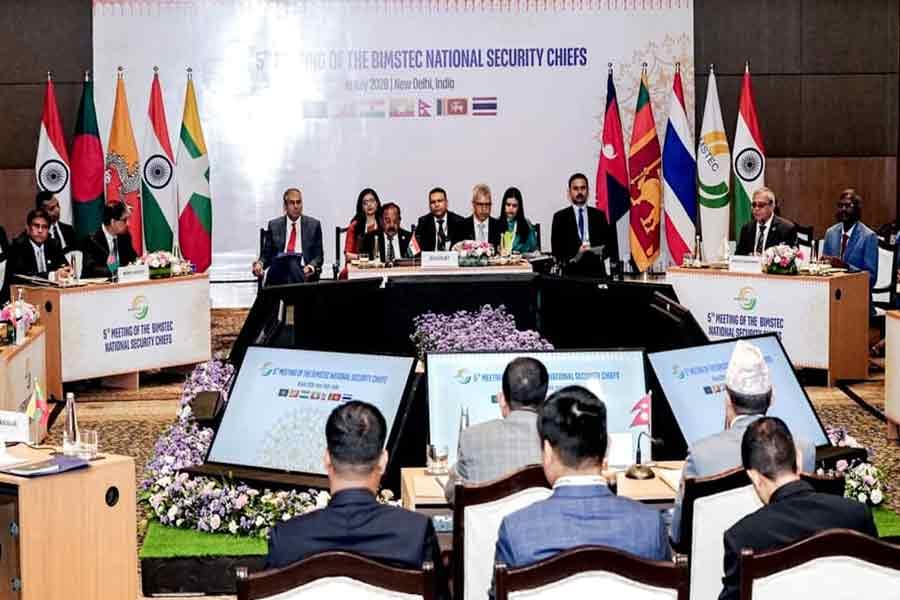
That commitment was reaffirmed at the 5th Meeting of the BIMSTEC National Security Chiefs, held in New Delhi on 16 July, where senior security officials from the seven-member regional grouping pledged deeper coordination to bolster regional security, improve resilience and strengthen institutional capacities to address an evolving spectrum of security challenges.
The meeting was hosted and chaired by India’s National Security Adviser Ajit Doval, bringing together National Security Advisers and heads of delegations from Bangladesh, Bhutan, Myanmar, Nepal, Sri Lanka and Thailand.
Opening the meeting, BIMSTEC Secretary General Indra Mani Pandey presented a comprehensive assessment of the organisation’s security cooperation initiatives and reviewed progress made since the previous meeting in tackling traditional, non-traditional and emerging security threats.
He emphasised the importance of implementing agreed decisions in a timely manner and called for stronger coordination, enhanced intelligence and information sharing, greater exchange of expertise and sustained capacity-building among relevant institutions across member states.
The discussions reflected the growing recognition that regional security now extends well beyond conventional military concerns. Delegates exchanged views on strengthening cooperation to combat terrorism and organised crime, improve cyber security, enhance maritime and energy security, expand regional connectivity, improve disaster management and prepare for emerging security risks.
A key outcome of the meeting was the adoption of the BIMSTEC Guidelines for the Maritime Component of Humanitarian Assistance and Disaster Relief (HADR). Officials said the guidelines are designed to facilitate faster and more coordinated humanitarian relief operations among member states during maritime emergencies and natural disasters, which have become increasingly frequent across the Bay of Bengal region.
The meeting also endorsed a set of Guiding Principles on the Conduct of Maritime Law Enforcement Agencies during Interactions at Sea. The principles are expected to improve predictability, reduce the risk of misunderstandings and promote safer interactions among maritime agencies operating in regional waters.
Observers say the maritime initiatives carry particular significance as the Bay of Bengal becomes increasingly important for regional trade, energy transportation and strategic competition, while remaining highly vulnerable to cyclones, storm surges and other climate-related disasters.
On the sidelines of the meeting, Secretary General Pandey held separate bilateral discussions with India’s National Security Adviser, Nepal’s Home Secretary and Sri Lanka’s Defence Secretary. The meetings focused on issues of mutual interest and explored ways to further strengthen cooperation under the BIMSTEC framework.
The gathering took place as BIMSTEC marks its 30th anniversary, providing member states with an opportunity to review the organisation’s achievements while charting priorities for future cooperation.
In their concluding remarks, the National Security Advisers and heads of delegation reaffirmed their shared commitment to enhancing collaboration in addressing increasingly complex security challenges. They stressed that stronger regional partnerships would be essential for safeguarding peace, promoting resilience and improving institutional preparedness across the Bay of Bengal region.
Established to promote regional cooperation among countries surrounding the Bay of Bengal, BIMSTEC comprises Bangladesh, Bhutan, India, Myanmar, Nepal, Sri Lanka and Thailand. The grouping now covers cooperation across a broad range of sectors, including security, connectivity, trade and investment, energy, disaster management, blue economy, agriculture and food security, health, science and technology, climate change, tourism, fisheries, women development, human resource development and people-to-people relations.
As security threats become more interconnected and transnational, the New Delhi meeting underscored BIMSTEC’s growing emphasis on collective action, practical cooperation and institutional coordination to safeguard regional stability and prosperity.
mirmostafiz@yahoo.com