


India has set an ambitious goal of expanding its navy to more than 200 warships over the next decade as it seeks to counter China's rapidly growing naval power and Pakistan's acquisition of advanced Chinese-built attack submarines.


The move reflects New Delhi's growing concern over strategic competition in the Indian Ocean, the South China Morning Post reports.
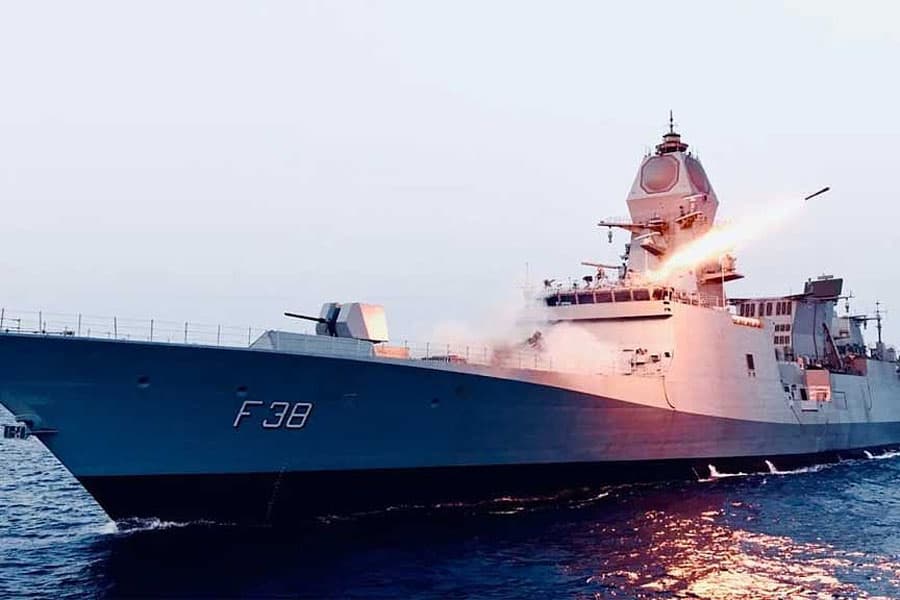
As part of the effort, India this month commissioned the stealth frigate INS Mahendragiri and the anti-submarine warfare ship INS Malvan, both built domestically.
The vessels have been presented as proof that New Delhi can expand its fleet while reducing dependence on foreign suppliers, the Hong Kong daily said.
The INS Mahendragiri was designed by the Indian Navy's Warship Design Bureau and built by Mazagon Dock Shipbuilders with 75 per cent indigenous content.
The project reportedly reflects Prime Minister Narendra Modi's drive for self-reliance in defence and other strategic industries.
It is the sixth vessel in the Nilgiri-class frigate programme.
The seventh ship, INS Vindhyagiri, is due to join the fleet in the coming months. Another seven or eight next-generation warships under Project-17 Bravo are also in the pipeline.
India currently operates around 150 naval vessels, including about 135 frontline warships such as frigates, destroyers and submarines. Around 50 more ships are under construction.
“Considering that composition is largely made up of indigenously supported ships, the target of a 200-ship navy by 2035 is well within reach,” said Sanjay Misra, a former rear admiral turned defence analyst.
“Given the right impetus we could even exceed this figure.”
Mishra said India's current strategic environment requires at least two “highly mobile, self-sufficient” naval fleets on constant standby, although maintaining that capability would require a significantly larger number of support vessels.
To meet that goal, the Indian Navy has accelerated induction, commissioning a new warship roughly every six weeks.
In the past six weeks alone, it has brought five domestically built vessels into service, as per the report.
India's long-term goal is to achieve complete self-reliance in shipbuilding, including critical components, by 2047.
Critics, however, have pointed to several obstacles.
India still depends heavily on imported specialised steel and other materials, while weaknesses in its domestic supply chain and ageing shipyard infrastructure continue to pose challenges.