


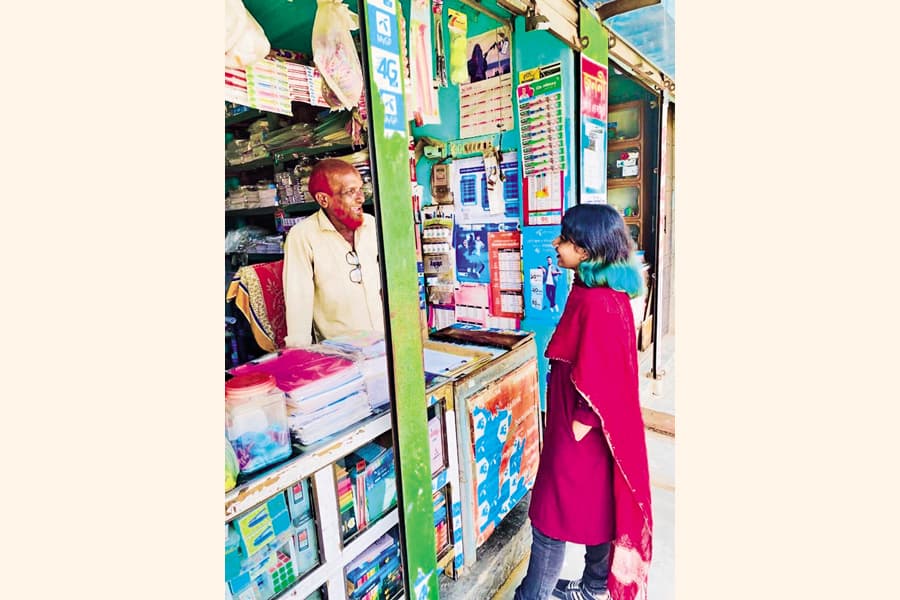
Most of the people of Bangladesh prefer to live in Dhaka as opposed to anywhere else in the country, as the capital fares considerably better in terms of stability, healthcare, culture and environment, education, and infrastructure than other parts of the country. The capital is able to offer far more and far better job opportunities compared to other parts of the country. This is precisely why we have typically observed a large inflow of people into the capital who arrive here for job purposes. However, in recent years, we have witnessed some people from the younger generations choosing to uproot their lives and settle in some remote corner of Bangladesh for work. There is no doubt that this move can be a precarious and sensitive decision that comes with a long list of pros and cons. The determinants influencing the move are also multifaceted.
Driving factors: Uprooting one's life and settling oneself into a completely new environment is no easy task. So, why are young graduates making this hard choice? Zafar Mohammad Siam who is working as a Territory Manager at BAT Bangladesh, puts it nicely, "If you're living in Bangladesh, multinational corporations (MNCs) provide you the best possible career in the corporate world, and starting in such a role is essential for growing in the company."
Raita Amreen Ridita, employed as a management trainee at BATB, says "I knew that I'd be responsible for the performance of my territory, and everything in my territory would depend on me. That sense of responsibility and trust was very alluring. In addition, BATB is a good organisation to work for."
Most people are only willing to make the necessary compromises and sacrifices for a great career boost which is often more accessible at MNCs. In general, most of these roles belong to the sales and distribution departments which allow these employees to gain a deep and intricate understanding of the core business of any company. In addition, since these roles are uniquely challenging, success in them is often more appreciated by the leadership team.
Common challenges: As mentioned earlier, there are intricate challenges that one signs up for when they accept such a job offer. For example, living away from one's family and friends while maintaining a household on your own can be exceptionally taxing, especially in the first stages where one is still habituating oneself with the ins and outs of their job roles. This is distinctly true for people who have lived in Dhaka and have gotten used to certain facilities and comfort of their own home which are unavailable outside of the capital. There are also more subtle challenges people face. Living alone day after day can be very isolating and with virtually no mental support from close ones available, it is often strenuous to maintain motivation. Social life outside of Dhaka is less happening which can also add to mental dissatisfaction and frustration.
Of course, for women, there are added challenges on top of all this. There are many types of stigmas that women face in these remote areas which are largely much less intense in Dhaka. Living alone poses more severe risks in this case. In many instances, due to these concerns, women cannot consider these roles despite said roles being lucrative and beneficial for their careers.
Things to look forward to: Although there are a multitude of challenges to cope with, the arrangement is far from being utterly bleak. Living in a remote serene city has its own appeal. For example, although the capital presents a higher quality of living, life in a metro can be monotonous and tiring. In cities outside of Dhaka, traffic jams and pollution are much less severe and in a lot of places, nonexistent. In addition, the way of life is much simpler, and rural Bangladesh is breathtakingly beautiful. Managing one's own household can help us master basic survival skills. "I wanted to see whether I can survive in a completely new environment without my friends and family. Thus far, I am doing fine," comments Shadman Jahin who is working as a territory manager at JTI and is currently posted at Manikganj. There is also a sense of freedom and adventure that comes with living by oneself.
This experience also helps one step out of their social bubble and witness the true reality of the country. This can enrich one's perspective, mindset, and thought process which consequently, benefits one's career. "For my case, I agreed to move out of Dhaka as I think gaining the market knowledge is essential for a better prospect in the future," states Maisha Joarder who is working as a cluster manager at Grameenphone and is posted at Chuadanga.
Planning can make it better: Moving out of Dhaka and living in a remote corner of the country is no easy task. However, well-planned and sensible strategies from the human resource (HR) department can go a long way to smoothen out the path. For example, there are often special allowances given to employees stationed outside of Dhaka. For sales roles, many companies, specially MNCs, offer a personal car which eliminates a lot of the hassle. Additionally, some provide a relocation budget which helps the settling-in process. Some companies arrange accommodation for female employees to minimise safety risks.
Unfortunately, these practices are almost solely followed by a handful of leading companies in different sectors. Most local organisations are still far behind in this avenue which can result in lower levels of motivation, productivity, and higher rates of employee turnover. To ensure that talented and highly motivated people join a company, an organisation's leadership needs to plan to make sure that challenges are minimised. That way many talented graduates will opt for applying and staying in those companies, rather than trying to move abroad or going for only Dhaka-based jobs.
The writer is working as a management trainee at Grameenphone.
simitasnia@gmail.com