


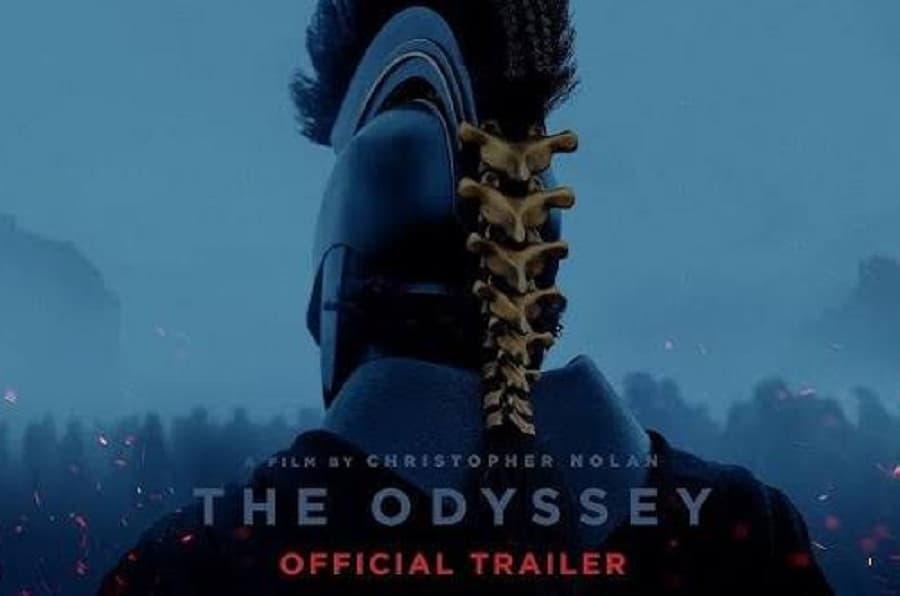
Turning Homer's almost three-thousand-year-old epic into a three-hour blockbuster was never an easy task. But Christopher Nolan pulled it off with courage.


He is famous for his time-bending and layered storytelling, and forcing that style throughout the original poem is quite difficult.
Nolan took some freedom to use different versions of the same literature, assessed it, and masterfully utilised his star-studded cast to execute this epic film.
At the centre of the story is Odysseus, king of Ithaca, whose return to his wife Penelope is delayed by ten years of war and ten more of wandering. Time here is treated less as a line and more as a map revisited at will, and old wounds return again and again.
When a happy reunion seems near, a fresh complication appears, leaving the audience waiting anxiously. The poem has survived nearly thirty centuries, and can still be reshaped so freshly, proving its endless richness.
The popular image of Odysseus as a fearless, glory-seeking king is not offered here. Instead, a man haunted by what war has made of him is shown, one for whom past triumphs are remembered with quiet horror rather than pride.
Glory and heroism, once celebrated without question, are revealed as forces that devastate everyone. Invaders can never return home; young and old of sacked cities are in despair, and symbols of Gods are destroyed. In The Odyssey, a slow, uneasy journey towards repentance is offered rather than a tale of adventure.
Ancient Greek beliefs are woven carefully into this journey. Xenia, the sacred duty of hospitality owed between host and guest, is broken again and again by the suitors who strip Penelope's household bare, and even by Odysseus himself. The law of Zeus, under which every action carries a consequence, affects gods and mortals alike. Fate and chance are treated as two faces of one coin, and no character escapes the weight of what has already been done.
As Odysseus, Matt Damon delivers a performance built on contradiction, and every contradiction is made believable. The quiet strength of an old-fashioned screen hero is brought to the role. Yet, doubt, temper and moral compromise are also allowed to surface. A code of honour is preached constantly by this Odysseus, marked by the ritual twang of his bowstring before every shot. Yet that same code is broken whenever it is inconvenient.
Tom Holland plays Telemachus, who is a restless young man chasing both his missing father and his own sense of manhood. As the suitor Antinous, Robert Pattinson is made so smug and entitled that one almost wishes a hand could reach through the screen and slap him. Anne Hathaway gives the film's finest moment as Penelope, who delivers a Oscarworthy dialogue with Telemachus after his return from Sparta.
Credit must also go to Zendaya's watchful Athena, Lupita Nyong'o in a demanding double role as Helen and Clytemnestra, Charlize Theron's seductive Calypso, and John Leguizamo, whose blind advisor Eumaeus is played with real warmth. Particular praise goes to Samantha Morton as Circe, whose magic of turning men into pigs reminds one of the body horror genre. Together, a rare kind of blockbuster is achieved where spectacle and sorrow are held in balance, and audiences are reminded that even the oldest literature still carries tales worth retelling today.