


Genome sequencing and genomics-based research have the potential to transform healthcare in Bangladesh by enabling faster and more accurate diagnosis of complex diseases, including cancer, diabetes, cardiovascular disorders, and rare genetic conditions.


Experts believe that integrating genomics into clinical practice will pave the way for precision medicine and significantly improve patient care.
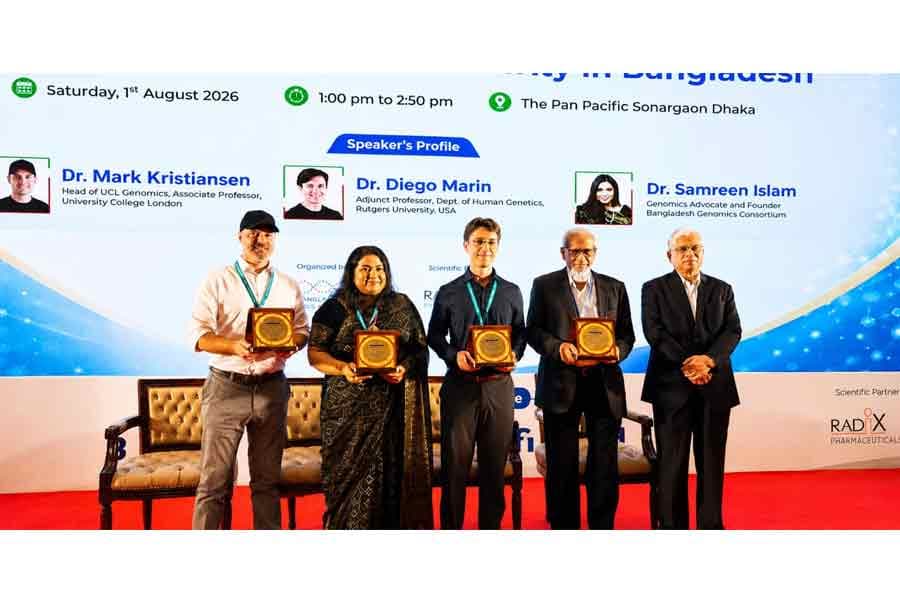
According to a press statement, the observations were made at the International Genomics Conference, organised by the Bangladesh Genomics Consortium with support from Radiant Pharmaceuticals Limited, held at a hotel in Dhaka on Saturday.
The conference was inaugurated by Dr. Samreen Islam, Founder of the Bangladesh Genomics Consortium and a genomics and stem cell specialist. Distinguished speakers included Naser Shahriar Zahedi, Chairman of Radiant Pharmaceuticals Limited; renowned cancer specialist Professor M.A. Hai; Associate Professor Mark Kristiansen; and Professor Diego Marin of Rutgers University, USA. Lieutenant General (Retd.) Sinha Ibn Jamali, Managing Director of Radiant Pharmaceuticals Limited, also addressed the audience. The event was moderated by Dr. Zeenat Ara.
Experts highlighted that genomics enables scientists and clinicians to identify the genetic causes of diseases, assess an individual's risk of developing specific conditions, and select the most effective treatment tailored to each patient. Genome sequencing also plays a crucial role in accelerating the development of new medicines and therapeutic approaches. Many countries have already incorporated genomics into routine clinical diagnosis and treatment.
Professor M.A. Hai emphasized that genome sequencing could significantly improve the diagnosis and treatment of cancer and other complex diseases. He noted that expanding access to such technologies in Bangladesh is now a pressing need.
Associate Professor Mark Kristiansen said that clinical genomics is transforming healthcare worldwide. According to him, the use of genomic information is rapidly expanding in disease diagnosis, risk assessment, treatment planning, and overall patient management.
Professor Diego Marin of Rutgers University stated that precision medicine, molecular diagnostics, and predictive genomics are making healthcare more personalized and effective by improving both disease detection and treatment strategies.
Radiant Pharmaceuticals Chairman Naser Shahriar Zahedi said Bangladesh has enormous potential in genome sequencing and urged the Ministry of Health to take broader initiatives in this field. He reaffirmed the company's commitment to supporting innovations that strengthen the country's healthcare system.
Managing Director Lt. Gen. (Retd.) Sinha Ibn Jamali said Radiant Pharmaceuticals has been consistently working to promote advanced diagnostic and treatment technologies. He expressed optimism that the Bangladesh Genomics Consortium's initiative would make a meaningful contribution to the country's healthcare sector.
Dr. Samreen Islam stressed that genomics could play a vital role in improving the diagnosis and treatment of complex diseases in Bangladesh. She called for building a strong and responsible genomics ecosystem by bringing together physicians, researchers, universities, hospitals, diagnostic laboratories, government agencies, pharmaceutical and biotechnology companies, technology partners, and investors.
The conference concluded with a panel discussion featuring national and international experts, who explored the future prospects of genomics and its role in advancing precision healthcare in Bangladesh.