


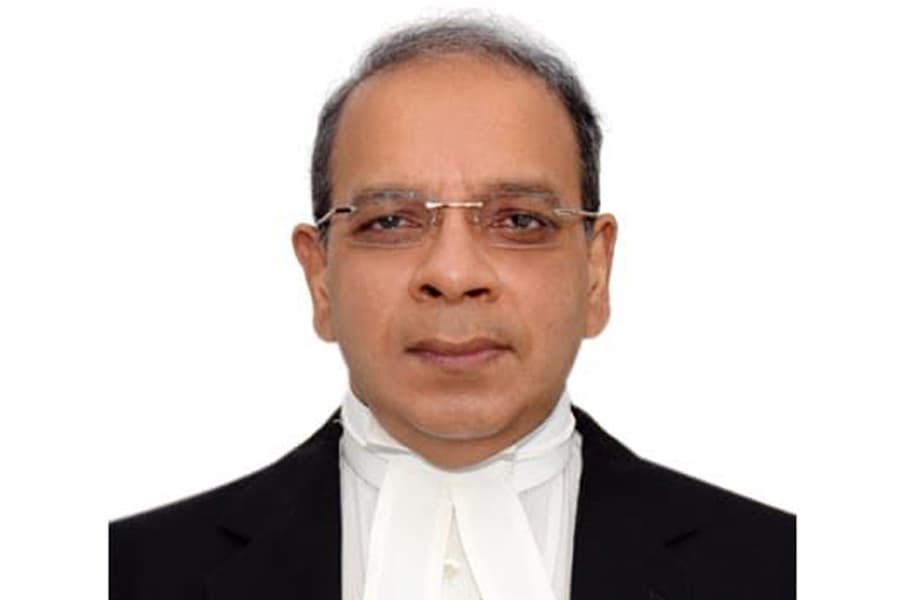
Chief Justice Dr Justice Syed Refaat Ahmed on Saturday called for a stronger commercial justice architecture, saying an efficient judiciary is a key driver of economic growth and investor confidence.


Speaking as the chief guest at the 15th anniversary of the Bangladesh International Arbitration Centre (BIAC) and the first Bangladesh ADR Summit at Hotel InterContinental Dhaka, the Chief Justice said Bangladesh must modernise its dispute resolution system to ensure that commercial disputes are settled swiftly and fairly.
“I have always maintained that the quality of a nation’s judiciary is a primary economic indicator,” he said, adding that investors seek certainty that contracts will be honoured, rights protected and disputes resolved within months rather than decades.
He acknowledged that lengthy judicial processes have long acted as a deterrent to foreign investment and constrained domestic entrepreneurship.
Emphasising that “time is a critical element of justice”, the Chief Justice highlighted progress on the proposed Commercial Court Act 2026, describing it as a landmark initiative designed to introduce technology-driven processes and specialised commercial courts capable of delivering faster judgments.
He expressed hope that the country would bridge the gap between legal commitments and economic realities through judicial reforms and greater reliance on alternative dispute resolution (ADR).
BIAC Chairman Mahbubur Rahman said the institution had evolved over the past 15 years from an ambitious concept into Bangladesh’s only institutional ADR centre.
He described justice as not merely a legal principle but an economic necessity, arguing that a country aspiring to become a regional commercial hub must strengthen institutional arbitration and mediation.
Mr Rahman said he envisaged a future in which ADR would become an integral part of major commercial transactions in Bangladesh.
Delivering the keynote address, Justice Fatema Anwar of the High Court Division highlighted persistent shortcomings in the country’s commercial dispute resolution system.
She said an ordinary commercial dispute still takes nearly four years to resolve through the courts, around three times the global average.
“Uncertainty in commercial life is by itself a tax,” she observed, describing prolonged litigation as a hidden cost that discourages investment and business expansion.
Justice Anwar also pointed to the absence of a comprehensive statutory framework for mediation and criticised the frequent use of the “public policy” exception to delay enforcement of arbitral awards.
She urged the private sector to play a more proactive role in advancing ADR, saying reforms could not rely solely on legislative or judicial initiatives.
During a panel discussion, UCB Bank Managing Director and Chief Executive Officer Mamdudur Rashid said the country’s banking sector continued to suffer from prolonged legal disputes.
Referring to the sharp rise in non-performing loans, he said NPLs had reached 32 per cent, while many recovery cases remained pending for years.
He cited an example of a case that had remained unresolved for 22 years, adding that banks often have to wait between three and eight years to settle commercial disputes through the courts.
Advocate Tanim Hussain Shawon of Dr Kamal Hossain & Associates said Bangladesh still lacked an effective arbitration ecosystem.
He noted that government agencies frequently challenge arbitral awards in court even when they have agreed to arbitration, undermining confidence in the system.
Former BIAC board member Rizwan ur Rahman stressed the need to introduce mandatory pre-litigation arbitration for commercial disputes to reduce the burden on the judiciary.
He said such a mechanism would help businesses resolve disputes more efficiently while easing case backlogs in the courts.
Participants at the summit also called for a more inclusive ADR framework involving legal professionals alongside technical experts, including engineers and industry specialists, to ensure that increasingly complex commercial disputes are resolved efficiently and with the necessary expertise.
They emphasised that strengthening arbitration and mediation would improve the country’s business environment, enhance investor confidence and support Bangladesh’s long-term economic development.
bdsmile@gmail.com