
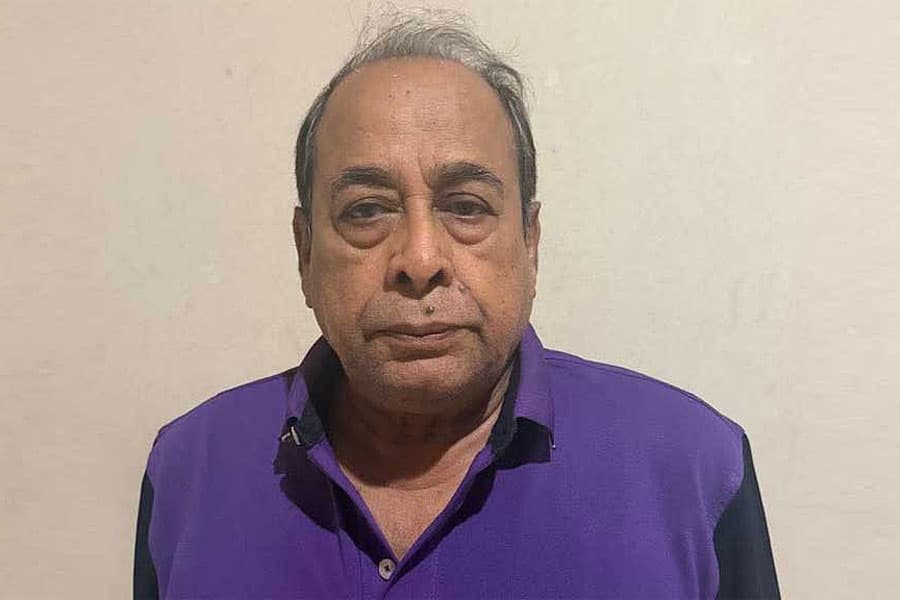
Home Minister Salahuddin Ahmed says cashiered Major Mozaffar Hossain, arrested over his alleged involvement in the assassination of former president Ziaur Rahman, will be tried under military law.
After inspecting the Border Guard Bangladesh (BGB) headquarters at Pilkhana on Monday, he said the same individual cannot be tried separately under two different laws for the same offence.
A military court tried 18 army officers on charges of "mutiny" following Zia's assassination, hanging 13 of them and handing the rest varying jail terms.
The case was never tried in a civilian court.
Police, however, filed a case over the incident with Chattogram's Kotwali Police, in which Mozaffar was named the sixth suspect.
The first information report (FIR) said he had been standing beside the president at the time of the assassination.
The Criminal Investigation Department (CID) later took over the case's investigation.
Police and CID sought 173 extensions from the court to submit their investigation report or chargesheet, before the CID finally admitted its failure to solve the case and submitted a final report to the court on Oct 24, 2001.
Mozaffar was arrested in Banani DOHS on the night of Jul 15, and later handed over to the army.
Salahuddin made the comment when asked whether the police case over Zia's assassination, which the Criminal Investigation Department (CID) investigated and submitted a final report on, would be revived.
Salahuddin said, "Military law applies here. The co-accused in that case were tried under military law, through a general court martial. The same fugitive has now been arrested, and we've handed him over to the military.
“They'll form a general court martial under their own rules and take it from there.”
Asked about the deaths and injuries among Bangladeshis from landmine explosions along the Myanmar border, the minister said equipment for landmine detection had already been procured and handed over to the BGB, which is currently using it.
Questioned about barbed-wire fencing along the Myanmar and India borders, he said the Myanmar border is currently "very vulnerable" for Bangladesh, for several reasons, making the situation there “different” from fencing built along the India border.
He justified the need for fencing on the grounds of the ongoing conflict between the Arakan Army and Myanmar's government near the border, along with the presence of other armed groups, including the Rohingya Solidarity Organisation (RSO) and Arakan Rohingya Salvation Army (ARSA).Their frequent clashes, alongside widespread drug smuggling in the area, further underline the need for the fence, the minister added.