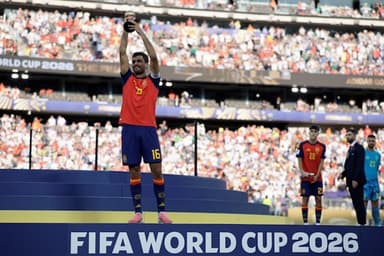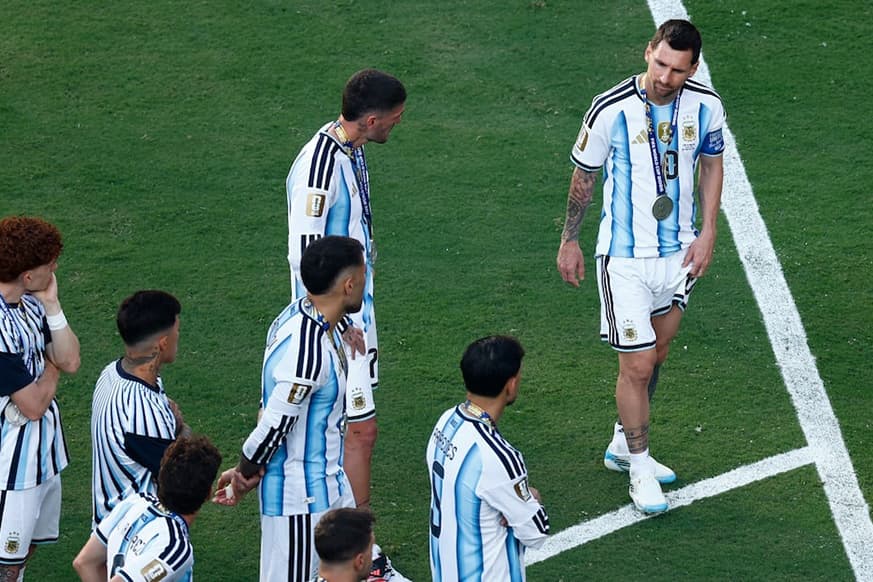
The streets of Buenos Aires slowly came back to life on Sunday evening as Argentines dressed in blue and white silently walked home from bars and viewing parties after losing the World Cup final to Spain and the chance to be back-to-back champions.
Spain secured their 1–0 victory with a goal in extra time, crushing Argentina's dream in the United States of repeating their 2022 Qatar triumph and claiming a fourth title.
"I recognise when a team plays well, and Spain played very well," said Fernanda Ramayon, 39, a psychologist who watched the game at a Buenos Aires restaurant with her children and husband.
"I think it's a lot to have reached the final. I'm happy anyway."
Many Argentines started the World Cup with tempered expectations, not daring to believe that their country could achieve the rare feat of clinching two consecutive World Cups as only Italy (1934 and 1938) and Brazil (1958 and 1962) have done.
But nerves and expectations swelled as the team led by star Lionel Messi pushed through nail-biting knockout stage wins over Cape Verde, Egypt and Switzerland.
Several Argentines on Sunday said the semi-final victory against England had left them satisfied enough with the team.
That match carried heavy symbolism for Argentines, framed by the history of England's win at the 1966 World Cup, Diego Maradona's "Hand of God" goal in 1986 and the memory of the 1982 war over the Falkland Islands, known in Argentina as the Islas Malvinas.
Players brandished a banner declaring "Las Malvinas Son Argentinas" ("The Falklands are Argentine") after the 2-1 win.
"Of course, it's a very bitter sensation but we still beat the British, Messi had been missing that," said Ornella Godoy, a 24-year-old who works in publicity, on her way back from watching the match with friends outside a bar.
Messi had never played against England before.
"END OF A DREAM"
"It's the end of a dream," said the headline of La Nacion, one of Argentina's largest newspapers, on its website after the match, under an image of Messi's distraught face.
But thousands of Argentines still gathered around the Obelisk monument in downtown Buenos Aires, where fireworks went off.
It was a far cry from 2022, when more than a million people filled downtown Buenos Aires the night that Argentina won the World Cup. When the national team arrived two days later, millions more paralysed the city to welcome them home in the country’s largest street party, forcing Messi and his teammates to be flown in helicopters across the city to join the celebrations.
Many suspect that this will be the last World Cup for Messi, who turned 39 last month, but Godoy was optimistic.
"We have faith in the players that are left," she said.