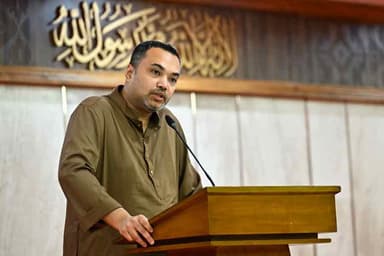




Bangladesh's 'Halal Economy' has the potential to emerge as a new avenue for export diversification and strengthen the country's position in the global market, speakers said at a workshop in Dhaka on Saturday.
They said Bangladesh could significantly increase its halal exports through the establishment of a single halal authority, internationally recognised certification and testing systems, and coordinated policy initiatives.
The observations came at a workshop titled "Halal Export Diversification", organised by the Bangladesh Chamber of Industries (BCI) in the capital.
BCI President Anwar-ul Alam Chowdhury (Parvez) chaired the event while Export Promotion Bureau (EPB) Vice-Chairman and Chief Executive Officer (Additional Secretary) Mohammad Hasan Arif attended it as the chief guest, said a press release.
The keynote paper was presented by Dr Md Mominul Islam, associate professor at the IUBAT Business School. Designated discussants included former Bangladesh-Malaysia Chamber of Commerce and Industry (BMCCI) President Shabbir A. Khan and Dhaka University Economics Department Prof Dr Md Deen Islam.
Speaking as the chief guest, Mohammad Hasan Arif said export diversification is one of the country's most important priorities at present.
He said the global halal economy encompasses a wide range of products and services beyond agricultural and food items, offering Bangladesh significant opportunities to expand its export basket.
The EPB, he said, is ready to provide all necessary support to exporters to tap into the growing halal market.
Anwar-ul Alam Chowdhury said Bangladesh must place equal emphasis on developing domestic industries and diversifying exports as the country prepares for graduation from the Least Developed Country (LDC) category.
He noted that ready-made garments (RMG) currently account for about 82 per cent of Bangladesh's total exports, generating around US$38.28 billion in export earnings while halal product exports stand at only US$850 million, despite the sector's enormous potential.
Referring to global market trends, he said the halal market was estimated at US$3.3 trillion in 2025 and is projected to grow to US$9.45 trillion by 2034.
He added that demand for halal products is increasing not only among nearly two billion Muslims but also among consumers of other faiths because of their emphasis on health, quality, ethics and safety.
According to him, only about 20 per cent of the potential global demand for halal products is currently being met, leaving vast opportunities for expansion.
He stressed that Bangladesh should establish itself internationally as a trusted "Halal Brand" by leveraging its Muslim-majority status.
Among others, former FBCCI President Mir Nasir Hossain, Bangladesh Accreditation Board Director General Md Aminul Islam, Association of Testing Laboratories Bangladesh President Md Ahsan Habib, BCI Director Zia Haider Mithu, Bengal Meat Head of Export AKM Sayadul Haque, former Bangladesh Competition Commission Director Md Khaled Abu Naser, Bangla Chemical Chief Executive MS Siddiqui and representatives from various public and private organisations attended the workshop.
The workshop also put forward several recommendations to boost halal exports, including branding Bangladesh as an international halal hub, establishing a unified halal authority, ensuring Shariah compliance, health standards and ethical benchmarks throughout the production and supply chain, setting up internationally accredited testing laboratories, drawing on the experiences of countries such as Malaysia, Indonesia and Thailand, strengthening research and development, and developing the skilled workforce and infrastructure required for a robust halal ecosystem.