


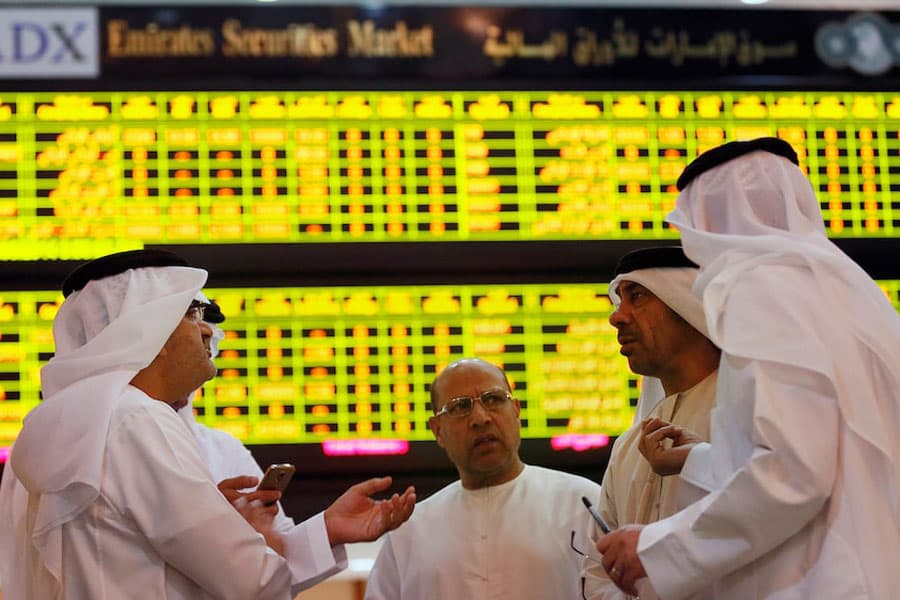
Major Gulf equity markets opened lower on Tuesday after Washington reinstated its naval blockade against Iran, with both nations escalating military strikes around the Strait of Hormuz, intensifying concerns over global energy supply disruptions.
The US military launched strikes against Iran for a third straight night on Monday, while President Donald Trump restored a blockade on Iranian shipping and suggested imposing a 20 per cent fee for protecting the Strait of Hormuz.
Dubai's main share index (.DFMGI), opens new tab dropped more than 1 per cent, with top lender Emirates NBD (ENBD.DU), opens new tab gaining 1.2 per cent.
In Abu Dhabi, the index (.FTFADGI), opens new tab eased 0.3 per cent.
The United Arab Emirates Ministry of Defence said on Monday two Emirati tankers were struck by Iranian cruise missiles in the southern lane of the Strait of Hormuz, within Omani territorial waters, killing one Indian crew member and injuring eight others.
Shipping data released Monday also showed that tanker traffic through the Strait of Hormuz over the previous day had dropped to its lowest level in two months.
Saudi Arabia's benchmark index (.TASI), opens new tab lost 0.2 per cent, hit by a 0.5 per cent fall in Al Rajhi Bank (1120.SE).
Meanwhile, Yemen's Houthi movement fired missiles at Saudi Arabia after accusing the kingdom of bombing an airport under its control on Monday.
Oil major Saudi Aramco (2222.SE), opens new tab gained 0.8 per cent as oil prices rose.
Brent crude futures were last up $1.90, or 2.3 per cent, to $85.20 per barrel at 0630 GMT.
Houthi military spokesperson Yahya Saree called the attacks 'blatant aggression.'