


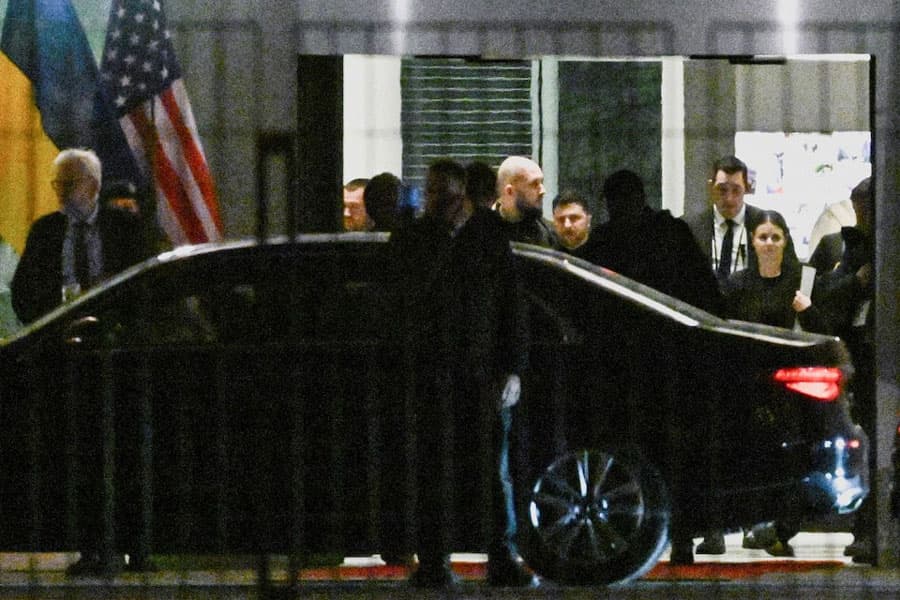
Ukraine said on Sunday it was willing to drop its ambition to join the NATO alliance in exchange for Western security guarantees. But it was not immediately clear how far talks had progressed on that or other vital issues such as the future of Ukrainian territory, and how much the talks in Berlin could persuade Russia to agree to a ceasefire.
RUSSIA EXPECTS UPDATE FROM US
Zelenskiy said in a post on X "there is a great deal of work under way on the diplomatic track right now" but did not divulge details.
The Kremlin said Ukraine not joining NATO was a fundamental question in talks on a possible peace settlement.
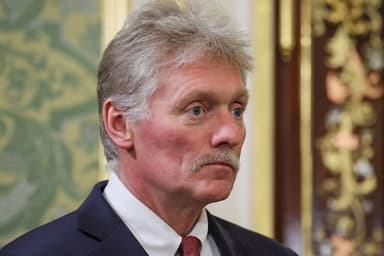
"Naturally this issue is one of the cornerstones and, of course, it is subject to special discussion," Kremlin spokesman Dmitry Peskov told reporters.
Peskov said Russia expected an update from the US after the negotiations in Berlin.
EUROPEAN DIPLOMACY FACES CRUCIAL WEEK
The talks come at the start of a pivotal week for Europe, with an EU summit on Thursday set to decide whether it can underwrite a massive loan to Ukraine with frozen Russian central bank assets.
Europe has come under fire from the Trump administration in recent weeks over its policies on migration, security and regulating big tech. The European Union and national governments have struggled to find a unified response to the US criticism.
EU foreign ministers met in Brussels on Monday to agree on new sanctions targeting the Russian shadow fleet of oil tankers, although the possibility of an 11th-hour hitch to agreeing an EU trade deal with Latin America threatens to further undermine their attempts to put on a show of strength.
"The most important thing for us is now to ensure we can finance Ukraine," said Danish Foreign Minister Lars Lokke Rasmussen in Brussels.
"We must take a decision to ensure that Ukraine is in a position to continue its freedom fight and to show the rest of the world that Europe is a strong player. Otherwise we will give in to the picture painted by the American president, that Europe is weak."
Finnish President Alexander Stubb, who has been closely involved in the Ukraine talks and met Zelenskiy on Monday ahead of the US negotiations, sounded a tentatively hopeful note.
"I think we are at a critical moment in negotiations for peace," he told Dutch TV programme Buitenhof broadcast on Sunday.
"And at the same time, we're probably closer to a peace agreement than we have been at any time during these four years," said Stubb.
SECURITY GUARANTEES AMONG ISSUES IN FOCUS
Stubb said the sides were working on three main documents - the framework of a 20-point peace plan, one relating to security guarantees for Kyiv, and a third on reconstruction of Ukraine.
European Commission President Ursula von der Leyen, NATO Secretary General Mark Rutte and the leaders of Britain, Italy, the Netherlands, Poland and Sweden are among those expected in the German capital on Monday.
Russian President Vladimir Putin has repeatedly demanded that Ukraine officially renounce its NATO ambitions and withdraw troops from the roughly 10 per cent of the eastern Donbas region which Kyiv still controls.
Moscow has also said that Ukraine must be a neutral country and that no NATO troops can be stationed there.
EU foreign policy chief Kaja Kallas said on Monday that taking over Ukraine's Donbas region will "not be Putin's endgame".
"We have to understand that if he gets Donbas, then the fortress is down and then they definitely move on to taking the whole of Ukraine," Kallas, a former Estonian prime minister, told reporters.
"If Ukraine goes, then other regions are also in danger."