


When Jocelyn Zelaya was caught in a hail of gunfire on the streets of San Salvador in 2017, the young mother was simply “in the wrong place, at the wrong time,” says her aunt Jackelyne.
A group of gunmen armed with automatic weapons had opened fire to assassinate a member of a rival gang on the other side of the road. Zelaya, then 20, was caught in the line of fire. She was hit by eight bullets, her aunt told CNN.
“But she didn’t die then, they took her to hospital,” Jackelyne Zelaya recalls, struggling to contain her tears. “The attack was at about six in the afternoon, and when I got to the hospital at ten, she had just died. Her body was still warm.”
Jocelyn’s death, which deprived one-year-old Marcela of her mother, was just one of thousands of killings that year in El Salvador, a period when the tiny Central American nation of six million people had the highest murder rates in the world according to the World Bank.
Many of the dead, like Jocelyn, were innocent bystanders caught in a turf war between two enormous criminal gangs, the Mara Salvatrucha and the Barrio 18.
To this day Zelaya doesn’t know which gang was responsible for killing her niece. “We were left alone in our pain. We buried her and raised her daughter having to explain to her why her mom isn’t here,” she says.
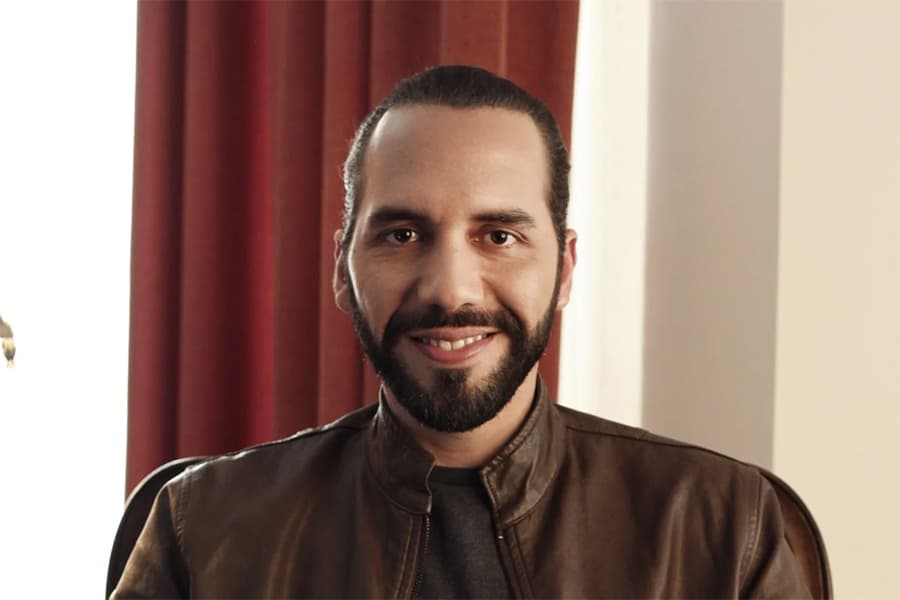
But, like many others who have lost their loved ones, she does know who she credits for taking on those gangs: Nayib Bukele, the country’s strongman president and self-styled “world’s coolest dictator” and “philosopher king.” Despite being criticised by opponents and international human rights organisations for alleged large-scale human rights abuses in his crackdown on crime, Bukele is widely tipped for re-election when El Salvador heads to the polls this Sunday.
‘The Bukele Method’
A canny politician, Bukele began his race to power while his family’s advertising agency worked for the government of the FMLN, the former Civil War guerrilla group that would win two presidential elections, in 2009 and 2014. But Bukele’s true ascent to the pinnacle would take a leap after being expelled by his party in 2017 and becoming an outsider. As such, he won the 2019 elections on his first try, with a pledge to rid the country of corruption and graft.
The then-37-year-old swiftly gained a reputation as a disruptor and innovator. He adopted Bitcoin as legal tender in El Salvador in 2021 and invited the tech-bros of the world to surf in the Pacific.
But above all, it is Bukele’s ironfisted crackdown on criminal gangs that has fueled his popularity both domestically and across Latin America, making him the runaway favourite this Sunday.
Bukele boasts one of the highest approval rates in Latin America, regularly faring above 70% in most independent polls.
The opposition, meanwhile, is spread across several candidates. Under Bukele, El Salvador’s homicide rate has plummeted. Within a year of him coming to power, it had fallen to just a third of what it was in 2017, the year Jocelyn Zelaya was killed.
Today, the government claims, it is less than two murders every 100,000 – a rate of homicide lower than in the United States, although national and international NGOs have expressed doubts on the transparency of the government’s figures.
Some of that early success could be attributed to the Covid-19 pandemic, but few doubt the influence of what has since come to be known across Latin America as the “Bukele Method.”
In March 2022, an outbreak of gang violence that killed 62 people in a single day had left Bukele facing the bloodiest crisis of his presidency. He responded by introducing emergency powers he said would deal with the gangs once and for all. Last year, a Justice Department investigation unsealed in a court in New York stated that Bukele was secretly negotiating a truce with the same gangs he was claiming to fight, but the state of emergency was not revoked. Bukele has denied negotiating with the gangs.
Constitutional guarantees were suspended, allowing the police to detain a person without charge for up to 15 days and tap anyone’s phone without a judicial order; the Army was deployed; and the number of detentions rocketed.
By early 2023, Bukele’s government had built a sprawling penitentiary complex with capacity for up to 40,000 inmates dubbed “Center for the Confinement of Terrorists.”
But not everyone is a fan. Critics accuse Bukele of recklessly committing large-scale human rights abuses in his fight against the gangs, and of dismantling the country’s checks and balances by attacking El Salvador’s legislative and judicial powers.
Nearly two years after the March killings, El Salvador’s state of emergency and restriction on civil liberties remain in place following multiple renewals approved monthly by Congress.
Even more people are now in prison; over 75,000 as of January. So, while El Salvador no longer faces record murder rates, it now boasts the highest incarceration rate in the world.
In between, Bukele also managed to increase his control of state institutions that are meant to be independent from the presidency and check its power. In January 2020, he famously entered Congress surrounded by fully armed soldiers to press the lawmakers to allow an emergency loan to purchase new armaments.
A year later – following his party New Ideas’ absolute majority in the legislative elections – the new Congress loyal to Bukele dismissed El Salvador’s Supreme Court judges, as well as the attorney general who had resisted some of his early reforms.