
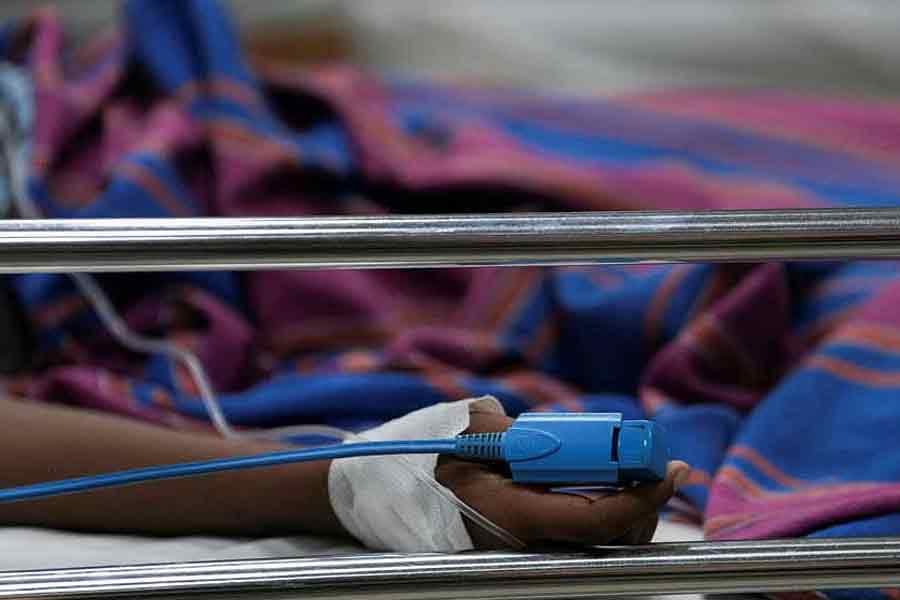
Sri Lanka's public health services and hospitals are battling the worst outbreak of mosquito-borne dengue in nearly a decade, and turning to the island nation's armed forces to help curb the spread of the disease.
The efforts range from air force drones tracking stagnating rooftop pools of water after monsoon rains to military and police officers helping to inspect homes, building sites and schools in a campaign to stamp out mosquito-breeding sites.
With 53 deaths and 76,044 infections since it began in January, the numbers of the stricken, spread wider by a more virulent strain, are approaching the tally of more than 100,000 notched by a 2017 outbreak.
"It's challenging for the doctors because it's a rapid increase in patients," said consultant Lalindra Dias in Negombo, one of the worst-hit areas, located about 35 km (22 miles) north of the key city of Colombo.
"All of a sudden, you get a large influx coming into the hospital," added Dias, whose district general hospital treated nearly 1,800 sufferers in less than two months since June, up from about 1,050 in 2025.
July Influx of Cases
Hospitals rushed to add beds, convert wards to care for the ill and step up hours worked by doctors and nurses in the battle to treat an influx of more than 18,000 cases in the first two weeks of July, health authorities said.
June's tally of 21,537 infections, usually characterised by high fever, bodyache, and loss of appetite, was more than double the figure in May, but Sri Lanka has yet to introduce a vaccine.
The heightened strain comes in the aftermath of cyclone Ditwah, the nation's worst natural disaster, which tore up critical infrastructure and health facilities in late November, causing losses estimated by the World Bank at $1.4 billion.
That threatens to swamp Sri Lanka's advantage of four beds for every 1,000 people, which outstrips the average global ratio of fewer than three, World Bank data shows.
Public health workers were "stretched to their limit", said Kapila Kannangara, acting director general of the National Dengue Control Unit.
"The number of patients is high, and the severity of the cases is high," he added, since about 75% of cases were linked to the more virulent DENV-2 strain with a rapid spread.
Health officials expect infections, typically boosted by the rainy season, to ease off as monsoon rains weaken in August, but warn they could climb from November as rainfall returns to the island in its second annual monsoon season.
Armed Forces Join Cleanup Work
On Thursday, the government targeted cleaning up of the worst-affected regions, combing sites from homes to religious institutions to eliminate sites where mosquitoes breed, authorities said.
With its drones helping public health officials identify rooftops where water collects as well as monitoring larger areas, the air force is also helping overstretched staff at some public hospitals to keep track of patients.
Nearly 11,000 mosquito breeding sites were cleared this month, with fines levied at more than 4,000 premises found to harbour them, the health ministry said.
To reduce pressure on hospitals, doctors are advising those with mild symptoms to recover at home, some patients said.
"The doctor asked me to stay at home because my platelet count had not fallen too much," 23-year-old Shalini Aloka Perera told Reuters.
"Then I did my treatment at home because there are too many patients in the hospitals."
Authorities are also considering turning to a dengue vaccine, though experts have warned it may confer limited benefits as the virus is complex and several strains are circulating.
At the Negombo hospital, Dr Dias said the rise in cases was expected to plateau before reducing in August, but the different pattern of virulence made such forecasts difficult this year.
"So we cannot exactly say when it will stop, by the end of July. Sometimes it will be a little longer than that."