


Bangladesh appears set to retain a competitive advantage on the lucrative US apparel market after Washington imposed new labour-related tariff on imports from 60 economies, placing the country on the lowest rung while subjecting several of its biggest rivals to steeper duties.


The measures, announced by the Office of the United States Trade Representative (USTR) on July 23 under Section 301 of the Trade Act of 1974, came after an investigation into whether countries had failed to prevent the production and export of goods made wholly or partly with forced labour.
Effective from 12.01am Washington time on July 24, the tariffs range from 10 per cent to 12.5 per cent and replace the temporary 10 per cent global tariff previously imposed under Section 122 of the same law.
Bangladesh will now face an additional 10-percent tariff on all exports entering the United States, on top of the existing Most-Favoured-Nation (MFN) duties. While the measure raises the cost of Bangladeshi exports, the lower rate preserves the country's competitive position relative to many of its principal competitors.
China, Vietnam and Thailand -- among the world's largest apparel exporters -- have each been subjected to the maximum tariff of 12.5 per cent, widening further Bangladesh's cost advantage in one of its most important export markets.
Bangladesh is one of only 17 countries, out of the 86 covered by the USTR action, to receive the minimum tariff rate.
The tariffs stem from an investigation launched by the Trump administration in March under Section 301, a provision that authorises the US government to investigate whether another country's trade practices are unreasonable or discriminatory and to impose retaliatory measures where necessary.
Unlike temporary tariffs introduced under emergency provisions, Section 301 measures have no automatic expiry date and are not subject to a statutory maximum rate, although they require a formal investigation before being imposed.
The USTR concludes that many of the economies under investigation failed to prohibit or effectively enforce bans on goods produced using forced labour, creating unfair trade conditions and placing US commerce at a disadvantage.
Announcing the decision, US Trade Representative Jamieson Greer said the measures were intended to address both labour-rights concerns and unfair trade practices.
"Today's action will begin to correct what is both a human -rights abuse and distortive trade practice to improve the welfare of workers everywhere," Greer said.
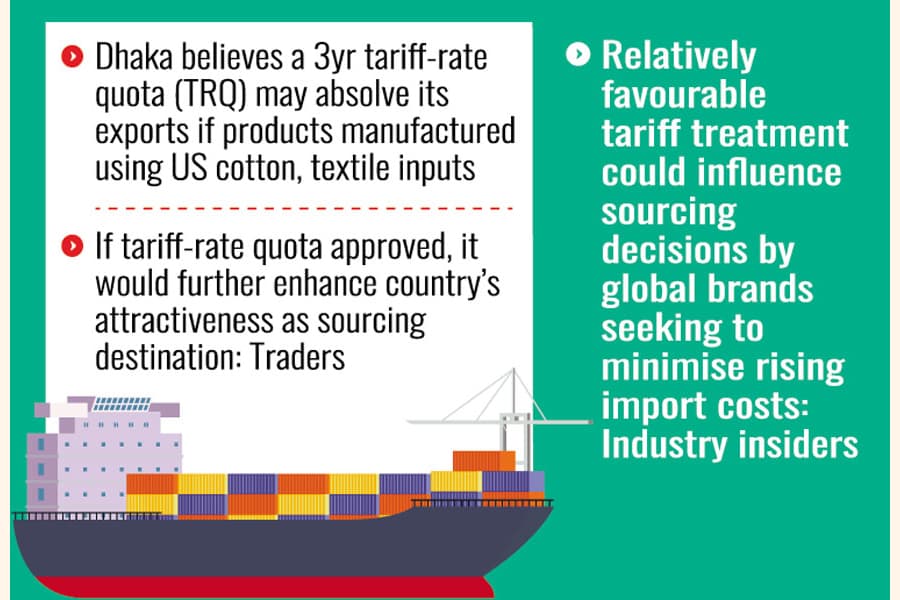
Bangladesh could also benefit from a further initiative under consideration by the USTR, says the foreign ministry, adding: "The agency is examining a three-year tariff-rate quota (TRQ) for Bangladesh, Cambodia, Indonesia and Malaysia that would waive Section 301 tariffs on products manufactured using US cotton and textile inputs."
If implemented, the proposal would provide Bangladeshi exporters with an additional competitive advantage while encouraging greater use of American raw materials in garment production.
The United States is one of Bangladesh's largest export destinations, with ready-made garments accounting for the overwhelming majority of shipments.
Industry observers say the relatively favourable tariff treatment could influence sourcing decisions by global brands seeking to minimise rising import costs while maintaining diversified supply chains.
Responding to the announcement, a spokesperson for Bangladesh's foreign ministry said the government remained committed to improving labour standards and strengthening cooperation with international partners.
"The Government of Bangladesh remains fully committed to upholding international labour standards and will continue to engage closely with international partners to ensure the robust growth, compliance and sustainability of Bangladesh's critical export sectors," the spokesperson said.
Although the latest 10-percent tariff will add to exporters' costs, analysts say Bangladesh's lower duty compared with key competitors could help safeguard its position in the US market. The proposed tariff-rate quota, if approved, would further enhance the country's attractiveness as a sourcing destination at a time when international buyers are increasingly factoring labour compliance and trade policy into procurement decisions.
mirmostafiz@yahoo.com