Regional bloc Bimstec is pursuing alternative mechanisms to boost trade and investment among its seven member-states while negotiations on a long-pending free-trade agreement (FTA) continue, says its chief executive.
The forum's Secretary-General, Indra Mani Pandey, explained the trade-promotion programme to journalists on Tuesday during an interaction with members of the Diplomatic Correspondents Association of Bangladesh (DCAB) at the headquarters of the Bay of Bengal Initiative for Multi-Sectoral Technical and Economic Cooperation (Bimstec) in Dhaka.
He said the FTA negotiations remained a complex process involving multiple countries with differing priorities, but expressed optimism that progress could be made on several constituent agreements in the coming months and years.
The Bimstec FTA framework agreement was signed in 2004. Subsequently, a Trade Negotiation Committee (TNC) was established along with six working groups to negotiate six constituent agreements covering different areas of the proposed trade pact.
"The working groups have been meeting from time to time, and in some subgroups we have made significant progress. We are quite hopeful that in the coming months and years we will see progress in the finalisation of some of the constituent agreements," Pandey said.
He noted that multilateral trade negotiations naturally take longer than bilateral FTAs because member-countries seek to balance regional trade liberalisation with their respective national priorities and concerns.
"FTA is one mechanism for enhancing trade, but it is not the only mechanism."
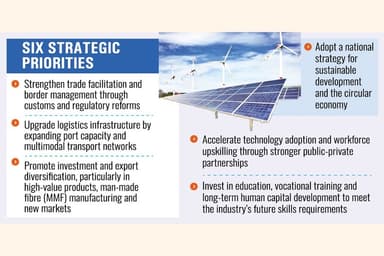
To strengthen economic cooperation while the negotiations continue, Bimstec is promoting several complementary initiatives aimed at facilitating business and investment across the region.
Among the proposals are establishing a Bimstec Chamber of Commerce and Industry to strengthen business-to-business links, creating a platform for investment-promotion authorities to encourage cross-border investment, and exploring cooperation on common standards to reduce non-tariff barriers to trade.
Pandey said differences in standards remain a significant obstacle to expanding intra-regional trade, and member-states are examining whether greater harmonisation could help facilitate commerce.
"The goal is very clear. We need to have more trade and investment in our region. There are many opportunities to pursue, and that's where Bimstec is fully focused."
Bangladesh, which recently assumed the Bimstec chairmanship, intends to accelerate the negotiation process by convening meetings of the Trade Negotiation Committee and its working groups more frequently to provide "the much-needed push" towards concluding the pending agreements, he told the reporters.
On regional connectivity, Pandey said member-states are also working on a visa-facilitation scheme to promote business travel, tourism and people-to-people exchanges.
An expert group on visa measures agreed last year to work towards such a framework. However, discussions are continuing as the members have yet to reach a consensus on the specific provisions of the proposed scheme.
"All member-states fully understand that if we need to have more trade, more travel, more tourism and more exchanges among our member-states, ease of travel through visa facilitation is very important," he observed.
Looking ahead, Pandey has noted that Bangladesh's second year as Bimstec chair in 2027 will coincide with the organisation's 30th anniversary, raising the possibility that the next Bimstec Summit could also serve as a platform to commemorate the milestone.
He notes that Bimstec continuously reviews the implementation of its programmes through regular meetings of experts, senior officials and ministers.
Action plans are updated periodically to incorporate new areas of cooperation, with all initiatives undertaken on the basis of consensus among the seven member-states.
mirmostafiz@yahoo.com