


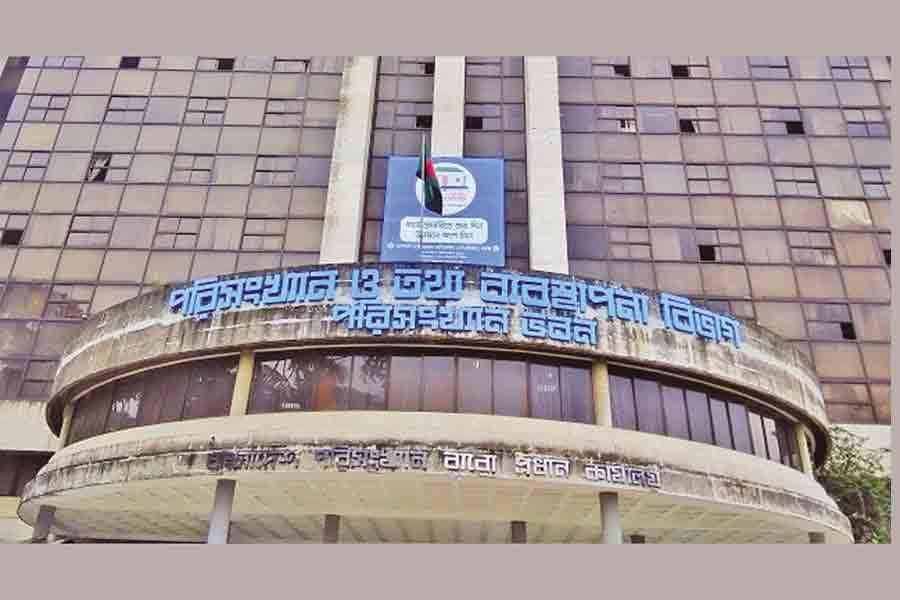


Groundwork, according to a report carried in this newspaper, is on for putting in place an integrated statistical data warehouse (ISDW). With the integration, the Bangladesh Bureau of Statistics (BBS) is set to undergo a transformation unlike any in the past. Most likely, the infamy the BBS gained due to its concocted statistics, particularly during the ousted regime, will be a thing of the past once and for all. Statistics the BBS churn out can be imperfect in two ways---if the statistics are manipulated to suit political expediency and if inefficiency or certain limitations account for the data set arrived at. Concocted data are dangerous because any conclusion drawn on their basis may project a rosy picture divorced from reality. An unreal and fictitious image is not confined to just a particular area, their influence negatively affects all other areas of national importance.


So the urgency for an unalloyed data set cannot be overemphasised. In a digital era, the statistics should be as correct as possible. Usually many of the surveys and studies are representative where analysis helps conclude the final outcome. Now here is an attempt to make the system sound enough to have authentic pictures of diverse areas of national importance starting from budget to planning for the development. Financed and developed by the Korea International Cooperation Agency (KOICA), the metadata or data about data are expected to transition the old models to an advanced system of informatics. The objective is to establish a comprehensive and integrated system that can respond immediately to help users. But the country will have to wait until the third and fourth quarters of 2027. Bangladesh can expect to gain full control of the advanced and integrated statistical infrastructure by 2028.
Digital upgrading of the national statistical organisation (NSO) was a sine qua non in the interest of pragmatic planning and development of the country. KOICA's involvement with the project is a good example of cooperation and transfer of technology. Organising metadata and meta-content is highly important and the Korean cooperation agency has agreed to lend its helping hand to accomplish the task. Some quarters may raise the question if security of vital national information stands any chance of compromising in the process. How the ISDW will be designed may offer an explanation.
Evidently, the emphasis here is on the digital infrastructure's modernisation. Unless the system is modernised, the quality and usability of official data leave much to be desired. If those are tailor-made to serve crucial development plan and decision making in real time, the country can stay a few notches ahead. The ISDW is expected to serve as a unified data warehouse. Here one important aspect is institutionalising data governance, security and compliance. In this case, staff recruitment and training will be highly important. Since digital ecosystem is continuously changing, the trained staff members will have to keep them updated all the time. At the end of the day, a secure and sustainable system manned by an efficient staff set-up can deliver the expected goods. With the manual work becoming obsolete, the digital transformation can play a vital role in institutionalisation of the BBS through creation of a secure and sustainable ISDW.