




Successful execution of a government social-protection programme depends primarily on identification of deserving recipients. Over the past 18 years, billions of taka was distributed among people but only 50 per cent of the intended target poor received the benefits. The richest 20 per cent households grabbed 22 per cent of the benefits. This gross anomaly in distribution of allowance could happen, according to a report carried in the FE on Tuesday, in the absence of a comprehensive database of the country's poor households. Mooted in 2009 and initiated in 2013, a national household database (NHD) of households could be completed by the Bangladesh Bureau of Statistics (BBS) in 2022 at almost double the original cost jumping from Tk 3.29 to Tk7.27 billion. But the database is yet to be accessible because a management information system (MIS) could not be developed so far. In the absence of an MIS and application-programming interface (API), the database remains inoperable.


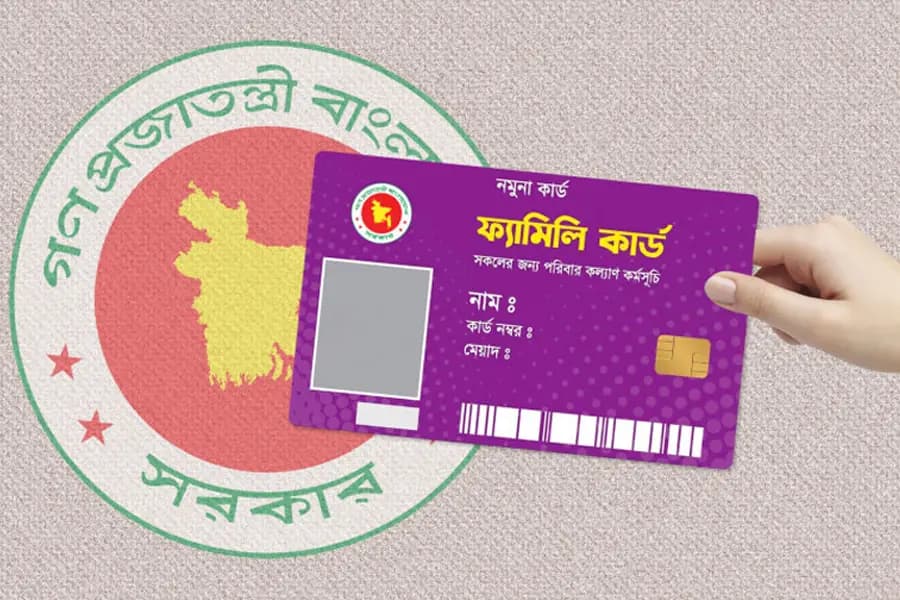
Now that the incumbent government has allocated Tk145 billion for distribution among 4.1 million households through family cards for the current fiscal year, the problem of finding the deserving candidates arises once more. A proposal has been advanced for carrying out a three-month nationwide census. A total of 60,000 enumerators will be recruited to complete the job. Economists and government officials have rightly questioned rationality of this move. First, the Department of Social Services is not the right agency to carry out such a census. It runs short of the manpower and the required expertise. The timeframe of three months to accomplish the job is far too short for the purpose. Here the prime minister's emphasis on transparency and reliability of the database comes to the fore. A casual approach to this highly important and sensitive issue will not do. Also, overlapping of programmes should be avoided.
What about the NHD prepared by the BBS in 2022? A random cross check of some of the data can give an idea about the authenticity or not of the database. If it is found that data were not manufactured but there is a genuine reflection of the things as they are, the NHD can be used for making a list of family card-holders. In that case development of an MIS and API will be necessary to make the database usable. It will save time and cost. If the NHD proves fallacious, a fresh census will have to be carried out for preparation of a failsafe database. To do this, required manpower and expertise have to be readied before starting the task. The BBS is best suited to accomplish the job.
If a comprehensive national database is prepared, it may have multiple uses. As an information bank, it can instantly identify families receiving benefits under existing social safety nets and even persons with criminal records. There is no point preparing a data pool time and again. Its updating system will take care of the changes that happen. Before the process of database preparation is launched, a provisional list of family card holders may be considered. Since the aim and objective are poor people-centric well-being, the programme for reaching succour to them should not wait. If integrity of local leaders is not compromised, finding the deserving recipients will not be difficult.