


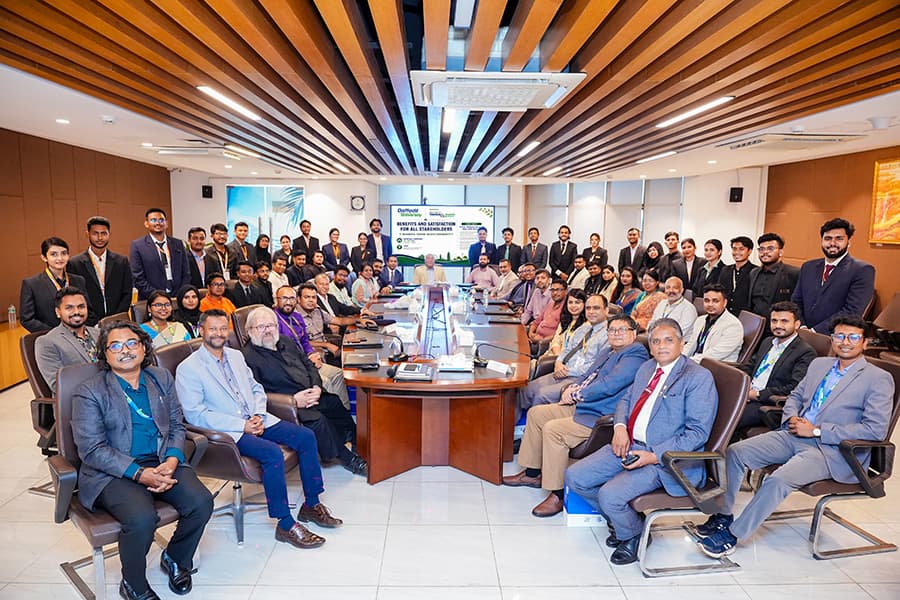
A roundtable discussion on promoting sustainable and 'meaningful tourism' in Bangladesh brought together key stakeholders from the country's tourism sector on Tuesday (July 14), with speakers highlighting the need for strategic planning, improved service quality and sustainable practices to unlock the country's tourism potential.
The roundtable, titled "Meaningful Tourism: Perspectives on Planning and Sustainability," was held at the International Conference Room of Daffodil International University (DIU) in Savar, Dhaka, says a press release Wednesday.
Professor Dr Wolfgang Georg Arlt (FRGS, FRAS), an internationally renowned tourism expert from Germany, presented the keynote paper and shared recommendations on the future of Bangladesh's tourism sector.
The discussion focused on the concept of 'meaningful tourism' as a tool to promote sustainable development in the tourism and hospitality sectors while ensuring economic benefits and broader value for stakeholders.
The session began with a welcome address by Professor Dr Mohammad Rakibul Kabir, Dean of the Faculty of Business and Entrepreneurship at DIU, and was moderated by Associate Professor Mahabub Parvez of the same faculty.
Among the participants were Mohammad Hanif, president of the Tour Operators Association of Bangladesh (TOAB); Md Ziaul Haque Howlader, general manager of Bangladesh Tourism Corporation; Md Jalal Uddin Tipu of the Association of Travel Agents of Bangladesh (ATAB); Md Tawfiq Rahman, secretary general of PATA Bangladesh; Mofizur Rahman, managing director of Novoair; Rizwan Maruf, director (Marketing) of InterContinental Dhaka; Md Sakhawat Hossain, chief executive officer of The Westin Dhaka; and other leaders from the tourism industry.
Speakers said the global tourism industry is undergoing rapid transformation due to climate change, artificial intelligence (AI), and changing tourist preferences and behaviour. They noted that while many traditional business models are becoming obsolete, these changes are also creating opportunities to develop new tourism services and destinations.
They observed that Bangladesh currently attracts a negligible number of international tourists and ranks among the world's lowest countries in terms of per capita tourist arrivals.
The speakers said that if both the public and private sectors remain vigilant and learn from the experiences of other destinations -- including environmental and cultural degradation, the challenges of over-tourism and the outflow of a large share of tourism revenue abroad -- Bangladesh could turn these challenges into opportunities.
They also said that despite its rich cultural heritage, diverse landscapes and biodiversity, Bangladesh has yet to fully realise its tourism potential. In 2025, the country received around 650,000 foreign tourists, who spent about US$440 million.
Although Bangladesh is home to more than 2 per cent of the world's population, it attracts only 0.05 per cent of international tourists, the speakers noted.
They added that nearly half of the world's population lives within a four-hour flight of Bangladesh. By prioritising service quality over visitor numbers and developing specialised tourism products tailored to regional source markets, Bangladesh could significantly strengthen its position as an international tourism destination in the second half of the twenty-first century.