


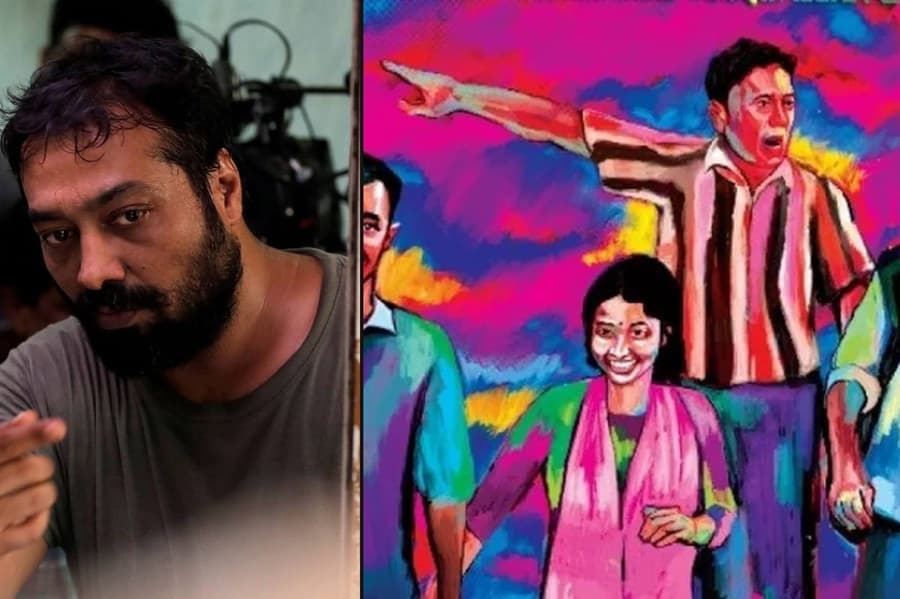
Anurag Kashyap watched a Bangladeshi film about a flooded village in Khulna last month. He wrote something on Letterboxd that he probably didn't expect to become international news. A few days later, he was attached as the film's global distributor. Delupi will now carry his name on every poster abroad, 'Anurag Kashyap Presents', which is the kind of thing that gets people curious about a film they'd otherwise never hear of.


The film deserved the attention before Kashyap's name showed up, and it still does now that the attention has arrived for the wrong reason.
Mohammad Tawkir Islam's debut, released quietly last November with little marketing, is set in a remote stretch of southern Khulna, where a village is cut off as floodwaters rise after a change in government.
On paper this reads like festival-circuit material, worthy, probably slow, easy to skip. It already played Rotterdam, in fact, before any of this Kashyap business started. But the premise undersells what the film actually does with its setting.
A young man named Partho, from a travelling jatra troupe, and his fraying relationship with a woman called Nupur- that's most of the plot.
There isn't a second plot underneath it building toward some larger reveal.
What Kashyap responded to, in his own comment, was how the film shows power working at a scale small enough that you'd almost miss it: a flooded courtyard, a rationed boat, someone deciding whose house gets reached first.
He wrote that it felt like watching a neighbouring village's actual life, not a story built for effect.
That's a specific kind of compliment, and it's earned.
Most films about displacement go wide, with aerial shots and a chorus of suffering meant to hit you all at once. Delupi stays inside the four or five relationships that make up the village and lets the flood sit in the background, present but not doing the emotional work.
The real subject is what the water reveals about people who had no power even before it arrived.
This is exactly why the film is worth two hours of anyone's time, whether or not the name Kashyap means anything to you. It doesn't ask you to know Bangladeshi politics or care about climate migration as an issue before you sit down.
It gives you two people and a boat and lets the stakes build from there, which is a harder trick than it sounds and one most films with far bigger budgets fail at.
If you've ever wondered what a flood actually does to a household beyond the water damage, what it does to who has to ask whom for help, and who gets to say no, this is the film that shows rather than explains it. There's no score swelling to tell you when to feel something.
You feel it, later, once you've noticed the boat scene again in your head.
The way Kashyap ended up watching it is its own small story.
Islam had hoped he'd catch it at Rotterdam. That didn't happen, so he just sent the film to Kashyap directly, no agent, no formal channel, just one filmmaker reaching another. It shouldn't have worked. It did. Kashyap didn't stop at praise; he moved to take on the film's international distribution, and there's talk of more collaboration between them down the line. However, neither side has said what yet.
None of this changes what's actually on screen, and maybe that's the point worth sitting with. A distribution deal gets a film into more theatres and more conversations, which matters for an independent Bangladeshi production trying to survive past its festival run. But nobody in that flooded courtyard knows their story is now attached to a Bollywood name. They're just trying to figure out who gets the boat first this time. Watch it before the marketing catches up to what the film already knows about itself.
mahmudnewaz939@gmail.com