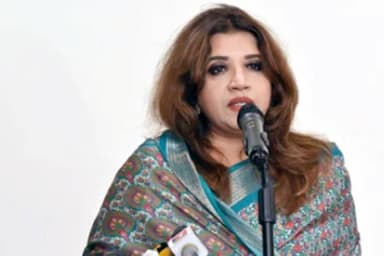



Every morning, Monwara Begum walks to her son’s grave. She speaks to him in silence, reliving memories that refuse to fade.
“When he was at university, if I didn’t hear from him for a day, he would call in the morning or evening and ask, ‘Ma, how are you? Now no one calls me that way,” she said in a choked voice.
For Monwara and her husband, Mokbul Hossain, July 16 is no longer just a date on the calendar. It is the day they lost their son, Abu Sayed, whose final moments became one of the defining images of July uprising.
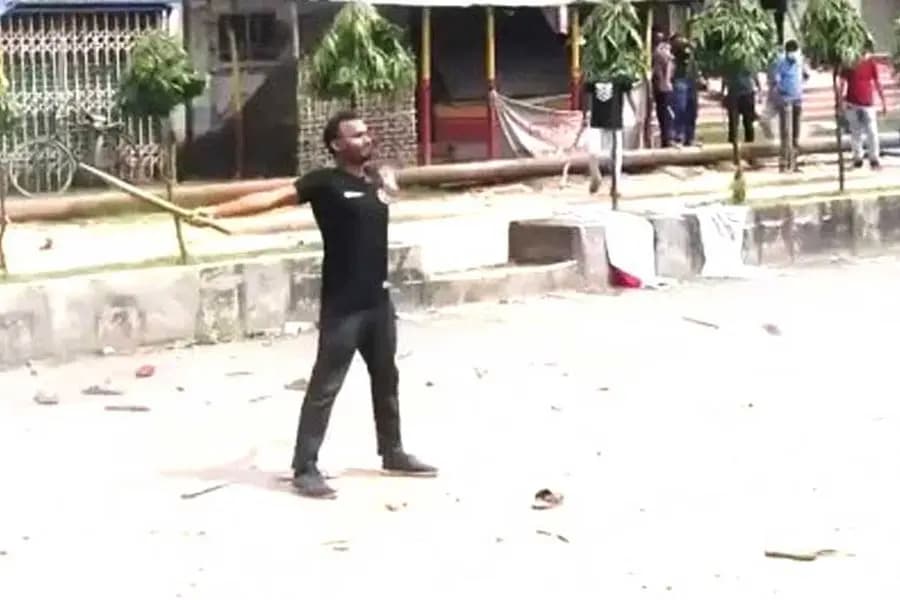
On July 16, 2024, English department student of Begum Rokeya University, Rangpur, fearlessly stood before police holding only a stick near the university gate during anti-quota movement. Moments later, he was shot.
Images and videos of the young protester standing unarmed in front of police spread rapidly across Bangladesh and around the world. For many, they came to symbolise the courage of a generation demanding change. The anti-quota protests soon evolved into a nationwide mass uprising that eventually led to the fall of then Awami League government.
Yet, two years later, despite a tribunal verdict, Abu Sayeed’s parents and fellow protesters say justice remains incomplete.
A verdict, but lingering uncertainty
On April 9 this year, the International Crimes Tribunal-2 sentenced two people to death and 28 others to various prison terms for crimes against humanity linked to Abu Sayed’s killing.
The verdict was welcomed by his family but its implementation remains uncertain.
“The court has given its verdict. If I could see that verdict executed while I am still alive, my heart would find some peace,” Mokbul Hossain said before breaking into tears.
“My son will never come back. But those responsible should face the punishment the court has ordered.”
A mother’s unending wait
For Monwara, life has settled into a routine of remembrance.
“My son was supposed to support this family. Instead, he gave his life thinking about the country.”
Holding back tears, she added, “Those who killed my son deserve the highest punishment.”
Comrades seek closure
Those who stood beside Abu Sayed on the day of the protest also say the legal process has moved too slowly.
Siam Ahsan Ayan, one of the first people who rushed to rescue the critically injured student after he was shot, said Abu Sayed had made the ultimate sacrifice without thinking about his own future.
“He never thought about his own life, his parents or his siblings. He thought about the country,” Ayan said. “It took a long time for the verdict to come, and now we do not see any visible steps to implement it quickly.”
Shamsur Rahman Sumon, a fellow protester and a student of the Bangla department at the university, echoed that frustration.
“If the verdict in the case of the first martyr of the July uprising is still not implemented even after two years, it raises questions,” he said. “We want the judgment to be executed without unnecessary delay.”
The day that changed Bangladesh
The protest on July 16, 2024, began as students from different educational institutions marched towards Begum Rokeya University.
Police and activists of Chhatra League (now banned) blocked their entry, leading to violent clashes. As tensions escalated, police fired tear gas, rubber bullets and live rounds to disperse demonstrators.
Witnesses say Abu Sayed refused to retreat.
Standing alone with both arms spread wide, he faced the advancing police. Seconds later, he was shot.
He was rushed to Rangpur Medical College Hospital where doctors declared him dead.
The following day, he was buried in his ancestral village of Babanpur in Pirganj upazila.
His death transformed him into one of the most recognisable faces of the July uprising, his final act etched into the nation’s collective memory.