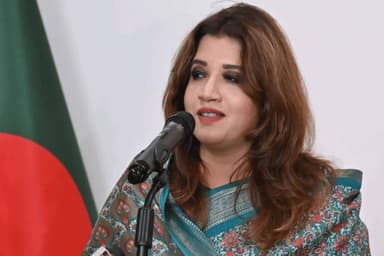



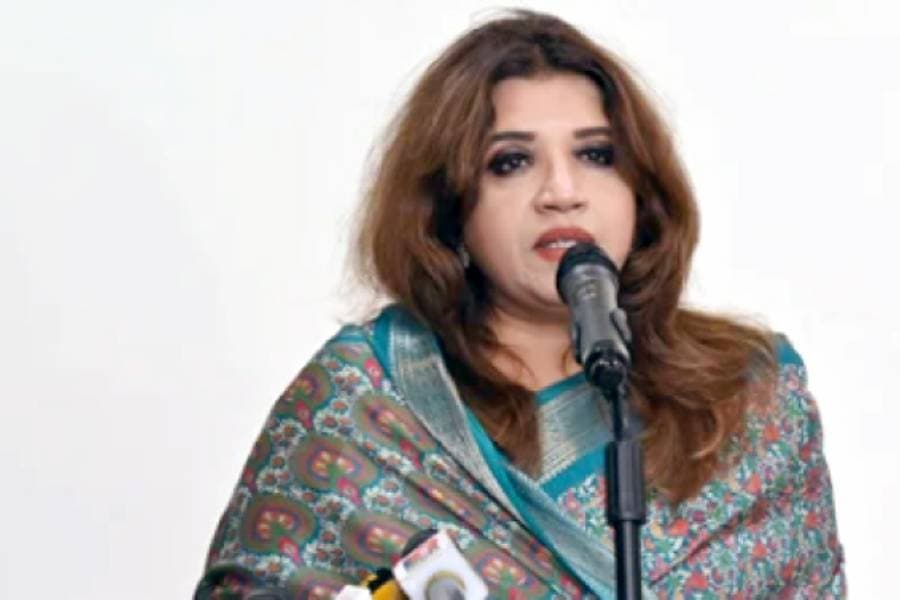
State Minister for Foreign Affairs Shama Obaed Islam on Thursday said bringing ousted former prime minister Sheikh Hasina back to the country would require India’s political and diplomatic goodwill, while insisting that the issue would not undermine bilateral ties between the two neighbours.
Speaking to reporters at the Ministry of Foreign Affairs, the state minister said Dhaka had repeatedly communicated with New Delhi, seeking the return of Sheikh Hasina and other accused persons currently staying in India to face justice in Bangladesh.
“We hope that India will respond to our repeated communications and letters regarding Sheikh Hasina and other accused persons who are in India and whose trials have either been completed or are pending in Bangladesh. We expect India to expedite the process through diplomatic channels and facilitate their return,” she said.
Shama Obaed stressed that the Hasina issue should not be viewed as an obstacle to Bangladesh-India relations.
“I do not think this issue will disrupt relations between Bangladesh and India. Bilateral relations will continue, and relations between two countries are always multidimensional,” she said.
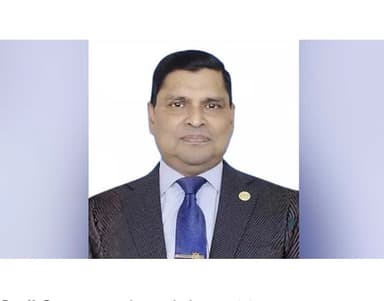
She noted that dialogue and exchanges between the two countries would continue, citing the visit of Bangladesh’s adviser Brig Gen (Retd.) Dr AKM Shamsul Islam to a BIMSTEC meeting as an example of ongoing engagement.
“However, this issue is extremely important for the people of Bangladesh, for democracy and for the country’s history,” she said.
Referring to the July uprising, the state minister said the families of those killed and injured deserved justice.
“Those who sacrificed their lives, those who were killed and those who remain injured, as well as their families, deserve closure. They want to see those responsible for killing and injuring their sons and daughters brought to justice. The government is sincerely trying to expedite the process,” she said.
Responding to another question, Shama Obaed said Sheikh Hasina had fled to India following the July mass uprising and public demand had intensified during July for convicted individuals to be brought back so that their sentences could be enforced in Bangladesh.
She said the legal process had already been explained by the Ministries of Foreign Affairs, Law and Home Affairs.
“Since she has already been convicted, there is no longer any legal provision for voluntary surrender. Therefore, as soon as she returns to Bangladesh, she will be arrested. That is what the law requires,” she said.
The state minister said the interim government had initiated communication with India under the Bangladesh-India extradition treaty regarding Sheikh Hasina and other accused persons, including suspects in the Hadi murder case.
“If they are returned under the extradition treaty, there are legal procedures as well as diplomatic norms that must be followed. Once she returns, she will be arrested immediately,” she said.
Asked whether Sheikh Hasina would be provided with travel documents if she wished to return voluntarily, Shama Obaed said matters relating to passports and visas fell under the jurisdiction of the Ministry of Home Affairs.
“The Home Ministry would be in a better position to explain what kind of travel documents would be required. But, generally speaking, this will certainly require the cooperation of the Indian government,” she said.
She said India had an important role to play in the process.
“If the Indian government acts swiftly under the extradition treaty and expedites the diplomatic process, the necessary documentation can be arranged accordingly. A person only needs a travel document with a photograph confirming his or her identity to travel from one country to another. Such a document could be issued either by the Indian government or by the Bangladesh government,” she added.
Responding to questions about aircraft procurement, Shama Obaed said Bangladesh planned to purchase both Boeing and Airbus aircraft, rejecting suggestions that the Boeing acquisition was the result of external pressure.
Bangladesh had earlier committed to purchasing Airbus aircraft from France, while Boeing aircraft are being acquired from the United States.
“Our civil aviation sector needs to be taken to a much higher level. The Prime Minister inherited a fragile economy from the previous government. To put the economy back on a stronger footing, we have to exercise austerity where necessary while also making essential purchases. We need both Boeing and Airbus, and we will buy both,” she said.
Asked whether Bangladesh was giving preferential treatment to any particular country in trade or investment, the state minister said national interest remained the government’s foremost consideration.
“Absolutely not. In matters of investment, Bangladesh’s national interest always comes first,” she said.