

The government has taken a move to strengthen energy audits across major industries as part of a broader strategy to curb energy waste, reduce dependence on imported fuels and build a more efficient and financially sustainable power sector.
The initiative, outlined in the national budget document, seeks to promote the use of energy-efficient equipment and encourage designated industrial consumers to optimise electricity consumption at a time when rising fuel costs and growing demand continue to put pressure on the country’s energy system.
The move comes as Bangladesh grapples with mounting electricity generation costs driven by dwindling domestic gas reserves and increasing reliance on imported liquefied natural gas (LNG).
More than 40 per cent of the country’s electricity generation capacity is gas-based, making the sector particularly vulnerable to fluctuations in global fuel prices.
Shift towards renewable energy
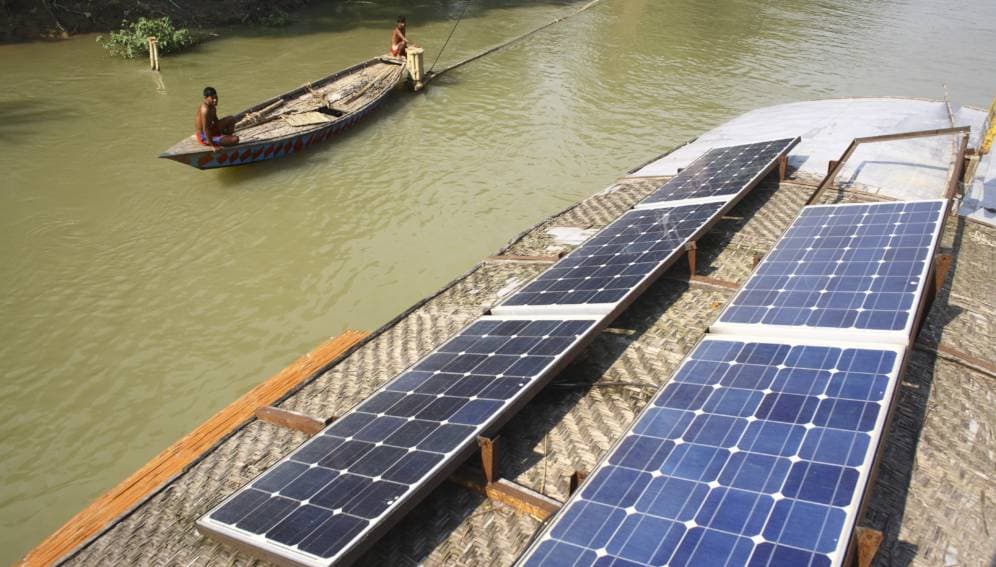
To address these challenges, the government plans to reduce dependence on imported fossil fuels by expanding renewable energy and making better use of indigenous energy resources.
The budget document says investors will receive incentives to manufacture renewable energy equipment locally, including solar panels, wind turbine components and battery storage systems.
Bangladesh has set an ambitious target of meeting 20 percent of its electricity demand from renewable sources by 2030, with the share expected to rise to between 30 and 50 percent by 2050.
To achieve these goals, authorities have outlined a series of initiatives including expanding rooftop solar programmes, conducting wind resource assessments in coastal regions, implementing utility-scale solar projects and piloting waste-to-energy generation.
The government also plans to formulate a National Energy Storage Roadmap and improve grid flexibility to accommodate a larger share of renewable electricity.
Expanding generation and transmission
The government aims to raise the country’s electricity generation capacity to 35,000 megawatts by 2030 while expanding the transmission network to 25,000 circuit kilometres.
Construction of the 2,400MW Rooppur Nuclear Power Plant is progressing rapidly, according to the document.
Fuel rods have already been loaded into one reactor, with around 300MW expected to be connected to the national grid by August 2026. The first unit is projected to supply 1,200MW by January 2027.
The government says its long-term objective is to establish a modern, affordable, uninterrupted and environmentally sustainable electricity system.
Addressing structural weaknesses
Electricity generation costs have risen sharply due to what it describes as years of unplanned power and energy policies, corruption, rent-seeking, mismanagement and irregularities, according to the document.
It alleged that capacity charge mechanisms enabled widespread financial misappropriation and capital flight, while several large-scale power projects undertaken during the previous administration included controversial contractual provisions that imposed heavy financial obligations through expensive power purchases and imports.
Heavy reliance on fossil fuels has further increased production costs, the document said.
As a result of the widening gap between electricity generation costs and retail tariffs, government subsidies for the power sector are expected to exceed Tk 40,000 crore in the current fiscal year.
Although Bangladesh’s installed electricity generation capacity now stands at 28,919MW including imported electricity and grid-connected renewable power, ensuring uninterrupted and high-quality supply remains a challenge.
Reform agenda
The government says it has prioritised reforms in electricity generation, transmission and distribution through short-, medium- and long-term plans.
Among the key measures are strengthening transparency and accountability, identifying those involved in corruption and tightening monitoring across the sector.
It has planned to retire inefficient power plants, modernise facilities where necessary and adopt a least-cost generation strategy.
The budget outlines plans to review capacity charges and power purchase agreements to improve financial accountability, while modernising transmission and distribution systems through smart grid technologies aimed at reducing system losses.
Special emphasis has also been placed on expanding electricity access in remote and island areas.
To keep electricity tariffs affordable, future power plants will be developed through competitive bidding, the document says.
In metropolitan areas, underground distribution lines and substations will be introduced as part of broader grid modernisation efforts.
The government has also prepared a draft Power Sector Strategy Paper (2026–2050), which proposes a least-cost generation plan, a balanced energy mix and the integration of advanced technologies such as SCADA, Geographic Information Systems (GIS) and Advanced Metering Infrastructure (AMI).
Besides, the entire process of obtaining new electricity connections and paying bills has been automated to improve customer services.
With industrial energy audits, renewable energy expansion and governance reforms forming the backbone of the strategy, the government hopes to make Bangladesh’s power sector more efficient, resilient and financially sustainable while meeting the country’s growing electricity demand.