


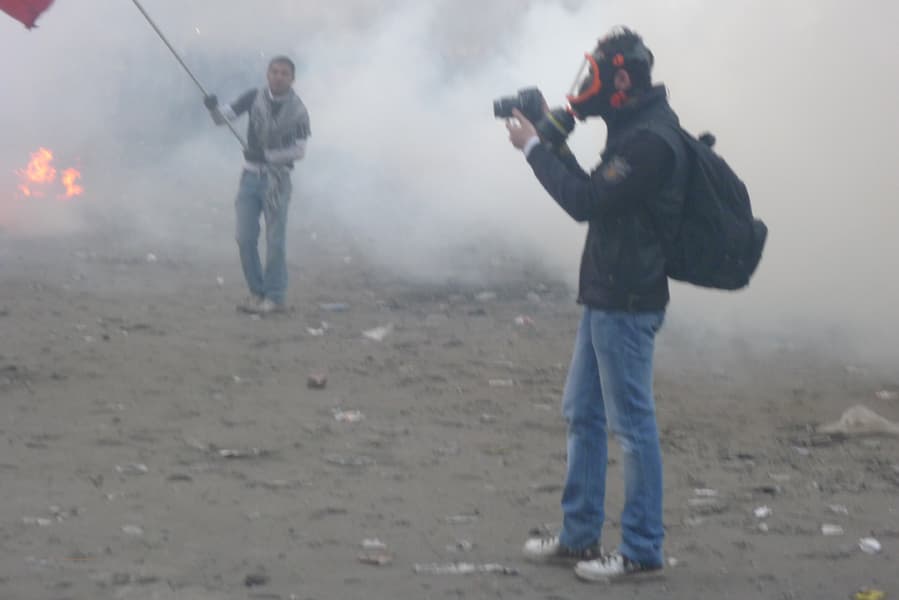
The Quick Response Support Team (QRS) expresses deep concern over the deteriorating safety and security of journalists in Bangladesh, as evidenced by a series of recent incidents documented by VOICE with support from International Media Support (IMS).
In a media statement, the watchdog platform said that between January and March 2026 alone, 34 cases of violations against journalists were recorded, reflecting a troubling pattern of violence, intimidation, legal harassment, and restrictions on access to information.
These incidents underscore the growing risks faced by journalists in the course of their professional duties. In Bogura, journalists Shubh Kundu, Sanjib Kumar, and Sazzad Hossain Pallab were among hundreds named in a delayed and politically sensitive case, raising substantial apprehensions about the use of legal mechanisms to intimidate and restrict independent reporting.
The risks are further heightened in field reporting contexts. In Rangpur, journalists Ferdous Joy, Mehdi Hasan, Saiful Islam Mukul, and Mahbub Hossain Suman were attacked while covering a local clash, highlighting the lack of adequate protection for journalists in volatile situations. Similarly, in Lakshmipur, journalist Tarak Mahmud was subjected to a mob attack, reflecting an alarming pattern of collective violence against media professionals.
Of particular concern are incidents where violence is used not only to harm journalists but also to obstruct accountability and suppress evidence. In Chakaria, journalists Choton Kanti Nath, Iqbal Faruk, and M. Ziabul Haque were reportedly assaulted while documenting illegal sand extraction, with their equipment seized and destroyed, directly undermining their ability to report on matters of public interest.
At the same time, institutional pressure and misuse of authority continue to deepen these risks. The detention of 21 journalists associated with the Bangladesh Times following critical reporting reflects a shrinking space for dissent. Similarly, in Cumilla, journalists Rasel Sarkar and Abdul Alim were detained and allegedly compelled to delete recorded materials, inducing fear about administrative censorship and restrictions on press freedom.
Retaliation against investigative journalism remains a persistent and widespread threat. In Satkhira, journalist Samiul Monir was attacked following reporting on illegal sand extraction activities, highlighting the risks faced by reporters covering resource exploitation. Similarly, SATV journalist Hasan Al Sakib reportedly received threats after publishing reports on corruption, underscoring patterns of intimidation linked to powerful vested interests, including actors with institutional influence.
In Dhaka, journalists Prosoon Ashish and Aminur Rahman were physically attacked in a public space, further reflecting how threats against media professionals are no longer confined to remote areas but are increasingly present in urban settings. In addition, digital and data-related vulnerabilities are emerging as a growing challenge, as evidenced by a data breach involving the Bangladesh Election Commission that exposed personal information of thousands of journalists, increasing their risk of targeted harassment.
Taken together, these incidents point to an alarming normalisation of violence and intimidation against journalists in Bangladesh. The convergence of legal pressure, physical attacks, digital insecurity, and institutional actions is contributing to a climate of fear and self-censorship, severely undermining press freedom, restricting access to information, and weakening democratic accountability.
The Quick Response Support Team calls upon the Government of Bangladesh and relevant authorities to take immediate and concrete measures to address this situation. This includes ensuring prompt, impartial, and transparent investigations into all reported attacks and violations against journalists, holding perpetrators accountable regardless of affiliation, and strengthening legal and institutional safeguards for media professionals. Law enforcement agencies must be sensitised to uphold journalists’ rights and refrain from actions that obstruct or intimidate reporting.
We further urge a review of the application of existing laws to prevent misuse against legitimate journalistic work, alongside the establishment of effective protection mechanisms, including rapid response systems and accessible complaint redress procedures for journalists at risk. Strengthening digital security and preventing unauthorised exposure of journalists’ personal data must also be prioritised.
The safety of journalists is integral to freedom of expression and the public’s right to information. Without a secure and enabling environment for journalists, democratic values, transparency, and accountability cannot be sustained. The QRS stands ready to support coordinated efforts among government, media, and civil society to safeguard press freedom in Bangladesh.
The Quick Response Support Team (QRS) is a multi-stakeholder platform comprising journalists, civil society representatives, indigenous rights activists, and academics, which commenced its work on 1 January 2026. The project is committed to monitoring, documenting, and responding to safety violations against journalists.
bdsmile@gmail.com