


The 2026 Global Liveability Index published by the Economist Intelligence Unit presents a sobering assessment of Dhaka's living conditions. Among the 173 cities ranked this year, Dhaka sits at 171, ahead of only Tripoli and Damascus, two cities that continue to grapple with the aftermath of war and civil collapse. That Dhaka finds itself in such company, even as much of Asia records genuine gains in liveability, should trouble policymakers far more than it appears to. While Chinese cities such as Fuzhou, Nanjing and Shenyang climbed the rankings this year on the back of sustained public investment in healthcare, and while the regional average for Asia rose to 73.9, Dhaka's overall score of just 42 out of 100 remains stuck deep in the "intolerable" range that the EIU reserves for cities offering the most compromised living conditions on earth. It is worth sitting with that classification for a moment. This is not a city being described as merely uncomfortable or underdeveloped by international standards; it is being placed, by a methodical and long-running index, in the same tier as capitals recovering from civil war.
The numbers behind that overall figure tell their own story. Dhaka's infrastructure score of 27 is among the weakest recorded anywhere in the index, on par with cities such as Kyiv that are contending with active war. Its stability score of 45 reflects chronic concerns around crime and civil unrest rather than any singular crisis, which is in some ways a harder problem to fix than a war, since there is no ceasefire to negotiate, only the slow, unglamorous work of institution-building. Culture and environment scores similarly languish at 41, weighed down by pollution, congestion and limited social freedoms, while even education, at 67, lags the regional Asian average of 82. Only healthcare, at 42, shows the kind of stagnation that suggests years of underinvestment rather than crisis. Taken together, these five category scores describe a city where almost every dimension of daily life, from the commute to work, to the air breathed along the way, to the reliability of a hospital bed in an emergency, falls short of what its size and economic importance to the country would suggest it should offer.
What makes this ranking particularly striking is the contrast with the factors that have driven improvement elsewhere in the index this year. The report is explicit that Chinese cities have climbed the table primarily because of upgraded healthcare scores following years of deliberate public investment, with five Chinese cities now scoring above 80 out of 100 in that category. Lisbon moved up sharply for the same reason. New York improved its stability score after years of falling crime rates and a reduced risk of terrorist attack. None of these gains happened by accident, and none happened overnight. They are the visible results of policy choices sustained over a sufficiently long horizon to show up in outcomes that an external index, run independently of any government's own narrative, can detect. There is no reason Dhaka cannot follow a similar trajectory. Still, it will require the same discipline, applied consistently across several budget cycles rather than announced once and left to fade.
It is also worth noting what the index does not say about Dhaka. Unlike Tehran, Kyiv or the cities of the Middle East and North Africa that fell this year because of the war involving Iran, Dhaka's low ranking cannot be attributed to any single external shock. There is no blockade, no strike, no sudden geopolitical rupture explaining its position. That is, in a strange way, the more damning finding. Dhaka's score is not the product of a crisis that a peace deal or a change of government might resolve. It is the accumulated result of ordinary, everyday governance choices made and deferred over many years. That also means it is a problem entirely within Bangladesh's own capacity to address, without waiting on any external actor to change course first.
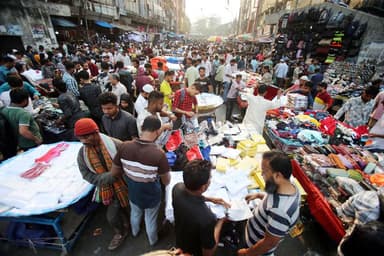
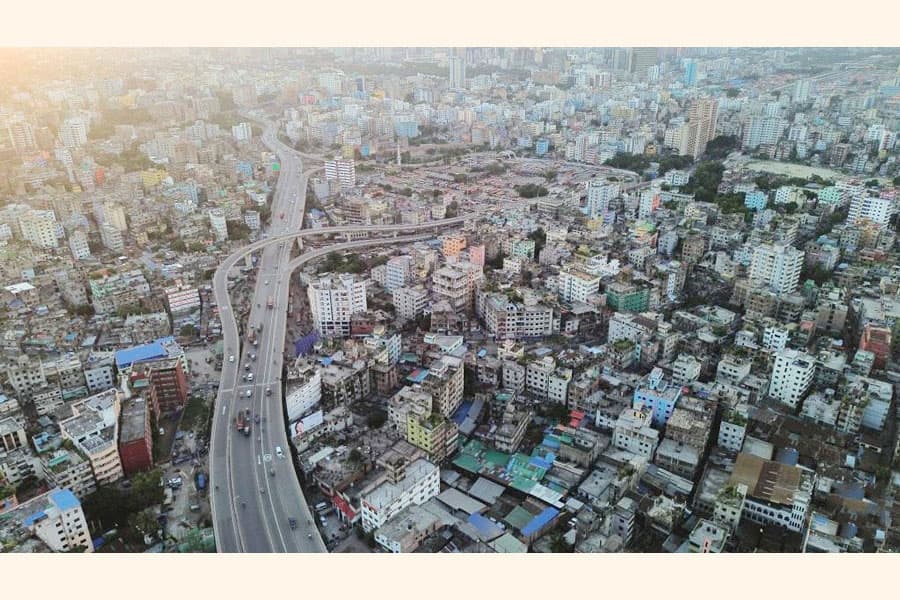
The most obvious starting point is infrastructure, both because it is Dhaka's weakest category and because it is the one most directly within the control of city and national planners. The chronic congestion that defines daily life in Dhaka, the inadequate quality of roads and public transport, and the strain on water, energy and telecommunications systems are not new observations, but they remain unresolved. A serious liveability strategy would prioritise finishing and expanding mass transit corridors on schedule, enforcing traffic management with the same urgency applied to garment exports, and treating housing quality as a public health issue rather than a private real estate matter. Every year of delay compounds the cost of the eventual fix, both financially and in terms of the cumulative toll on residents who spend hours of every working day simply moving through the city. Reliable electricity and water provision, too often treated as background utilities rather than liveability indicators in their own right, deserve the same sustained attention, since their absence quietly erodes quality of life in ways that rarely make headlines but consistently show up in surveys such as this one.
Healthcare deserves equally deliberate attention, precisely because the EIU report shows how quickly gains in this category can move a city's overall standing. Investment in public hospital capacity, availability of essential medicines, and quality of care in underserved neighbourhoods would not only improve the lived experience of residents. Still, it would also lift Dhaka's score in a category where comparatively modest, well-targeted spending has already delivered outsized returns for cities elsewhere in Asia. This is not a call for extravagant new hospitals as monuments, but for consistent, unglamorous investment in the everyday reliability of public health provision, from staffing primary care clinics adequately to ensuring that over-the-counter medicines and basic diagnostic services are genuinely accessible across the city rather than concentrated in a handful of well-served neighbourhoods.
Stability is a harder category to move through infrastructure spending alone, since it depends on policing, judicial capacity and social cohesion rather than concrete and cabling. But the report's own account of New York's improvement, driven by a sustained multi-year decline in crime, suggests that visible, patient investment in community policing and urban safety does eventually register in how a city is perceived and lived in. Dhaka's civil administration would do well to treat public safety as a long-term liveability metric rather than a series of episodic crackdowns timed to political calendars. Consistency, more than intensity, appears to be what separates cities that improve their stability scores from those that merely react to individual incidents.
The culture and environment category, which captures everything from air quality to corruption to social freedoms, may be the most politically sensitive to address but is arguably the most consequential for how Dhaka's residents experience daily life. Reducing air and water pollution, tackling the petty corruption that shapes so many everyday transactions, and expanding access to public cultural and recreational spaces would all move the needle here. These are not abstract governance ideals; they are concrete determinants of whether a city feels tolerable or intolerable to live in, and they are also the indicators most visible to the young, increasingly globally connected population that Dhaka will need to retain if it hopes to keep its best talent from seeking opportunities and better living conditions abroad.
Education, Dhaka's relative bright spot at 67, still trails the Asian average of 82 and should not be allowed to plateau simply because it looks comparatively strong. Consistent investment in public education indicators, alongside continued expansion of private education availability and quality, would help close that gap and provide a more durable foundation for the other categories to build on, since an educated, healthy and safe population is, in the end, the precondition for everything else this index measures.
None of these is to suggest that Dhaka's challenges are unique or that they can be solved quickly. The city carries the weight of a young, fast-urbanising nation with limited fiscal room, and comparisons with wealthy, slow-growing cities like Copenhagen or Vienna, which top this year's index, will always be somewhat unfair. But the more instructive comparisons are not with the top of the table; they are with the cities that have moved up it. Fuzhou, Lisbon and New York did not become dramatically wealthier overnight; they made sustained, sector-specific investments and let the results accumulate over successive years of index publication. Dhaka has the same option available to it. The question is whether its policymakers are willing to treat liveability not as a public relations concern to be managed around index publication dates, but as a genuine, long-term development objective worth budgeting year after year, well beyond any single administration's term. Bangladesh has proved its capacity for sustained economic transformation before. Turning that same discipline towards the liveability of its own capital would be a fitting, and overdue, next chapter.
Dr Matiur Rahman is a researcher and development professional.
matiurrahman588@gmail.com