


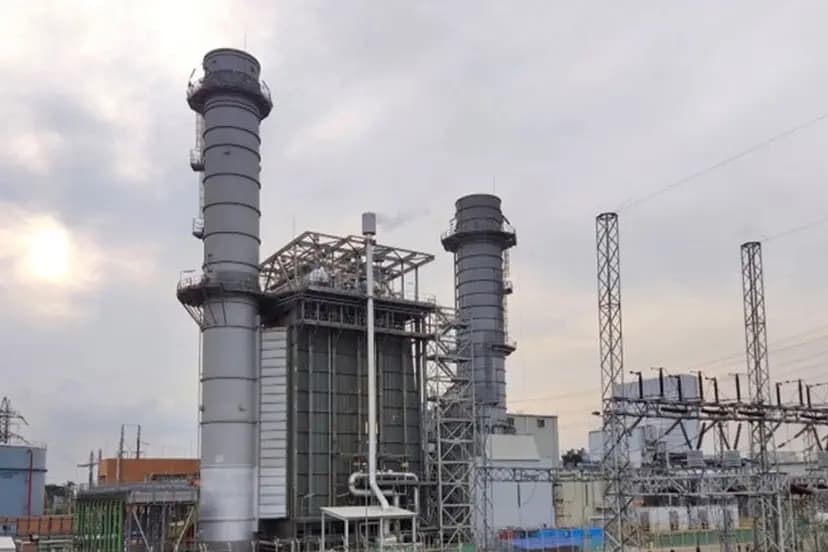
Disruption of gas supply from one of the two floating storage and regasification units (FSRUs) at Maheshkhali, Cox's Bazar to the national grid has exposed the vulnerability of the system. Imported liquefied natural gas (LNG) is stored in the FSRUs for regasification and supply to the national grid. The disruption has caused a shortfall of 450 million cubic feet of gas a day (mmcfd). As a result, gas supply to households, CNG (compressed natural gas) filling stations, power plants, factories and industries has been severely affected.


What is particularly worrying is that local experts could not detect the technical problem developed due to a fire, causing the shutdown of the US-based Excelerate Energy-operated terminal. Experts from the United Kingdom (UK) and the United Arab Emirates (UAE) have been flown in to fix the problem. The good news is that foreign technical specialists and the UK team have identified the damage caused by the fire to critical components including cables and a boiler during a ship-to-ship LNG transfer. Replacement of the damaged parts and cables is within sight but a timeline for completion of repair could not be given yet.
While hope for resolution of the problem looks bright, a shadow of danger lingers. As Minister for Power, Energy and Mineral Resources Iqbal Hassan Mahmood Tuku revealed that the fire had broken out at the time an LNG carrier was attempting to berth. A massive accident could be avoided by a hair's-breadth with the LNG ship barely moving away. Clearly, the FSRU arrangement is vulnerable on several accounts. There is no guarantee similar accidents will not happen in the future. What if a devastating fire breaks out at the time of ship-to-ship transfer of LNG!
The shutdown of the Excelerate Energy has led to an abrupt drop of gas from 2,620 mmcfd to 2,170 mmcfd against the demand for around 3,800 mmcfd. Such accidents cannot be ruled out in the future. Disruptions in supply was reported in the past as well for minor glitches but this time the fire incident has given a cause for serious apprehension. This cannot be taken lightly.
The non-viability of heavy dependence on imported fuel from the Middle East has come to the fore on account of the war in that region. It is a grim reality the country is now confronting. Bangladesh needs to extricate itself from this sticky situation. Admittedly, it cannot be done overnight but the process should be rolled on as early as possible. The country should embark on tapping its potential for both fossil and renewable energy. Along with exploring its onshore and offshore oil and gas, it should concentrate on developing infrastructure of renewable energy. While the country has failed as yet to strike gas reserve in its 26 offshore blocks in the Bay of Bengal, India has been extracting natural gas from Krishna-Godavari basin within its designated territory in the sea.
Without achieving energy sovereignty, the country cannot make progress it aspires to. The international tender it floated in the past could not attract oil companies to undertake exploration and extraction of gas. One or two companies engaged to do the job also left without accomplishing the job. Now, the incumbent government is going to launch yet another such programme. Can it draw the attention of the oil giants? The country's current gas reserve will get exhausted within a decade, according to energy experts. So, concerted efforts should be expended to attract oil companies with reputation for deep-sea gas exploration.
While this process of exploration for extraction of gas and oil continues, the policymakers must set their sights on transitioning from the conventional energy sources to clean renewable energy. Harnessing solar and wind power would be the likely option considering the abundant sunshine all across the country and wind in the coastal areas in the south. Solar panels and accessories are less costly than before. The prices of those can be further cut down if those are manufactured locally. Instead of relying on imported solar panels, focus should immediately be directed to production of the panels and accessories locally in order to facilitate the transition from fossil fuels to renewable energy.
nilratanhalder2000@yahoo.com