
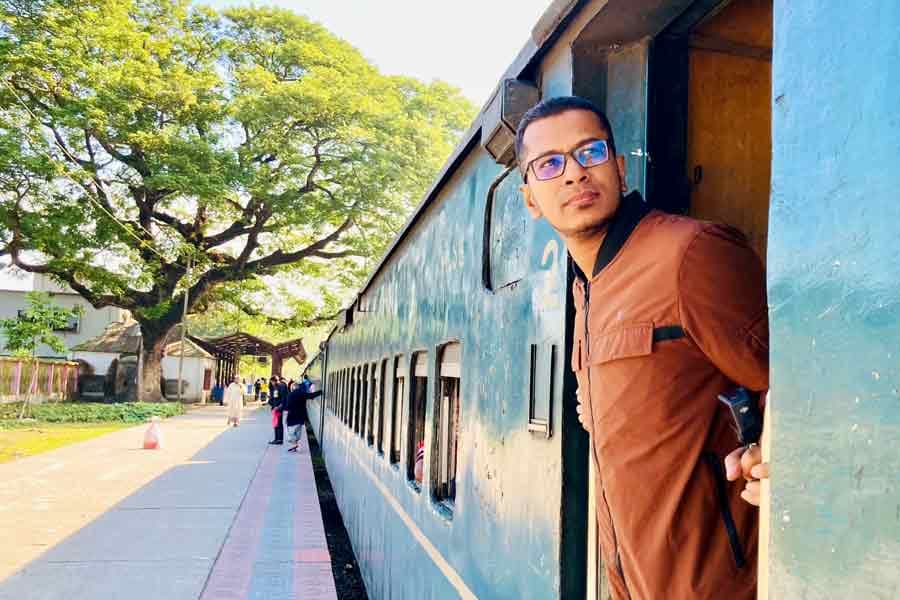
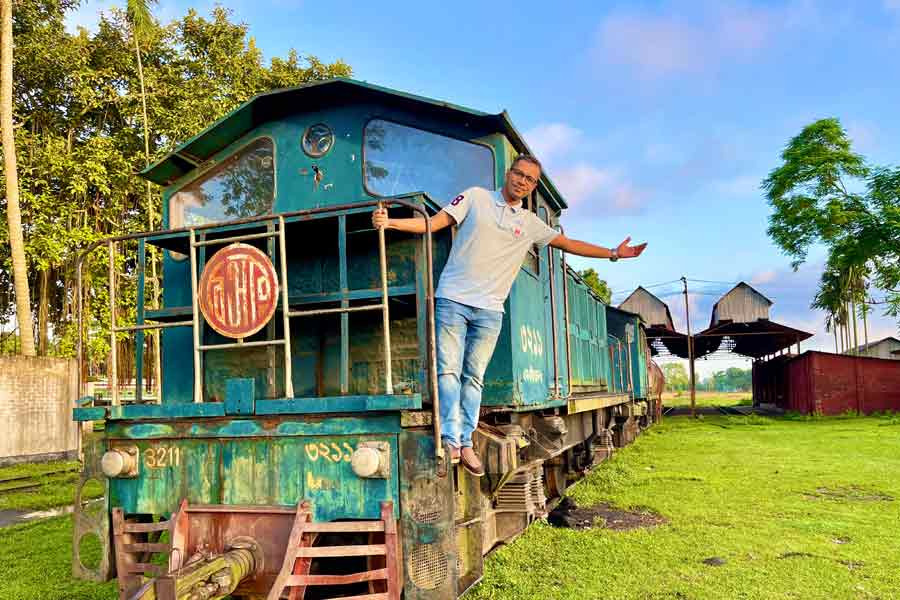
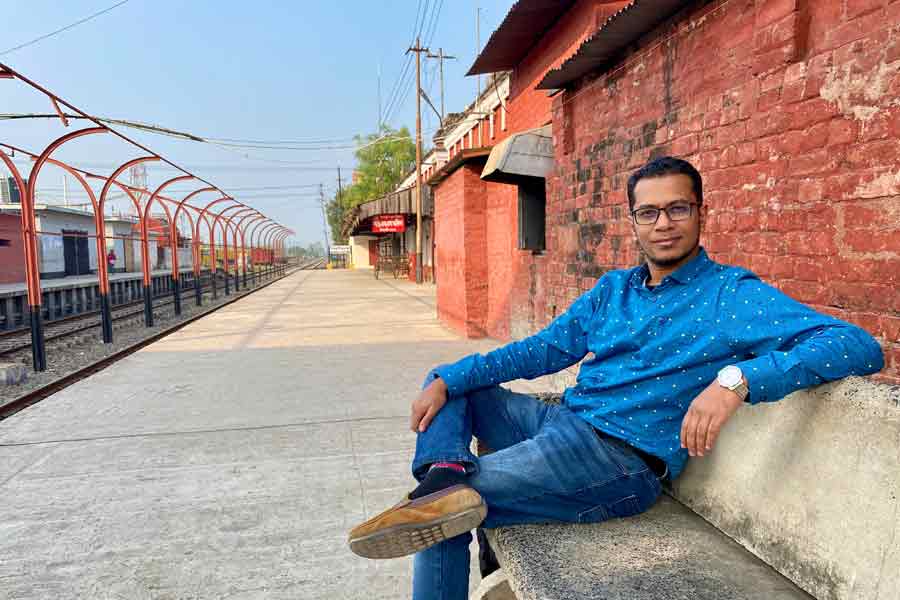
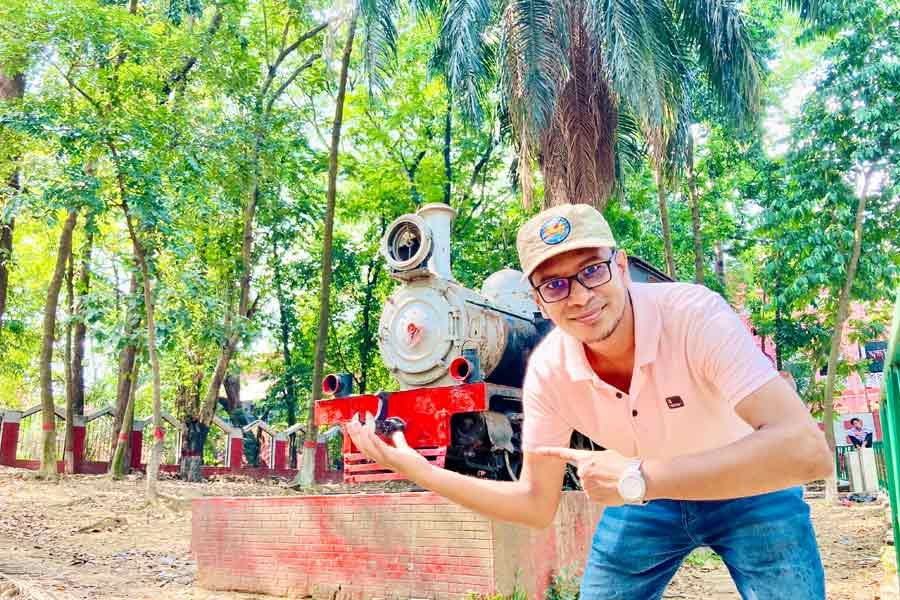
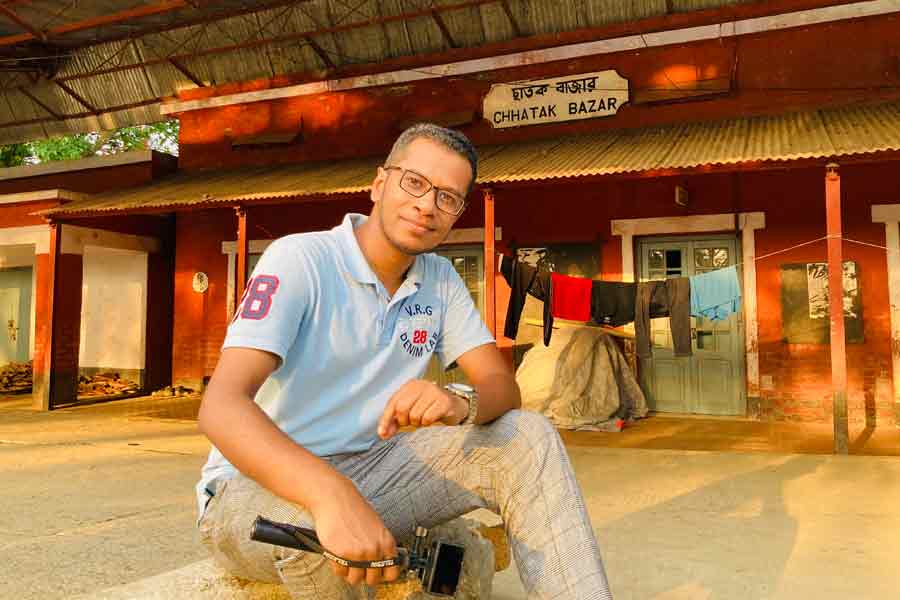
Md Asif Imtyage is a traveller and vlogger, with a deep passion for train travel. He has extensively travelled by train not only in Bangladesh but also India, Sri Lanka, and China. He shares his journeys on his YouTube channel named Lets Go To, which has more than 27,000 subscribers.
His videos stand out for their rich storytelling, blending the historical context of the routes with descriptions of the passing landscapes, landmarks, and life on board. With his spontaneous presence in front of the camera, he draws the audience in. In an extended interview with The Financial Express (FE), he talks about how vloggers like him are playing a role in popularising train travel, how trains can bridge the gap between social classes by running on schedule, and how Bangladesh can overhaul its railways to become a transit hub for regional trade.
FE: Tell us who you are, how you fell in love with trains, and how you began your train vlogging journey.
Asif: I am a traveller and vlogger. I finished my master’s in zoology from Government Titumir College in Dhaka. I have an IT business in Mirpur, overseeing the marketing section.
I was born in Dhaka. But after my birth, I lived for around eight years in Kushtia. Children often develop an interest in trains by playing with toy trains at home, and that also happened to me.
When I was three or four, my father bought me a battery-powered toy train, which I still have. I enjoyed attaching the track pieces to make one continuous line. The locomotive had a headlight, and I would sometimes keep it turned on without putting the engine on the tracks.
My father would put me on a motorbike and take me to the nearby railway station every day. A train would pass the station in the afternoon, and I would watch it. This would calm me down. While travelling by train with my parents, I would observe the landscapes. Even if my parents would try to get me to sleep, I would stay awake to enjoy the views.
When I was a fifth-grader at Rifles Public School and College (now renamed Birshreshtha Noor Mohammad Public College) in Dhaka, I had geography as a subject. I would look at the map of Bangladesh in the book and notice the railway routes marked on it. The map sparked my interest in travelling. Guided by my teachers, I also learned to draw the map of Bangladesh. The drawing was not flawless, but it was fairly good.
I started taking pictures with a film camera in 2007-08. Then came digital cameras, which I used to snap photos during my travels and occasionally shoot videos. Back then, there was no platform to share pictures and videos online. So I would preserve those on my hard disk, CDs, and DVDs.
There was a travel page named Onno Konokhane in Naksha, a supplement of Prothom Alo. Between 2008 and 2010, they would publish my travel stories with pictures. I also wrote travelogues for Kaler Kantho, especially about my 2010 visit to India. My pleasure was seeing my photos published in the mainstream media. I also participated in photo exhibitions.
In 2016-17, I started shooting videos. I was doing this in full swing in 2018-19 and also uploading the videos on YouTube. I made vlogs on using trains to travel from Dhaka to Murshidabad in 2019.
FE: It is sometimes said that trains are for low-income people. What is your opinion?
Asif: This is not true. There are options both for the poor and the well-off. For instance, we have four non-stop trains running between Dhaka and Chattogram - Subarna Express, Sonar Bangla Express, Cox’s Bazar Express, and Parjatak Express. Their fares are a bit higher than the other intercity trains serving this route. You can say these trains are for high-income people.
On the other hand, we have much cheaper options on this line, such as Karnaphuli Commuter and Chattogram Mail. However, their travel time is much longer. Low-income people, who often have to prioritise affordability, mostly travel by these trains.
Based on my travels in several countries, including India and Sri Lanka, I would say trains actually reduce the gap between the poor and the rich. Unlike Bangladesh, local trains mostly run on schedule in those countries, which is why people of various echelons of their societies take those. If we can ensure that Bangladeshi trains maintain schedules, they could also bridge the gap between social classes, while poor people will realise the value of time as well.
FE: What is the importance of railways to you?
Asif: Think about Singapore. With very little agricultural production, it is almost entirely dependent on food imports. Yet, it is a major global business hub.
In contrast, Bangladesh’s agricultural production volume is large. If we want to utilise our railways to become an intermediate trade hub for other countries, we need significantly faster transportation services like high-speed trains, also known as bullet trains.
But for that to happen, the associated services and infrastructure need to be improved at the same time as well. If we launch bullet trains on the Dhaka-Chattogram route now and charge premium fares, the passenger response would be very poor. In the context of the present situation, passengers do not need to spend a lot of money on super-fast travel.
I have travelled by high-speed trains in China. They are expensive. Yet, the Chinese people take these trains because cutting travel time translates into economic benefits. We have to create the same reality in Bangladesh.
To become a transit hub for other countries, we need better diplomacy. Then we need to sign agreements with those nations. To ink such deals, we have no alternative but to massively upgrade our railways.
Introducing advanced rail services can also give regional tourism a big boost. For instance, the territory of Myanmar lies between Cox’s Bazar and China’s Yunnan province. I have visited Yunnan, which topographically resembles Bandarban.
If Yunnan can be connected to Cox’s Bazar by railway via Myanmar, it will widen tourism opportunities for Bangladeshis to a great degree. We have a limited number of tourist destinations in our country. But China is such a huge country and there are so many places to visit that you will need decades to travel around it.
FE: Is there any route in Bangladesh that you have not travelled yet but want to?
Asif: The Bheramara-Damukdia route, where train tracks no longer exist. Rabindranath Tagore also wrote about his memories of the route. In Chhinnapatra, he mentioned Sara Ghat (Paksey), which is on the opposite bank of the Padma River in Damukdia (Bheramara).
When I was a child, I travelled by the train that used to run on this route. I remember it like a dream. I was in my mother’s lap, returning from my grandmother’s place. The tracks were later removed, and roads were built there. But the land still belongs to the railway.
There are other defunct routes and stations that I love, such as Bharatkhali in Gaibandha and Bahadurabad Ghat in Jamalpur. I have been to Bahadurabad Ghat several times, and my audience loved the video that I made there. The Teesta Express used to go up to Bahadurabad Ghat, but Dewanganj Bazar later became its terminus.
Bahadurabad Ghat did not disappear under water like Chilmari in Kurigram, but train services have been discontinued. Even the tracks are still there, but they are no longer functional due to a lack of repairs. If the authorities want, they can resume services on this route.
Around 2021-22, I met the deputy railway secretary at Rail Bhaban in Dhaka. That was quite a long meeting, where I discussed some plans, including reopening several closed lines, introducing heritage trains, and making train travel a more delightful experience for passengers.
He asked me to present the plans in the form of a document. I did that later and submitted 12-15 plans. I also explained how implementing the plans would benefit the railway. However, those were not finally implemented. Implementing such plans involves many hurdles that cannot be overcome easily.
FE: If Bangladesh Railway gives you a free ticket for life, where will you travel first?
Asif: Cox’s Bazar. This is a place that will never bore you. Every time you go there, it feels new and you will discover it in a novel way.
FE: Do trains influence people’s imagination more than other modes of transport?
Asif: Of course. Think about local trains. I have taken such trains, including Ramna local and Burimari commuter, on early winter mornings. You may see farmers wrapped in warm clothes and carrying spades running towards the train that has already started rolling. But the guard stops the train when he sees the farmers, and the journey resumes when they get on.
Why was the train stopped? Because it was supposed to serve the farmers. What benefit would a local train provide if it does not serve these farmers?
Then at the next station, you may see a livestock trader getting on board, clutching two goats in his arms. The goats are bleating, and the trader is taking them to the local marketplace for sale.
When you observe the unfolding of such scenes of people’s daily lives, along with the diverse landscapes outside, they will definitely influence your thoughts. Nature, humans, land - everything you see on a train trip will fuel your imagination. They will also help you understand the reality and connect better with people.
FE: What was your most horrible train ride in Bangladesh?
Asif: Mahanagar Express, which I took to travel to Chattogram from Dhaka in 2025. The train was extremely overcrowded. Many passengers, especially the straphangers, travelled without tickets.
Passengers even travelled on the roof, which is a punishable offence. I had a serious altercation with the travelling ticket examiner (TTE) about why no action should be taken against the ticketless passengers.
FE: How do passengers react when you shoot videos on the train?
Asif: I have faced many awkward situations, especially when I started out. Passengers sometimes gesture towards me or whisper among themselves. When this happens, I usually walk up to them, aim the camera at them, and ask them if they want to say something. Then it becomes normal.
In the initial days of vlogging, I remember people asking me what exactly I was shooting. I could not give them a satisfactory reply. Moreover, railway employees and police would object, asking me whether I had taken permission for shooting videos and where I would post them. I had to convince them in various ways to allow me to shoot.
The number of train vloggers increased especially after the Covid-19 pandemic. This made the railway staff more familiar with shooting travel videos. Nowadays, they do not interrogate vloggers that much.
FE: What is the most scenic train route in Bangladesh?
Asif: Rajshahi-Amnura, Burimari-Lalmonirhat, Dohazari-Cox’s Bazar, Akhaura-Chattogram, and Kulaura-Fenchuganj routes are visually charming.
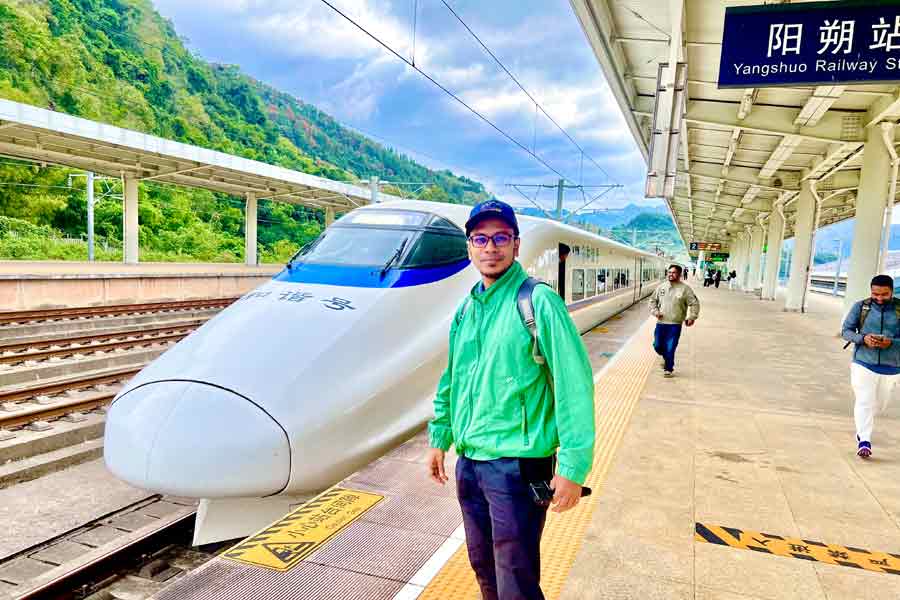
FE: Which one is your favourite railway station?
Asif: Paksey. I have a picture from 1912 when the Hardinge Bridge was not yet built. I collected it and several other pictures from the archive of the Cambridge University library.
There are pictures that show the station’s tin sheets and the waves in them. Those waves are still there. The feeling I get at Paksey station is unmatched.
FE: How are vloggers like you playing a role in popularising train travel in Bangladesh?
Asif: Let me give you an example. I never told my friends about making train travel videos. But many old friends phoned me after watching my videos. They asked me various questions, including how they could travel to these places.
Watching a train vlog is not just about watching a travel video; it also gives the audience information about many other subjects. For instance, after watching one of my 2023 videos about drinking date palm juice in winter, many told me they did not know date palm jaggery was made this way or that it had such a yellow tone.
One of my objectives of making travel videos is to spread truth among the audience. I want them to learn something from my content.
FE: Imagine a situation where all types of railway services have been withdrawn in Bangladesh. What will we lose as a nation then?
Asif: The communication system will face large-scale disruptions if there are no trains. Particularly, freight transport will be hit the hardest, and the consequences will be really bad. The railway is an easy option for transporting goods in bulk. Besides, the railway earns more from goods trains than passenger services.
On the other hand, it will be a serious blow to the low-income population. They depend a lot on local trains, especially in northern Bangladesh. For example, they can travel by a local train from Parbatipur to Kaunia for as low as Tk 15. But travelling the same distance by bus or other forms of transport will cost them a lot more and the duration of the journey will also be longer.
If you shut down railways and massively expand road communication to make up for that, you still cannot reduce travel expenses. Trains are much cheaper than buses.
FE: What are your thoughts on content made by other train vloggers?
Asif: For around two years, between 2022 and 2024, I could not actively make videos due to my ailing father’s treatment. In this period, many travel vloggers became popular. There are many train vloggers now, but the volume of creative production is still low.
Schoolchildren are among the main viewers of train videos. They love watching trains, locomotives, passengers travelling on the roof, etc. The audience for creative work in this segment is quite small. As vloggers tend to prioritise view count, they shoot scenes that have the potential to generate the maximum number of views instead of making something creative.
A BBC documentary on the Maitree Express is so far the best train travel production involving Bangladesh Railway that I have watched. It tells you a story, mentioning events as far back as the 1947 partition and how it severed many railway connections between India and then East Pakistan. It is like a movie that touches your emotions.
I also tell stories in my videos and try to include exclusive elements in them. In a video, I showed a picture of Sara Ghat. I think even Bangladesh Railway does not have pictures of the ghat.
I have plans to make documentaries on the life of locomotive masters. I did a film directing course at the National Institute of Mass Communication under the Ministry of Information and Broadcasting. I want to apply the skills that I learned in the course.
However, I do not know to what extent I can do that. Filmmaking is a very complex task. You have to face different types of obstacles. Besides, you need money.
FE: You travel extensively. How do you juggle your professional life with travel?
Asif: Regardless of your profession, you need the desire to travel. Time is not a problem. An employee has weekends, Eid holidays, and annual vacation. He can easily go on at least two weekend trips in a month. During the annual vacation, he can even travel outside Bangladesh.
As for expenses, I will say you get money for travelling the same way you pay for cigarettes. Even beggars find ways to buy cigarettes. Travelling is like an addiction. If you get addicted to it, the money can be arranged.
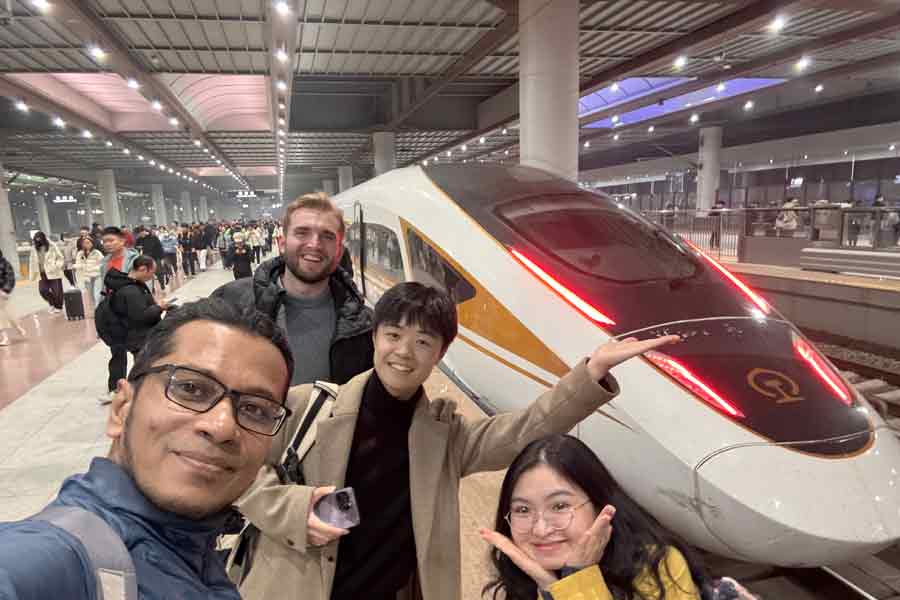
FE: Where did you enjoy train travel the most outside Bangladesh?
Asif: Sri Lanka, and to some extent, China. There are high-speed trains in China, but these journeys are not enjoyable because you cannot see anything properly. A train running at 40-50 kilometres per hour offers a ride that I can feel. China has some low-speed trains, which I enjoy.
On the other hand, Sri Lankan trains offer highly pleasant journeys. This country has tracks by the sea and through forests, hills, and tea gardens. The landscapes on every route are very scenic.
The ending of my 2025 recap video shows the Sri Lankan train that runs along the sea. If you ride this train, you can see the waves lapping the shore and the water occasionally splashing against the train.
Tourists from various countries visit Sri Lanka to have these experiences. But they come to Bangladesh to ride the locomotive, which is not possible in Sri Lanka.
r2000.gp@gmail.com