Muhammad Mahmood’s article, “Global Economy in 2026,” (FE, P-4 July 26, 2026) is both timely and important. The global economy is unquestionably under severe stress. War in the Middle East, renewed pressure on energy prices, geopolitical fragmentation, high public debt, climate-re
One of the more intriguing facts in modern economics is that the value of the United States (US) stock market substantially exceeds the country's annual Gross Domestic Product (GDP), while in many other nations' stock market capitalisations and GDPs are roughly equal. At first glance, this appears
Journalism is not fundamentally about possessing a formal journalism degree; it is about acquiring the intellectual capacity to interpret reality responsibly. Just as one does not need a degree in political science to become a politician, one does not necessarily need a degree in journalism to beco
Following the discussion on the architecture of newspaper influence (The Financial Express, May 22, 2026), an equally important question emerges: who produces the analytical journalism capable of generating such influence in the first place? If newspapers constitute part of a society’s cognit
A thoughtful reader of my recent article (April 7, 2026, P-4, FE) raised a pertinent question: Is "geopoliticonomy" meant to be a formal model, or is it simply a descriptive expression? The question is important-not because it challenges the validity of the term, but because it exposes a deeper iss
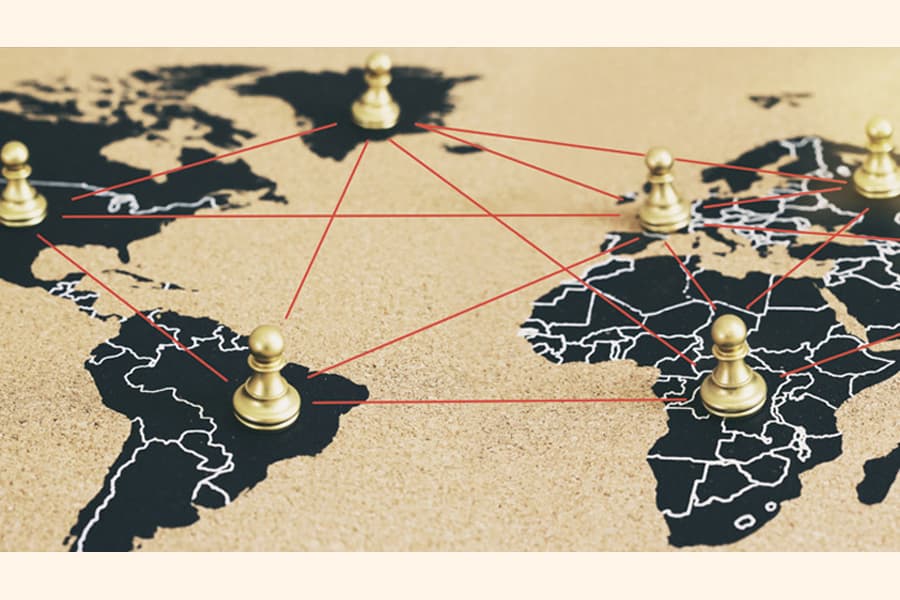
The vocabulary we use to describe global affairs shapes how we understand them. For decades, geopolitics has served as the dominant lens—focusing on territory, alliances, and military power. Yet in today’s world, that term is no longer sufficient; it cannot fully capture the deep and ac
Public debate often reveals insights that formal policy discussions overlook. Occasionally a thoughtful reader’s question captures the essence of a national economic problem more sharply than lengthy technical policy reports. Such was the case when I received the following email in response t
For monetary policymakers, a Ph.D. in economics-by itself-is not enough; in fact, a formal degree in economics is not even the decisive criterion. The issue is not the title but the mastery of the craft. The current Federal Reserve Chair, Jerome Powell, is not an academic economist in the tradition