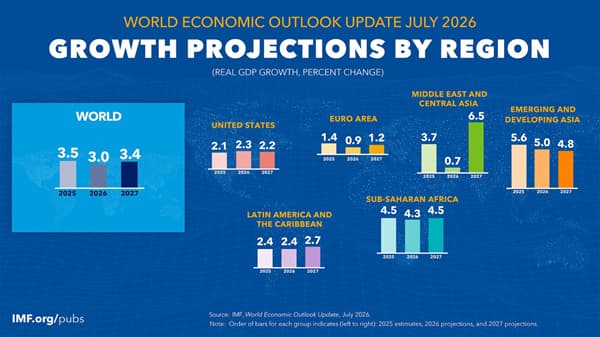
This article argues that the global economy in 2026 is not facing a single crisis, but a convergence of slower growth, persistent inflation, debt pressure, geopolitical fragmentation, technological disruption, and climate-related shocks. Together, these forces are testing the resilience of governme
The United States marked its semiquincentennial on July 4, 2026, exactly 250 years after the adoption of the Declaration of Independence in 1776. Before independence, Britain controlled more than 20 colonies in North America, stretching from present-day Canada to the Caribbean.
On June 11, 2026, the finance minister presented Bangladesh's FY2026-27 national budget, a record BDT 9.38 trillion, or about USD 77 billion. The expansionary budget targets 6.5 per cent GDP growth, aims to reduce inflation to 7.5 per cent, and supports the country's ambition to become a trillion-d
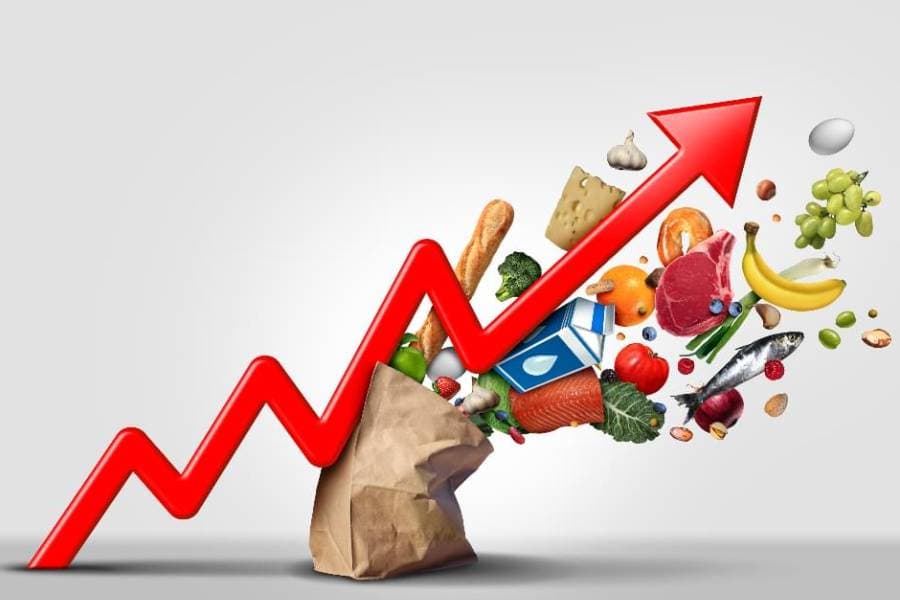
Bangladesh’s point-to-point inflation rose to 9.42 per cent in May 2026 from 9.04 per cent in April and 8.71 per cent in March, driven by higher prices for food, housing, and transport. According to the Bangladesh Bureau of Statistics (BBS), the increase was mainly due to rising global energy
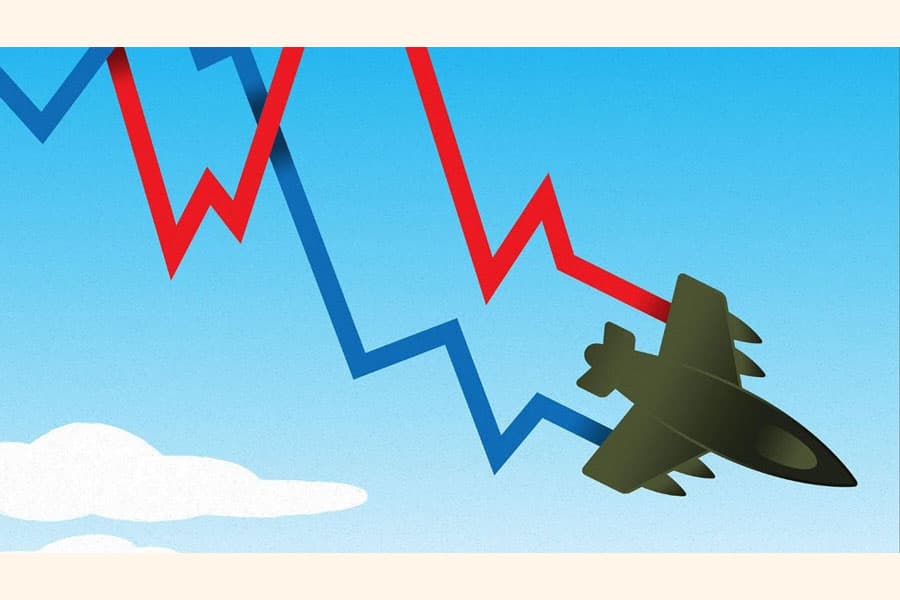
The 2026 war with Iran has triggered a global energy shock, disrupted international trade, and increased the risk of a broad recession. Now inflation rates are surging, interest rates are rising and growth is faltering. Sparked by joint U.S. and Israeli strikes on Iranian infrastructure, the confli
When Bangladesh Prime Minister Sheikh Hasina fled to India in the face of a mass uprising on August 5, 2024, the country was not simply between governments, it was in a freefall. An interim government was formed under the leadership of Nobel Laureate Dr Mohammad Yunus to stabilise the political and
At Davos 2026, global leaders, policymakers, and business executives were grappling with how to counter a potential Trumpian trade order defined by protectionism, tariffs, and economic nationalism. With fears of renewed trade wars and disrupted supply chains, discussions at the World Economic Forum
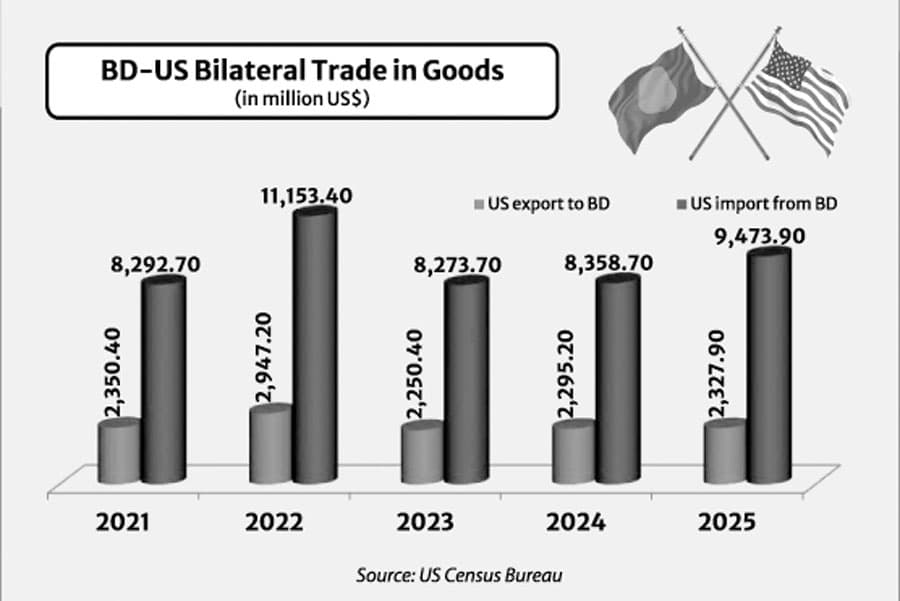
The United States is Bangladesh's largest export market and a major source of foreign direct investment, with bilateral relations focusing heavily on garment trade, energy, and development. A 2026 trade agreement is reducing U.S. tariffs on Bangladeshi goods to 19 per cent, with special provisions