
FE Report
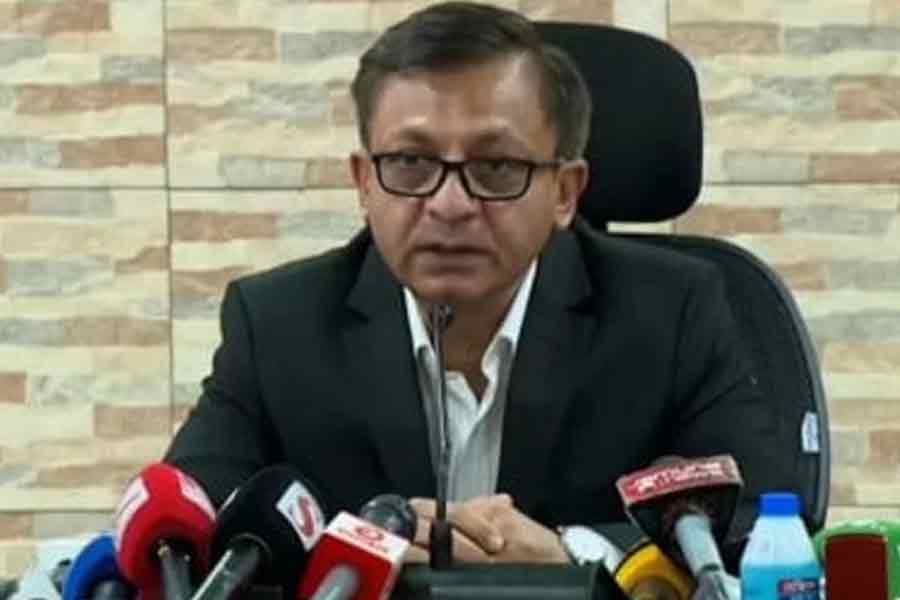
Bangladesh could face risks to exports worth approximately $17.5 billion after graduating from the Least Developed Country (LDC) category due to the loss of preferential market access in developed economies, Commerce Minister Khandaker Abdul Muqtadir told Parliament on Monday.
Responding to a question from Chattogram-11 lawmaker Jasim Uddin Ahmed during the second day of the second and first budget session of the 13th Jatiya Sangsad, the minister said the government had already undertaken a series of trade and market diversification initiatives to address the challenges arising from Bangladesh’s transition to developing-country status.
“Bangladesh will soon graduate from the LDC category. As a result, the country will lose the preferential market facilities currently available under various trade arrangements with developed economies, which could negatively affect exports worth around $17.5 billion,” he said.
To mitigate the impact, Muqtadir said Bangladesh had already concluded an Economic Partnership Agreement (EPA) with Japan and was currently negotiating a Comprehensive Economic Partnership Agreement (CEPA) with South Korea.
He added that the government had also initiated efforts to sign EPAs, CEPAs or Free Trade Agreements (FTAs) with the European Union, the Regional Comprehensive Economic Partnership (RCEP), the United Arab Emirates, Singapore, Indonesia, China and other promising export destinations.
The minister attributed the country’s growing trade deficit partly to policy failures of the previous government and partly to adverse global economic conditions, including the energy crisis, the Russia-Ukraine war, rising commodity prices, dollar shortages and uncertainties in international markets.
He said higher import costs for fuel, food and industrial raw materials, coupled with slower export growth, had significantly contributed to widening trade imbalances.
According to the minister, Bangladesh’s trade deficit increased to $24.16 billion in fiscal year 2024-25 from $21.50 billion in the previous fiscal year. During the period, the country’s export earnings stood at $55.19 billion, while imports amounted to $79.35 billion.
“Although Bangladesh exported goods to 202 countries and territories during FY2024-25, around 84 per cent of total export earnings came from the ready-made garments sector,” he told lawmakers.
To reduce dependence on a single sector, the government has extended facilities similar to those enjoyed by the apparel industry to several promising export-oriented sectors.
The minister said exporters in eight priority sectors — leather and leather goods, jute and jute products, agricultural products, pharmaceuticals, ICT and software services, light engineering products, frozen foods and fish, and plastic products — have been granted bonded warehouse facilities against bank guarantees.
He added that the government was supporting entrepreneurs in these sectors through the Business Promotion Council and had formulated the Export Policy 2024-2027 to strengthen Bangladesh’s position in global trade through sustainable export growth.
Muqtadir said Bangladesh was continuing efforts under various bilateral trade and investment arrangements with Australia, the United Kingdom, Vietnam, Thailand, Uzbekistan, Belarus and Canada to expand market access and remove trade barriers.
He also noted that trade missions comprising government and private-sector representatives were exploring new export markets in Latin America, Africa and member states of the Commonwealth of Independent States (CIS).
Other measures include strengthening economic diplomacy through Bangladesh missions abroad, providing foreign currency loans from the Export Development Fund for importing raw materials, and creating a Tk 50 billion low-interest pre-shipment credit fund for export-oriented industries through Bangladesh Bank.
To promote export diversification, employment generation and women’s economic empowerment, the government has declared paper and packaging products as the “Product of the Year 2026,” the minister said.
Responding to a separate question from Bagerhat-4 MP Abdul Alim, the commerce minister highlighted Bangladesh’s efforts to strengthen trade relations with South Asian countries.
He noted that Bangladesh and Bhutan signed a Preferential Trade Agreement (PTA) in December 2020, under which 100 Bangladeshi products and 34 Bhutanese products enjoy duty-free market access. Negotiations for PTAs with Nepal and Sri Lanka are progressing, while preparations are underway for the next round of discussions on the proposed CEPA with India.
“Following LDC graduation, Bangladesh is prioritising bilateral, regional and multilateral trade agreements with key economic blocs and countries across Asia, Europe, Africa and the Middle East to enhance export competitiveness and attract investment,” he said.
In response to separate questions from reserved-seat MP Selina Sultana and a lawmaker from Chattogram-13, the minister said Bangladesh continues to face trade deficits with several SAARC member countries, including India, Afghanistan, Bhutan, Nepal, Sri Lanka and the Maldives.
He informed Parliament that Bangladesh’s trade deficit with India stood at $7.86 billion in FY2024-25, the highest among SAARC countries. The country also recorded trade deficits with Afghanistan, Bhutan and Sri Lanka during the same period.
mirmostafiz@yahoo.com