


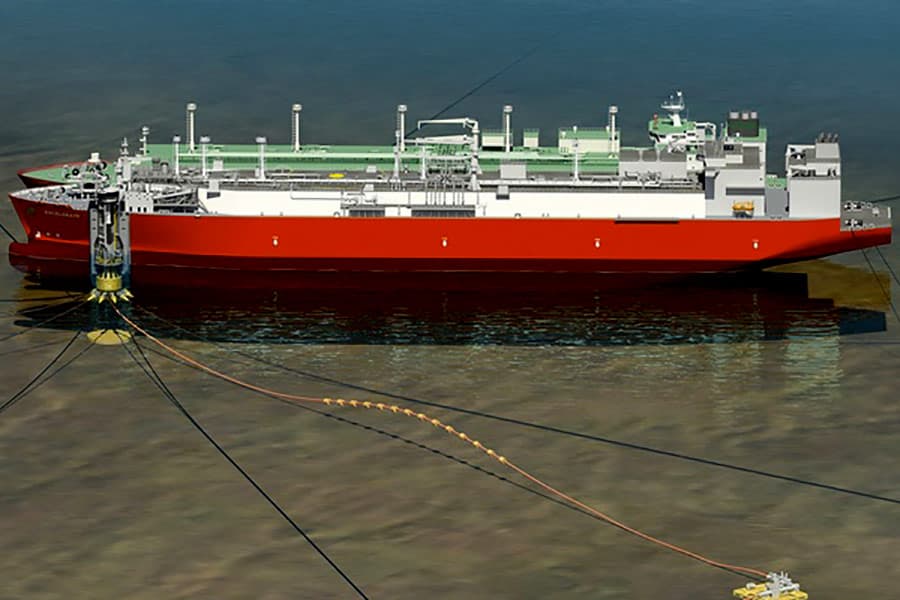
The government is trying to initiate partial operations of the damaged floating storage and regasification unit (FSRU) at Moheshkhali within one week, as foreign experts from the UK and Singapore have started work.


“If one boiler, out of a total of two in the FSRU, resumes operation, some 300 million cubic feet per day (mmcfd) of re-gasified liquefied natural gas (LNG) could be supplied from the damaged FSRU, owned by the US’s Excelerate Energy,” a senior official of state-run Petrobangla told The Financial Express on Sunday.
He said full-scale operation of the FSRU might be resumed within the next couple of weeks.
The country’s overall natural gas supply fell to around 2,151 mmcfd on Saturday from the pre-accident time of 2,640 mmcfd due to the closure of the FSRU after the accident on Tuesday.
Gas-fired power plants are the worst hit as electricity generation of around 2,000 MW is being affected due to the disruption in operations of the FSRU.
The gas-fired power plants are currently getting around 700 mmcfd of gas against the aggregated demand of 2,524 mmcfd of gas.
Foreign experts have assessed the extent of the accident and damage to the FSRU and informed the Energy and Mineral Resources Division (EMRD) under the Ministry of Power, Energy and Mineral Resources (MPEMR) of the updates on Sunday, said the Petrobangla official.
He said US's Excelerate Energy brought in foreign experts to repair the damaged FSRU a couple of days after Tuesday’s accident, which originated from an electric short-circuit resulting in a fire incident.
The shutdown has already cut gas supply to the national grid, significantly reducing gas pressure in many areas, disrupting industrial production, and squeezing generations in gas-fired power plants.
Long queues of vehicles in front of CNG (compressed natural gas) filling stations across the country are a regular consequence.
Consumers said the disruption intensified gas shortages in Dhaka and other parts of Bangladesh, where many households have been left with little or no gas for cooking for much of the day.
In some areas, supplies have stopped altogether, while factories in key industrial zones have reportedly been forced to reduce production because of low gas pressure.
azizjst@yahoo.com