


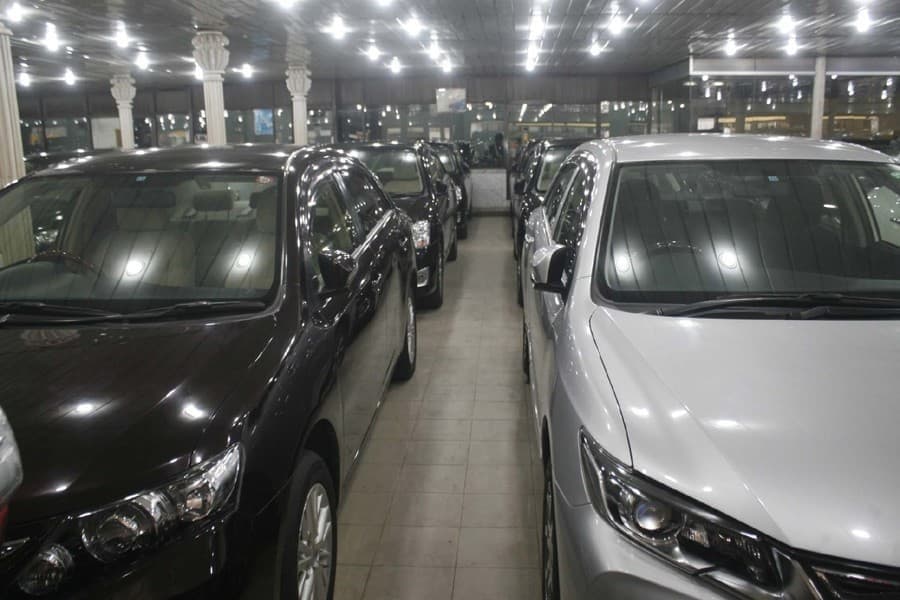
Imports of reconditioned vehicles fell by 6.42 percent in the fiscal year (FY) 2025-2026 from the previous fiscal year, with industry leaders attributing the decline to political uncertainty following the August 5, 2024 political changeover, inadequate policy support and prolonged economic sluggishness.
A total of 19,968 reconditioned vehicles, mainly from Japan, were imported during FY26, down from 21,337 in FY25, according to data provided by the Bangladesh Reconditioned Vehicles Importers and Dealers Association (BARVIDA).
It said that the declining trend is not a usual phenomenon, warning that it has adversely affected the country's local market and deprived the government of earning revenues.
Talking to the Financial Express on Monday, President of BARVIDA Abdul Haque blamed the current situation mainly on abrupt political changeover, siphoning of money abroad by a section of people during the previous Awami League government and a drastic fall in the purchasing power of middle-income households.
"Political and economic stability is important. The government should address the problem and laundered money should be brought back to the country from abroad," he said.
He deplored the fact that only 9,400 reconditioned vehicles were registered during the 2025 calendar year, compared with around three times that number in 2024.
Mr Haque, who is also the Honorary Consul of the Republic of Djibouti, said demand for reconditioned vehicles would recover if the economy stabilises and growth accelerates.
Earlier on April 1, Prime Minister Tarique Rahman informed Jatiya Sangsad that an estimated US$234 billion was siphoned off from Bangladesh during the tenure of the previous fascist government.
According to the White Paper Preparation Committee formed by the previous interim government led by Dr Muhammad Yunus, the volume of illicit financial outflows from Bangladesh between 2009 and 2023 is estimated at US$234 billion, which averages US$16 billion annually.
BARVIDA also called for a rational long-term tax structure and the removal of customs valuation disparities aiming to boost the country's reconditioned vehicles market.
It argued that although the government is encouraging electric vehicle imports through tax incentives, Bangladesh still lacks adequate charging infrastructure.
Hybrid vehicles, on the other hand, already have an established servicing and maintenance network, making them a more practical option for promoting cleaner transport in the near term.
The association said the reconditioned vehicle sector has attracted around Tk 20 billion (Tk 2,000 crore) in local investment, contributes about Tk 60 billion (Tk 6,000 crore) in annual government revenue and supports several millions jobs directly and indirectly.
talhabinhabib@yahoo.com