
The tax-free income ceiling for individual taxpayers is set to remain unchanged in the 2026-27 fiscal year, despite rising inflation and global economic pressures.
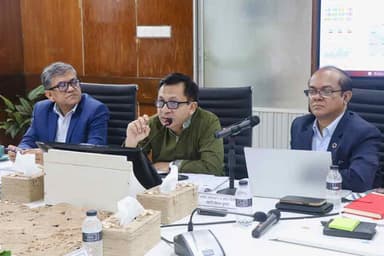
The decision came during an eight-hour strategic meeting at the Secretariat on Thursday, where Prime Minister Tarique Rahman reviewed the National Revenue Board's (NBR) proposals.
Finance Minister Amir Khosru Mahmud Chowdhury and NBR Chairman Md Abdur Rahman Khan were also present.
The move marks a continuation of the policy set by the previous interim government, a stance the newly elected BNP administration has decided to uphold to ensure state what it said "ownership" among citizens.
A significant shift in revenue strategy is the introduction of “Package VAT” at the Upazila level.
The premier approved the initiative, emphasising that every citizen -- from the poor to the wealthy -- should contribute to the state.
"The prime minister’s philosophy is that everyone who loves the country should pay taxes. Even if it is Tk 5 or Tk 500 a year, it gives them a sense of ownership of the state," an official said.
Under this plan, small traders in rural areas may pay a monthly VAT ranging from Tk 500 to Tk 1,000.
Additionally, VAT registration will become mandatory for business bank transactions, which will be facilitated through an online system.
Tarique rejected several proposals from the NBR that could have increased the cost of living.
The threshold for imposing excise duty on bank balances or loans will instead be raised from Tk 300,000 to Tk 500,000.
The government also turned down an NBR proposal to increase VAT on essential supplies from 1 per cent to 2 per cent.
In addition, a proposal to impose a flat 15 per cent VAT on different goods was rejected, with the prime minister arguing that regardless of any “rebates”, the ultimate burden would still fall on consumers.
"The motto is clear: make people's lives easier," an official said, noting that Tarique directed the NBR to ignore IMF pressure for revenue hikes and focus instead on trade facilitation and investment.
For the first time, battery-run autorickshaws and motorcycles will be brought under advance income tax (AIT), although at rates lower than those initially proposed by the NBR.
Under the new structure, motorcycles with engine capacities between 111cc and 125cc will pay Tk 1,000 annually, while those between 126cc and 165cc will pay Tk 3,000.
Motorcycles with engine capacities above 165cc will be subject to an annual AIT of Tk 5,000.
The NBR has also proposed a “wealth tax” for individuals with assets exceeding Tk 40 million, calculated based on the market value of those assets.
The proposed tax would range from 0.5 per cent to 2 per cent, although it would not exceed the taxpayer’s total payable income tax.