


Bangladesh’s decision to participate in a Saudi Arabia-led multinational maritime defence alliance is driven primarily by economic necessity rather than geopolitical realignment, according to foreign policy analysts, who argue that the country’s participation is largely symbolic and aimed at safeguarding critical trade routes through the Red Sea.
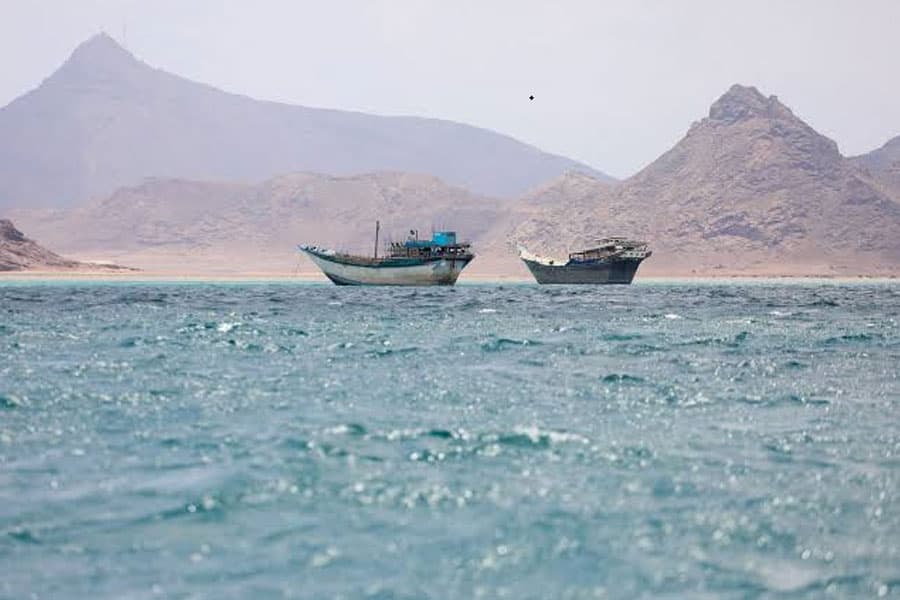
The alliance, comprising 14 countries including Saudi Arabia, Egypt, Pakistan, Türkiye, Qatar and Bangladesh, has been formed to strengthen maritime security and protect freedom of navigation through the Bab al-Mandeb Strait, the Red Sea and the Gulf of Aden, waterways that have become increasingly vulnerable to attacks by Yemen’s Iran-backed Houthi movement.
The initiative comes amid renewed instability in the region following the collapse of the temporary ceasefire between the United States and Iran. Although the Strait of Hormuz remains open, shipping through the Red Sea has been severely affected by security threats, forcing many vessels to take longer and costlier routes around southern Africa.
Foreign relations experts say Bangladesh’s participation reflects growing concerns over the economic consequences of the disruptions rather than any intention to align itself with one side of the Middle East’s geopolitical rivalries.
“This is simply a message that Bangladesh is keen to ensure freedom of maritime navigation and protect its economic interests because these sea lanes are vital for our external trade,” former ambassador Humayun Kabir told The Financial Express.
He said the move carries little geopolitical significance, recalling that Bangladesh had also joined a Saudi-led coalition during the Yemen crisis without assuming an active military role.
“There is virtually no activity under that alliance now. I believe this is also a token move,” he said, adding that Bangladesh lacks the naval capability to undertake any significant operational role in the Red Sea.
Professor Imtiaz Ahmed of the Department of International Relations at the University of Dhaka said it was too early to assess the full implications of the decision. However, he viewed the move as largely symbolic, demonstrating Bangladesh’s willingness to stand with its partners in protecting international commerce.
At the same time, he cautioned that Dhaka should ensure its participation does not draw the country into the broader confrontation between the United States and Iran.
The alliance also includes Egypt, Pakistan, Jordan, Kuwait, Bahrain, Qatar, Yemen, Nigeria, Sudan, Djibouti and Somalia. Saudi Arabia announced the initiative after hosting a meeting of military chiefs and representatives of participating countries in Riyadh.
Parvez Zaman Abbasi, executive director of the Centre for Governance Studies, said Bangladesh’s overriding motivation was economic.
“Nearly 70 per cent of Bangladesh’s exports, particularly shipments to Europe and the eastern coast of the United States, pass through the Red Sea and the Suez Canal,” he said.
According to Mr Abbasi, shipping disruptions have sharply increased logistics costs. Fuel prices, vessel charter rates and labour expenses have all risen, while war-risk insurance premiums for ships using the Red Sea have increased by around three-and-a-half times.
Air freight has also become considerably more expensive, with transport costs rising from about US$0.50 per kilogram to almost US$2.50, making express cargo shipments significantly costlier.
Meanwhile, vessels avoiding the Red Sea are sailing around the Cape of Good Hope, extending voyages by 10 to 15 days and adding between 3,000 and 4,000 nautical miles. Cargo that previously reached European hub ports from Chattogram in 28 to 30 days now typically requires around 45 days.
The delays are particularly damaging for Bangladesh’s ready-made garment sector, where about 85 per cent of exports are tied to fast-fashion supply chains that depend on short delivery cycles.
Congestion at transshipment hubs such as Singapore and Colombo has also reduced container availability, adding further costs for exporters and importers.
Mr Abbasi said the consequences extend beyond trade to inflation, foreign exchange reserves and energy imports. More than 40 per cent of Bangladesh’s remittances originate from the Middle East, reinforcing the country’s interest in maintaining stability along regional shipping lanes.
He described Bangladesh’s participation as a defensive maritime security measure that would also allow the Bangladesh Navy to improve interoperability and operational coordination with partner countries.
However, he said Dhaka should continue monitoring whether participation in the alliance could create perceptions that it is aligning against Iran.
He noted that Pakistan is both a member of the alliance and an advocate of diplomatic engagement between Washington and Tehran, suggesting that membership should not automatically be interpreted as taking sides in the regional conflict.
For Bangladesh, analysts say, the overriding objective remains protecting the maritime routes that underpin one of the world’s largest export-oriented garment industries rather than altering its traditional foreign policy of maintaining balanced relations across the Middle East.