


President Donald Trump was determined to annul the major achievements of the previous administration. The Affordable Health Care Act (ACA) popularly known as Obama Care and the Iran Nuclear deal known as the JCPOA were on the top of his abrogation list. He could not abrogate the ACA due to legal constraints. Nonetheless, he defunded many of its essential components making it dysfunctional except in the states where the Democratic Party controlled the legislature and provided state funding to keep it floating. But in the states controlled by the Republican party, thousands of the beneficiaries lost coverage of the health insurance. Despite repeated assurances Trump could not put in place an alternative health insurance scheme for the low income population.
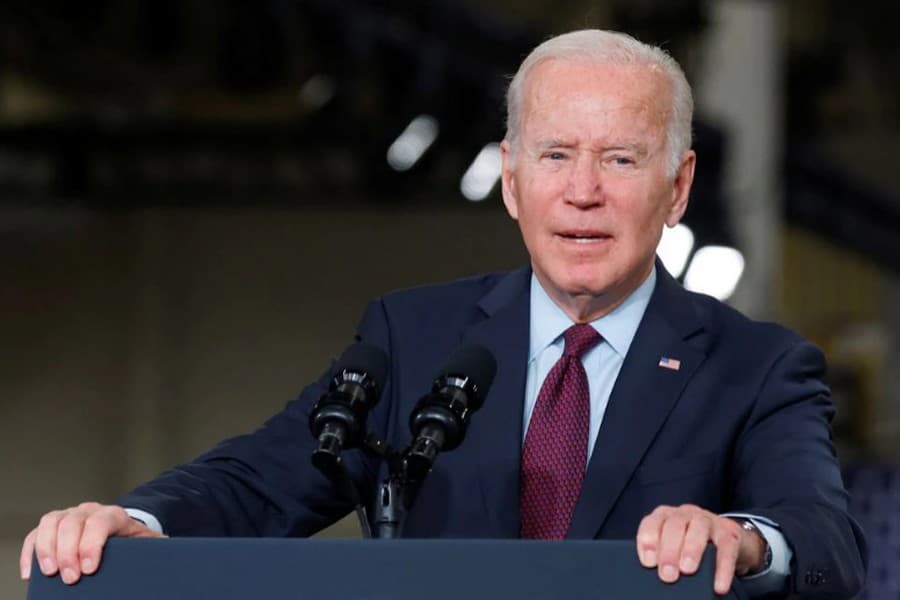
Trump abrogated the Joint Comprehensive Plan of Action in 2018 amid strong opposition of the European countries who were also involved in negotiating the agreement. Trump went further and imposed 1500 new sanctions against Iran making it difficult for the next administration to revive the agreement. Joe Biden announced to resurrect and rejoined the JCPOA soon after he took office. The other signatories of the agreement including the United Nations welcomed the resurrection of the agreement. Despite serious misgivings Iran hinted that it would reactivate the agreement but demanded safeguards against arbitrary actions of the United States in future. It also demanded repeal of the sanctions imposed by the Trump administration and sought release of Iranian assets held by the United States.
As the United States withdrew from the agreement and began imposing additional sanctions, the Iranian government concluded that it was no longer under obligation to limit the uranium enrichment. The European partners suggested that since they did not withdraw from the agreement and were not party to the new sanction, Iran should remain obligated to limit uranium enrichment. Iran argued that the embargo on sale of Iranian oil had made a profound impact on its economy and since the European partners could hardly respond to ease its economic hardships, they cannot expect Tehran to be adherent to the moribund nuclear deal. Tehran reiterated that its uranium enrichment program meant for research and power generations and denied having plan for making nuclear weapons.
In response to Washington's withdrawal from the JCPOA, Iran resumed producing more sophisticated centrifuges that enriched uranium to a level that has now reached to 60 per cent. This is close to the level required for producing bomb making material. Experts estimate that Iran's "breakout time" for possessing enough materials for making nuclear weapon has moved from about a year when Trump withdrew from the deal, to what may now be only a few weeks. This is precisely what the architects of the JCPOA wanted to avert- they wanted the "breakout time" longer. By abrogating the deal and imposing new sanctions, Trump has brought Tehran on the verge of making a nuclear weapon.
Though President Biden wanted to resume negotiation with Iran along with the European partners, Secretary of State Anthony Blinker could not assure the Iranian government that the sanctions would be lifted and Iran's frozen assets would be released. Tehran accused Washington of procrastination. After attending several sessions, newly elected Iranian government in April decided against resuming nuclear talks until the United States took tangible actions on easing the sanctions. The new regime in Tehran also sought guarantee that in future Washington will not pull out of the agreement. The State Department officials responded that they will not comply with the first condition and cannot agree to the second. If the US cannot comply with the lifting of sanctions, Iran sees no immediate dividend in carrying out the negotiation. It is understandable that the American officials cannot guarantee compliance of the agreement by future administration, but it does make Iranian government disenchanted on resuming dialogue with the United States.
By withdrawing from the Paris Climate Agreement, terminating the Trans Pacific Partnership, abrogating the Iran nuclear deal and suggesting equal sharing of the cost for the NATO, Trump had indeed dented the credibility of the United States. Though Biden had rejoined many of the international agreements and reiterated firm commitment to the NATO, the European leaderships could not take Biden's commitment for granted. They are concerned that in the event Biden is succeeded by a Republican administration in the near future, they might experience similar reversal of the US policy as unfolded during the Trump administration. Biden in his two visits to Europe ever since he became president, he assured the European leaders that the United States is back to the international community. But the European leaders remained unconvinced.
The weeklong meeting that began on November 29 in Vienna was held under a tense circumstance. IAEA Director General Rafael Grossi told member states that his recent discussions in Tehran had proved inconclusive and that he could not provide negotiators with up to date information about some aspects of Iran's nuclear activities. His report released on the following day confirmed that Iran is enriching uranium to 20 per cent purity using advanced centrifuges at the Fordow facility. Secretary of State Blinken said there is still time for Tehran to "reverse course" and engage in meaningful negotiations. He also said, "What Iran can't do is sustain the status-quo of building their nuclear program while dragging their feet on talks. That will not happen." Iranian Foreign Minister Hossein Amir-Abdollahian said the talks were "proceeding with seriousness, and sanctions removal as a fundamental priority."
The Vienna meeting has been adjourned on December 3, but both sides expressed optimism that they would resume talks next week. The gap between the two parties, however, remained wide. Iran demanded lifting of all sanctions-- old and new, and a commitment that the United States will not withdraw from the agreement again. In exchange, Iran agreed to limit uranium enrichment, accept international monitoring and verification as set by the agreement. The US agreed to consider lifting of those sanctions relevant to the nuclear deal but refused to address the sanctions linked to human rights violation, missile testing and support to terrorism which were not covered under the JCPOA accord.
There is no love lost between Washington and Tehran. The acrimonious relation between the two countries dates back to Islamic revolution that installed Ayatollah Khomeini in power in 1979. The marathon negotiation that led to the formulation of 2015 nuclear deal ushered in an era of cooperation. Iran's commitment to limit uranium enrichment and enabling the international verification of its nuclear sites in exchange of lifting trade and economic sanctions by the international community paved the way for confidence building. The EU countries resumed intense cooperation with Iran in upgrading the oil infrastructure, modernising Iranian aviation and development of economic zones. The lifting of sanctions enabled Iran access to cash and assets frozen in the United States.
The normalisation process suffered a setback with the treaty abrogated followed by series of new sanctions against Iran. The assassination of Iranian General Soleimani at Baghdad airport by US drone strike in January 2020 escalated the tension between the two countries. Apart from shooting some rockets targeting American embassy in Baghdad there was no retaliation by Iran. Zavad Jarrif, then Iranian Foreign Minister, told CNN "books have not been closed", implying that Iran reserved the right to take revenge of the assassination of Soleimani. In the past two years, six Iranian scientists involved in the nuclear programme were assassinated. Iran blamed Israel's complicity in the assassination spree. As the talks in Vienna began in April 2021, Iran's nuclear facility at Natanz was attacked. Iran pointed finger at Israel-American nexus behind the destruction of its nuclear facility.
In this backdrop, Iran would weigh all options before accepting a new deal. It was the United States, not Iran, who pulled out of the agreement. Iran can rightly denounce the United States for breach of contract and has the right to seek reparation for the damage resulted from abdicating the nuclear deal.
A senior US official said the United States is preparing for a world in which there is no return to Iran nuclear deal. He added "the date of resumption matters far less to us than if Iran is prepared to come back with a serious attitude." The official elaborated that if Iran doesn't return to the deal "of course we will have to use other tools that you could imagine increase pressure on Iran to come back to a reasonable stance at the diplomatic table."
Israel was opposed to entering nuclear deal with Iran. Its leader Netanyahu in an unprecedented move urged the United States Congress to reject the deal negotiated by Obama administration. Now Israeli government is urging Biden not to return to the deal.
Trump succeeded in expanding anti-Iran coalition deep in the Arab world. Morocco, Sudan, Oman and UAE have established diplomatic relation with Israel last year and joined Egypt and Saudi Arabia against nuclearising Iran.
Russia and China, also signatories of the nuclear deal, have their own priorities in the region. Both countries will have pivotal role in reviving the nuclear deal and promoting stability in the region. Time for talk is running out fast.
Abdur Rahman Chowdhury is a former official of the United Nations.
darahman.chowdhury@hotmail.com