



The triple planetary crisis refers to the major crises humanity currently faces on Earth—climate change, biodiversity loss, and pollution—that are intricately interconnected. With temperatures expected to rise by 2.1°C by the year 2050, the drivers of these three crises are also expected to intensify, propelled by population growth and economic expansion.
The UN has called for urgent action to address and combat these issues. Countries have been urged to limit global emissions by switching to cleaner, greener energy sources, protecting biodiversity from loss and extinction, and controlling pollution and environmental degradation through sustainable development practices.
Bangladesh has acted promptly to protect its Ecologically Critical Areas (ECAs), such as the Sundarbans and Saint Martin's Island. It has also shown climate adaptation leadership on the international stage. The country has drafted national legislation that complies with its legally binding international obligations. But this raises the question of whether this is enough to ensure sustainability, and what it means for countries like Bangladesh—especially when the nation's commitments are deeply rooted in maintaining global obligations such as the United Nations Framework Convention on Climate Change (UNFCCC), the United Nations Convention on Biological Diversity (UNCBD), and the Global Plastic Treaty.
Scientists have been warning of a planetary emergency for years, with the IPCC and organisations like the Club of Rome stressing the urgency of taking action to avoid irreversible tipping points. 'The Planetary Emergency Plan' gained significant traction in 2019, shortly after which the government of Bangladesh adopted a motion in parliament declaring a 'Planetary Emergency' to address the existential crisis posed by climate change, rising sea levels, biodiversity loss, and extreme weather events. Following this, Bangladesh adopted broader policy frameworks, such as the Bangladesh Climate Prosperity Plan 2022–2041 and the Bangladesh Delta Plan 2100, and updated its first Nationally Determined Contributions (NDCs) with an increased emissions-reduction target in 2022.
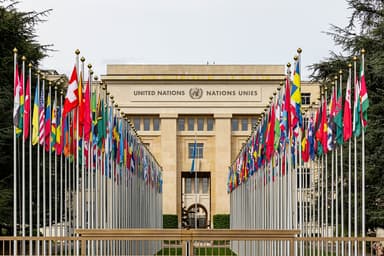
The Geneva Environment Network has been working on the issue alongside independent international and intergovernmental scientific bodies. Its member states, Bangladesh being one of them, have adopted global decisions that set agreed goals and targets alongside the Paris Agreement (2015), the Kunming-Montreal Global Biodiversity Framework (2022), and the Global Framework on Chemicals for a Planet Free of Harm from Chemicals and Waste (GFC) (2023).
Bangladesh has also been actively working to establish the Science-Policy Panel to further support the sound management of chemicals and waste and prevent pollution. A high-level delegation led by the Secretary to the Ministry of Environment, Forest and Climate Change (MoEFCC) attended UNEA-7, held in Nairobi, Kenya, in December 2025, where they emphasised that science-policy interfaces are not optional and that science-driven data is needed to confront the triple planetary crisis. The Bangladesh delegation also stressed the need for adequate financial support from developed economies. It highlighted the essential role of collective climate action in helping vulnerable nations tackle the impacts of climate change.
Aligning with global efforts to limit the Earth's average temperature rise to well below 2°C, Bangladesh further updated its Nationally Determined Contribution (NDC 3.0) in September 2025, with commitments that offer renewed hope for responding to the crisis at a national level. Despite contributing less than 0.5 per cent of global greenhouse gas emissions, Bangladesh has committed to an aggressive 26.46 per cent emission reduction in its energy sector, aiming to enhance resilience through a Just Energy Transition (JET). The plan outlines accelerating the shift to renewable energy by 2035, expanding transport electrification through Mass Rapid Transit (MRT) systems and low-cost electric vehicles, and implementing carbon-reduction policies in the waste sector to fall below business-as-usual (BAU) levels.
However, mapping out these systemic linkages on paper is vastly different from funding them. For a climate-vulnerable nation, transforming transit, energy, and waste infrastructure requires immense capital. Bangladesh's ambitious domestic goals cannot be achieved in a vacuum; they are fundamentally dependent on the international community fulfilling its financial pledges.
Internal roadblocks further complicate this financial hurdle. Bangladesh faces steep challenges in protecting its natural resources due to weak institutional coordination and governance practices, which allow undue exploitation and unsustainable development activities even in protected lands, forests, and coastal areas. Grassroots stakeholders consistently point to a stark lack of interdepartmental coordination among government agencies, which stalls the enforcement of environmental laws. Too often, influential violators exploit legal loopholes or leverage political and bureaucratic connections to walk free. When personal and political interests overshadow national and global ecological benefits, protection fails. Ensuring the rule of law, robust monitoring systems, and institutional synergy is critical to preventing mass biodiversity loss and extinction. Yet, this internal governance struggle is exactly why international partnerships must evolve beyond simple grants.
From integrating climate education and green skills into youth curricula and navigating energy trade-offs, to demanding international support to address Loss and Damage—Bangladesh's NDC 3.0 aims high. But a historic gap between well-scripted policies and actual enforcement has consistently reduced the likelihood of success. The government must demonstrate absolute accountability by ensuring good governance and strictly implementing NDC 3.0. By doing so, Bangladesh does not just protect its own backyard; it gains vital moral leverage in international negotiations, proving to global polluters that it is doing its part and setting an exemplary standard that demands matching global accountability and financial backing.
Nuzhat Fatima Purnota is employed at the Centre for Participatory Research and Development. She can be reached at purnota1226@gmail.com.
Md Shamsuddoha is the Chief Executive at the Centre for Participatory Research and Development.