



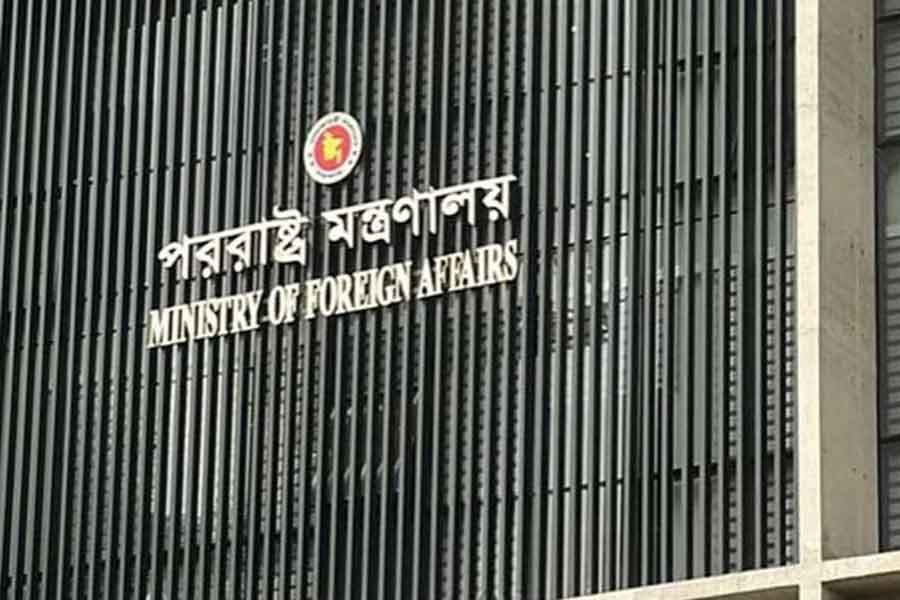
The first 100 days of a government are often treated as a symbolic milestone rather than a definitive measure of success or failure. No administration can be fairly judged on the basis of three months alone, particularly in a country where many of the most pressing challenges have accumulated over years, if not decades. Diplomacy, moreover, is a field where results often take time to materialise. Negotiations are painstaking, relationships require nurturing and breakthroughs rarely occur overnight.
Yet the first 100 days matter because they reveal priorities, energy and direction. They offer a glimpse into how a government intends to govern and whether it possesses the urgency required to address national challenges. One hundred days may be only one-fifteenth of a five-year tenure, but as the old saying reminds us, morning shows the day.
Viewed through that lens, the performance of the Ministry of Foreign Affairs (MoFA) under the BNP-led government of Prime Minister Tarique Rahman has not been particularly encouraging.
The appointment of Dr Khalilur Rahman as foreign minister was among the earliest surprises of the new administration. A technocrat with a long diplomatic career and a distinguished record in international affairs, he previously served as national security adviser to the Yunus-led interim government. His appointment reportedly caught even some senior BNP leaders off guard, leading to speculation that the government intended to place professional expertise above partisan considerations in managing foreign relations.
Initially, the decision was welcomed by many observers. Bangladesh faces a complicated international environment, and a seasoned diplomat seemed well placed to navigate it. Expectations were therefore high that the foreign ministry would quickly embark on an energetic diplomatic agenda aimed at strengthening bilateral relations, expanding economic opportunities and advancing Bangladesh's strategic interests.
Those expectations, however, have yet to be met.
Since assuming office, the foreign minister has devoted considerable time and energy to his campaign for the presidency of the United Nations General Assembly. Securing such a prestigious international position would undoubtedly be a diplomatic achievement and could enhance Bangladesh's visibility on the global stage. There is nothing inherently wrong with pursuing that objective.
The problem lies in the perception that the campaign has overshadowed more immediate foreign policy priorities. The effort has required extensive travel and engagement with governments across different continents. As a result, the minister has spent much of his time abroad, leaving relatively limited space for focused attention on issues that directly affect Bangladesh's national interests.
In his absence, much of the ministry's day-to-day diplomatic engagement has fallen on State Minister for Foreign Affairs Shama Obaid. By most accounts, she has worked actively, meeting ambassadors, engaging foreign diplomats and representing Bangladesh in various forums. Yet diplomacy ultimately requires leadership from the top. Routine meetings and protocol engagements cannot be a substitute for strategic direction and policy initiatives.
Perhaps the clearest illustration of the ministry's underwhelming performance is the lack of progress with Bangladesh's two most important neighbours and partners: India and China.
The foreign minister visited both countries during the first 100 days. Yet no major initiative emerged from either visit. No significant agreements were announced. No breakthroughs were achieved. No new framework for engagement was unveiled.
Most strikingly, Dr Khalilur Rahman himself described his visit to India as a courtesy call.
That description may have been diplomatically accurate, but it also highlighted a deeper concern. Bangladesh's relationship with India is burdened by numerous unresolved issues that require sustained and proactive engagement. Water-sharing disputes remain unsettled. Border management continues to generate tensions. The construction of border fencing remains contentious. Trade imbalances persist. Concerns regarding push-ins and cross-border incidents frequently surface. Connectivity, investment and energy cooperation all require continuous diplomatic attention.
Given the importance of India to Bangladesh's economic and strategic interests, many expected the new government to launch a fresh effort to address these longstanding concerns. Yet the first 100 days have produced little evidence of such an initiative.
The same can be said about relations with China. As Bangladesh's largest development partner and a major source of infrastructure financing, China occupies a central place in Dhaka's foreign policy calculations. Yet beyond routine exchanges, there has been little indication that the government has articulated a new strategy for engaging Beijing or balancing its relations among competing global powers.
The government's handling of the Rohingya crisis is equally troubling.
Nearly a decade after the mass displacement of Rohingyas from Myanmar, Bangladesh continues to shoulder an enormous humanitarian burden. More than one million refugees remain in camps in Cox's Bazar and Bhasan Char. The financial, environmental and security implications of hosting such a large population are immense.
Despite the urgency of the issue, the foreign ministry appears to have adopted a largely passive posture. There has been no visible diplomatic offensive to mobilise international pressure, engage key stakeholders or revive momentum for repatriation. The issue rarely appears at the centre of the government's foreign policy discourse. Such passivity risks allowing the international community's attention to drift elsewhere while Bangladesh continues to bear the costs.
The ministry's approach to economic diplomacy also raises questions.
There has been some movement regarding the reciprocal trade agreement with the United States. However, the current administration appears to be largely following a process inherited from the previous interim government. There has been little public discussion about whether the agreement adequately safeguards Bangladesh's long-term economic interests or whether adjustments might be necessary in light of changing circumstances.
Government officials argue that revisiting an international agreement after it has been negotiated or signed is difficult and often impractical. That argument has merit. Nevertheless, citizens have a legitimate expectation that a newly elected government will conduct its own assessment of major international commitments rather than merely continuing policies adopted by its predecessor.
Another episode that attracted public attention was the government's response to the US-Israeli military action against Iran. The statement generated significant debate and criticism, with many questioning both its tone and substance. Regardless of one's position on the issue, the controversy exposed a broader problem: the perception that Bangladesh's foreign policy messaging lacks consistency and strategic clarity.
Foreign policy is not only about negotiations and agreements. It is also about communicating a coherent national position to domestic and international audiences. Mixed signals can create confusion and undermine credibility.
To be fair, diplomacy is often conducted behind closed doors. Governments rarely reveal the full extent of their negotiations. Important initiatives may be underway without attracting public attention. Some achievements become visible only after months of patient work.
For that reason, it would be premature to conclude that the foreign ministry has failed.
However, it is equally difficult to identify a signature achievement, a major breakthrough or a compelling strategic vision emerging from the first 100 days. The overall impression is not one of momentum but of inertia.
This is particularly worrying because Bangladesh today faces an increasingly complex international environment. Strategic competition among major powers is intensifying. Global trade patterns are shifting. Climate diplomacy is becoming more consequential. Regional security challenges are evolving. Energy security, migration and technological transformation are reshaping the international order.
In such circumstances, Bangladesh requires a foreign ministry that is active, innovative and forward-looking. It needs a diplomatic establishment capable of anticipating challenges rather than merely reacting to them. It needs leadership that can translate opportunities into tangible gains for the country.
The good news is that 100 days do not determine the fate of a government. There is still ample time for correction, recalibration and renewed focus. The administration can still energise relations with key partners, revive efforts on Rohingya repatriation, pursue solutions to longstanding disputes and develop a coherent strategy for navigating an increasingly uncertain world.
But the warning signs from the first 100 days should not be ignored. Bangladesh cannot afford a foreign policy defined by passivity at a time of profound geopolitical change. A dynamic and vibrant foreign ministry is not simply desirable; it is essential for safeguarding national interests.
The sooner the government recognises this reality and injects greater urgency into its diplomatic efforts, the better prepared Bangladesh will be for the challenges and opportunities that lie ahead.
mirmostafiz@yahoo.com