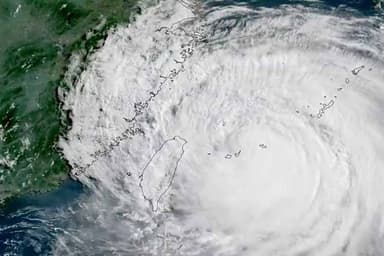



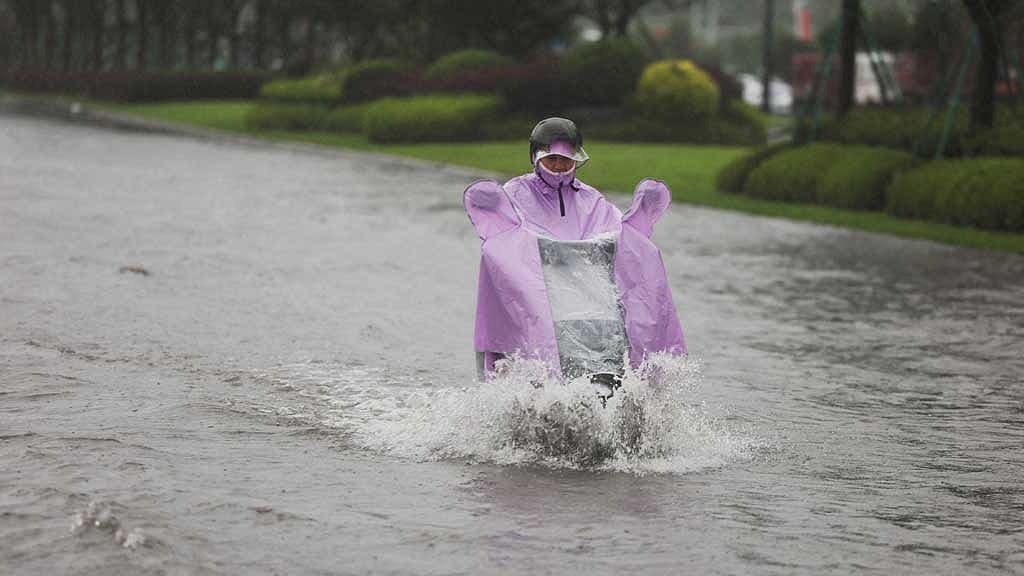
Emergency crews on China's east coast used excavators and chainsaws on Sunday to clear streets littered with fallen trees hours after Typhoon Bavi, the most powerful storm to hit the country this year, swept through the region.
Triggering a landslide and waterlogging some areas, Bavi had weakened by morning to a tropical storm as it pushed inland, but forecasters warned that the France-sized storm system could unleash prolonged and widespread rainfall across eastern and northern China.
Nearly 2 million people were evacuated ahead of Bavi's arrival, mostly in Zhejiang province, an economic and technology powerhouse for the world's second-biggest economy.
Bavi struck Zhejiang's coastal city of Yuhuan around 11:20 p.m. (1520 GMT) on Saturday before making a second landfall in Yueqing, in the major city of Wenzhou, around midnight.
In Yueqing, more than 1,300 trees fell across the city, over 700 of them uprooted entirely, state broadcaster CCTV reported. The deepest flooding reached roughly half the height of a vehicle tire.
In the city's mountainous north, footage aired by CCTV showed a landslide that sent large boulders tumbling onto a mountain road, while swollen river waters submerged nearby trees.
As it approached China, Bavi passed Taiwan to the north on Saturday, bringing strong wind and driving rain across much of the island. The storm dumped almost 80 cm (31 inches) of rain in one area in the northern county of Miaoli.
Taiwan's fire department said on Sunday that 134 people had been injured, mainly falling off motorbikes, slipping or being struck by objects. It reported no deaths. The transport ministry said 137 international flights had been cancelled on Sunday, along with 62 domestic flights.