


In a latest in-depth analysis of Bangladesh economy's weak spots, the International Monetary Fund has revised down the country's gross domestic product (GDP) growth to 3.5 per cent this fiscal year, principally for neglecting reforms.
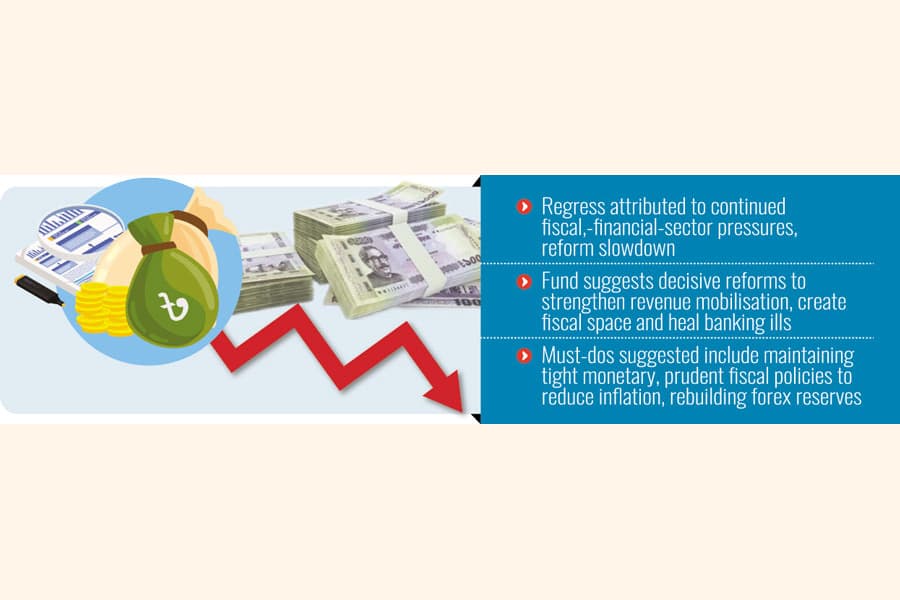
Worse even, the IMF alerts that the economic-growth rate could remain below 3.0 per cent over the medium term amid continued fiscal-and financial-sector pressures,
Earlier IMF growth forecast -- released after a spot analysis of the country's overall economic situation to determine its creditworthiness -- was much higher at 4.8 per cent in April.
"Economic growth is projected to moderate to 3.5 per cent in FY27 and remain below 3.0 per cent over the medium term amid continued fiscal-and financial-sector pressures," the lender said as an IMF staff team concluded a weeklong Dhaka visit discussing a fresh lending package.
"Advancing reforms to strengthen revenue mobilisation and address weaknesses in the banking sector would help improve the medium-term outlook," it said in a statement on the findings by the review mission.
The IMF staff team, led by Ivo Krznar, the lender's Mission Chief for Bangladesh, visited Dhaka on request by the government, for a new Fund-supported economic reform programme.
He said the IMF team had "constructive discussions" with the Bangladeshi authorities on recent economic developments and their policy priorities. The fact-finding visit provided an opportunity to better understand the authorities' policy plans, economic-reform priorities, and capacity-development needs.
Discussions on the possible parameters of a new arrangement -- including its size and associated reform commitments -- will take place in coming months.
"Bangladesh continues to face significant fiscal, financial, and inflationary challenges, which have been compounded by the war in the Middle East," the IMF observed.
It notes that higher global commodity prices and supply disruptions have renewed inflationary pressures and increased subsidy costs, further constraining already-limited fiscal space.
Higher import costs have also placed pressure on the external accounts, notwithstanding continued strong remittance growth.
Banking-sector stress remains elevated.
"Stronger revenue mobilisation and subsidy rationalisation are needed to create fiscal space to increase priority social and development spending. Well-targeted social support can help mitigate the impact of revenue reforms on vulnerable households," said the Washington-based financier.
It has suggested that tight monetary and prudent fiscal policies should be maintained to reduce inflation and rebuild foreign-exchange reserves. "Consistent implementation of the crawling-peg regime adopted in 2025 would help enhance exchange-rate flexibility and safeguard external stability."
And banking-sector restructuring "should be anchored in a credible and comprehensive strategy, with a well-managed cleanup of the sector needed to safeguard macro-financial stability and support investment".
The IMF has further said GDP growth will continue to weaken further in the absence of decisive reforms to strengthen revenue mobilisation and create fiscal space, and to address weaknesses in the banking sector.
"Risks to the outlook are tilted to the downside, reflecting the potential interaction of banking-sector strains, fiscal challenges, and external pressures," the Fund concludes.
syful-islam@outlook.com