


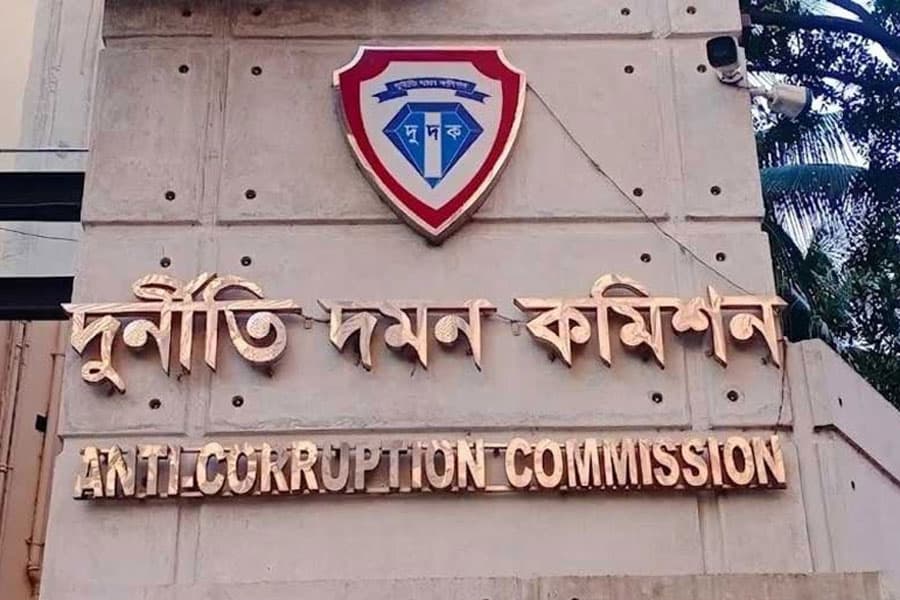
In a move awaited since long, the incumbent BNP government reportedly formed a search committee to select key members of the new anti-graft body. Already four months have elapsed since the chairman and two commissioners of the seventh Anti-Corruption Commission (ACC) reportedly resigned voluntarily. Ostensibly, their exit was to make way for the newly elected BNP government to select the state's oversight body to combat corruption in line with its political manifesto. But effective measures had been lacking for long under the incumbent government to fill the void created by the resignations, though the ACC Act 2004, requires that it should be done within 30 days of any vacancy.


But this long absence of the top ACC officials has created legal and administrative bottlenecks, preventing the graft-fighting body from approving new cases, initiating investigations, filing charge sheets, or issuing travel bans. Notably, under the ACC Act, critical actions like formally starting a criminal inquiry or freezing properties require direct approval from the commissioners. In consequence, without a commission in place, hundreds of pending case files are remaining in limbo. Foreign governments require formal criminal proceedings in Bangladesh before providing legal assistance to trace and repatriate siphoned-off funds. But the ACC with this void at the top is unable to approve Mutual Legal Assistance Requests (MLARs) thereby stymieing international asset recovery efforts.
The process of forming a search committee to appoint new commissioners has been too slow. Moreover, structural reform efforts have come to a standstill after parliament allowed the Anti-Corruption Commission (Amendment) Ordinance proclaimed by the interim government to lapse. Going into history, the anti-graft body has fallen into similar crises for the fourth time since its establishment in November 2004 by the then-BNP government of prime minister Khaleda Zia replacing the previous anti-graft body, styled, Bureau of Anti-Corruption (BAC). Since then six anti-corruption bodies came and went till the July 24 uprising (when the sixth commission stepped down on October 29, 2024). The commission also experienced a similar state of vacuum for about one and a half months until the constitution of the seventh ACC in December 2024.
The last (the 7th) ACC constituted under the Dr Yunus-led interim government moved, despite its limited mandate, fast to clean some of the rot left by the previous (now-defunct Awami League) government. It took sweeping action against some crony oligarchs, ghost corporate bodies and affiliates of then-ruling party who considered the state exchequer their personal property. Against this backdrop, it is deeply disconcerting that the anti-corruption watchdog has been experiencing such a state of paralysis for so long when there is no political vacuum in the country. Critiquing such crises in the process of creating a constitutional body to fight country's systemic corruption, independent anti-corruption watchdog groups like Transparency International Bangladesh (TIB) have noted that ACC activities have historically struggled to remain free from political influence, with past biases in investigating or withdrawing cases dampening public confidence and necessitating deep institutional overhauls. Unsurprisingly, the present government has meanwhile drawn a lot of flak from various concerned quarters for the laxity. Even the International Anti-Corruption Coordination Centre (IACC) reportedly expressed similar concerns to the government.
Now, the formation of a 5-member search committee chaired by a Supreme Court Appellate Division Justice to recommend qualified candidates as chairman and commissioners for the anti-graft body is, though belated, a commendable one. But it needs to accelerate its pace of work to complete the remaining tasks so the massive backlog of pending anti-graft cases could be duly addressed. According to the gazette notification to this effect, the search committee formed under Section 7 of the ACC Act, 2004, would recommend at least two candidates for each post of chairman and commissioner. The president would recommend the new chairman and commissioner from the list. Hopefully, through reconstitution of the ACC, the present government would thus fulfil one of its 31-point state-reform agenda.