


A minor child's right to maintenance is an “independent and distinct” legal right regardless of whether the parents remain married, the High Court has ruled, saying an unproven claim of divorce or the filing of a fresh lawsuit cannot be used to deny that right.
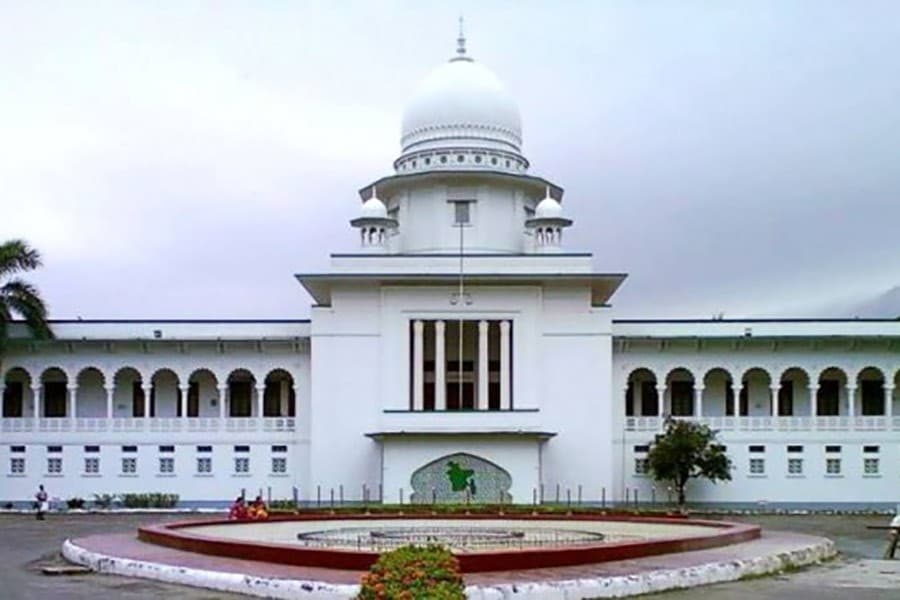
On Jun 22, a single-member High Court bench of Justice Abdur Rahman delivered the final verdict, upholding the order of the lower court, bdnews24.com reports.
After obtaining the certified copy of the judgment on Thursday, lawyer Israt Jahan, representing plaintiff Halima Khatun, told reporters: “A minor child's maintenance is a completely independent legal right. Whether or not the parents remain married, and regardless of whom the child lives with, the father is legally bound to provide maintenance at all times. The financial responsibility for a child's maintenance rests solely with the father.”
According to case documents, Halima Khatun married Md Sheikh Nazrul Islam (Saheb) through a registered marriage contract on Sept 29, 2011.
After the marriage, Nazrul allegedly demanded Tk 200,000 in dowry from his wife. Following a dispute over the demand, Halima returned to her parental home.
Their daughter, Sayra Akter, was born there on Dec 19, 2015.
After receiving no financial support, Halima filed a case with the Family Court in Bagerhat seeking her unpaid dower and maintenance for their daughter.
During the proceedings, Nazrul denied demanding dowry, claimed he had regularly provided maintenance, and asserted that he had issued a final divorce to his wife on Dec 30, 2016.
However, after reviewing the evidence, the Family Court found that he had failed to prove the divorce in accordance with the law.
The court therefore ruled in favour of Halima and her daughter through a decree.
Nazrul appealed the verdict before the Bagerhat District Judges’ Court, but the appeal was dismissed.
He then filed a civil revision before the High Court, which on Nov 14, 2021 also dismissed the petition and upheld the lower courts' decisions.
In 2022, in an apparent attempt to prevent his wife from enforcing the decree, Nazrul filed a fresh declaratory civil suit before the Senior Assistant Judges’ Court in Bagerhat, again claiming that the divorce had been legally effective.
Meanwhile, Halima had already initiated execution proceedings in 2018 to enforce the Family Court decree.
Nazrul sought a stay on those execution proceedings until the newly filed declaratory suit was disposed of.
On Sept 5, 2022, the execution court rejected his application. The Bagerhat District Judges’ Court later upheld that decision on appeal.
Nazrul then filed another civil revision before the High Court, which dismissed the petition.
Along with rejecting the revision, the High Court directed Nazrul to pay all outstanding dower and maintenance accrued during the previous 10 years in accordance with the law.
However, the judgment said that if he could prove genuine financial hardship before the execution court, it could allow him to pay the dues in instalments at its discretion.
In its observations, the High Court said Section 5 of the Family Courts Ordinance, 1985 grants exclusive jurisdiction to Family Courts over disputes relating to divorce, restitution of conjugal rights, dower, maintenance, and the guardianship and custody of children.
No ordinary civil court can assume that exclusive jurisdiction, it said.
The court further observed that under Section 16(4) of the same ordinance, an execution court's role is limited to enforcing a decree and it has no authority to suspend execution proceedings merely because another case concerning the matter is pending before a different court.
The judgment also said that under Section 7 of the Muslim Family Laws Ordinance, 1961, a divorce cannot be considered legally effective unless the mandatory statutory procedure, including written notice and documentary proof, has been followed.
An alleged divorce that is not established through the prescribed legal process has no legal effect and cannot dissolve a marriage, the court said.
Likewise, the mere filing of a fresh declaratory suit does not automatically suspend the enforcement of a decree that has already attained finality.
The court also observed that although the earlier alleged divorce was ineffective because it had not been proved in accordance with the law, the husband remains free to initiate divorce proceedings afresh by following the statutory legal procedure, and nothing in the judgment prevents him from doing so.
Reacting to the verdict, lawyer Israt Jahan said: “An unproven claim of divorce cannot stand in the way of enforcing a Family Court decree. A husband cannot evade his legal obligation to maintain his child by merely claiming an oral divorce without documentary evidence and the legally required notice. However, if the petitioner wishes, he may initiate a fresh divorce in accordance with the law. This judgment creates no obstacle to that. The order has paved the way for the recovery of nearly 10 years of outstanding maintenance for the child.”