


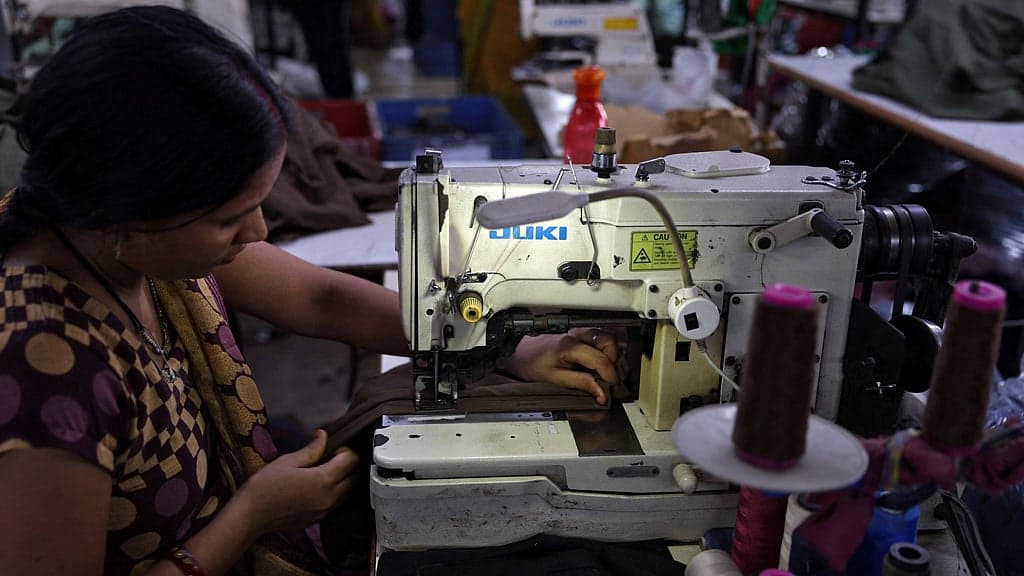
When temperatures climb, Bangladeshi garment worker Nasrin Begum reaches for hydration salts, lemons and coconuts, spending more than Tk 1,000 a month of her Tk 14,000 ($113.96) salary just to keep her body functioning during her shifts.


It is money she cannot really spare, but for Begum, staying cool is not optional. It is survival.
Begum, 32, is one of Bangladesh's 4 million or so garment and textile workers who have to set aside part of their meagre income to bear with the hazards of rising heat.
Peak summer temperatures in Bangladesh have increased by 1.1 degree Celsius (2 degrees Fahrenheit) since 1980, slightly faster than the global average of 0.8 Celsius to 1 Celsius, according to a World Bank study released in 2025. High humidity has pushed the feels-like temperature up by 4.5 Celsius, the study found.
Bangladesh currently has no standalone policy that sets national standards for managing heat risk among its most exposed communities, including outdoor and industrial workers - a gap flagged by researchers and labour advocates.
"These workers are paying an invisible 'heat tax', that is, an added cost burden resulting from their efforts to bear with heat," said Ameena Kidwai from workers' rights group People's Courage International. Kidwai is the author of a 2026 report on workers in South and Southeast Asia.
The garment factory where Begum works in the Konabari district of the industrial city of Gazipur has fewer than 1,000 workers. Despite the ceiling and exhaust fans running to cool the workplace, draining heat forces Begum to take breaks to splash water on her hands and face to cool off.
A 2022 study by researchers at Australia's Griffith University showed temperatures inside Bangladeshi factories in the summer regularly exceeds 30 Celsius.
There is no respite when Begum goes home either. The ground has been warming all day and radiates that heat throughout the night, and frequent power outages on warm nights prevent her from getting enough rest to replenish her energy.
Average land surface temperatures in Gazipur, situated just north of the capital Dhaka, climbed by roughly 2.01 Celsius between 2000 and 2020 as green spaces were built up, a 2024 study in the journal Computational Urban Science said.
Last month, the government raised electricity prices by more than 16 percent to offset its subsidy for the power sector, making it costlier to cool homes and factories.
"The price of electricity has been going up, impacting my monthly household expenses," said Begum.
Heat stress carries particular risks for women workers. Mothers in Bangladesh are 14 percent more likely to give birth to newborns experiencing cramps, heat stroke or headaches on hotter days, compared to those delivering on cooler days, because infants are less able to cope with heat, the national guideline on heat-related illness said.
"Work was particularly harder when I conceived my youngest kid. I would often have to take breaks or a half-day leave during my pregnancy," Begum said. Her pay was docked about 100 taka when she missed half of a shift.
Profit Hit
While workers endure heat stress, factory owners also face additional costs as they are pushed to invest in more cooling.
The nonprofit Apparel Impact Institute said in a February 2026 report that climate-related risks, including carbon pricing, volatility in raw material prices and rising energy costs, could shrink worldwide company profits by up to 34 percent by 2030.
Mohiuddin Rubel, a managing director at Denim Expert Ltd., said he has added more fans and improved ventilation in production areas of his clothing factory.
Other measures he has taken include better access to drinking water and hydration salts, more frequent hydration breaks and first-aid support for heat-related illnesses.
These measures have increased operating costs by about 2 percent to 5 percent for Rubel's factory due to higher electricity consumption, backup generator fuel during power outages, water supplies, cooling equipment and worker welfare provisions, he said.
But a large chunk of costs are borne by workers themselves.
Md. Safiqul Islam, another garment worker, has his own coping routine: He buys sugarcane juice, soda and cold drinks to quench his thirst on hot days, spending an average 2,500 taka each month on drinks, hydration salts and medicine during the summer.
About a dozen employees from different factories told the Thomson Reuters Foundation that most of them buy hydration salts, locally known as "saline," to cope with heat stress as it is not regularly provided by their workplaces.
Beyond these direct costs, health risks also hurt productivity.
Rubel said workers who experience poor sleep due to hot nights or face a difficult commute may arrive at work already fatigued.
Meanwhile, delays at work impact incomes.
"If I am late for three days, one day's wage, or 'hajira', is deducted from my pay," said Islam.
But Rubel said the costs of growing heat cannot be absorbed entirely by factories.
Government investment is needed in reliable electricity, water and healthcare services to support workers' well-being and strengthen industrial resilience, he said, adding more research on the heat tax is needed.
"Stronger policy support for workplace adaption would help businesses and protect workers' health and productivity," he said.