
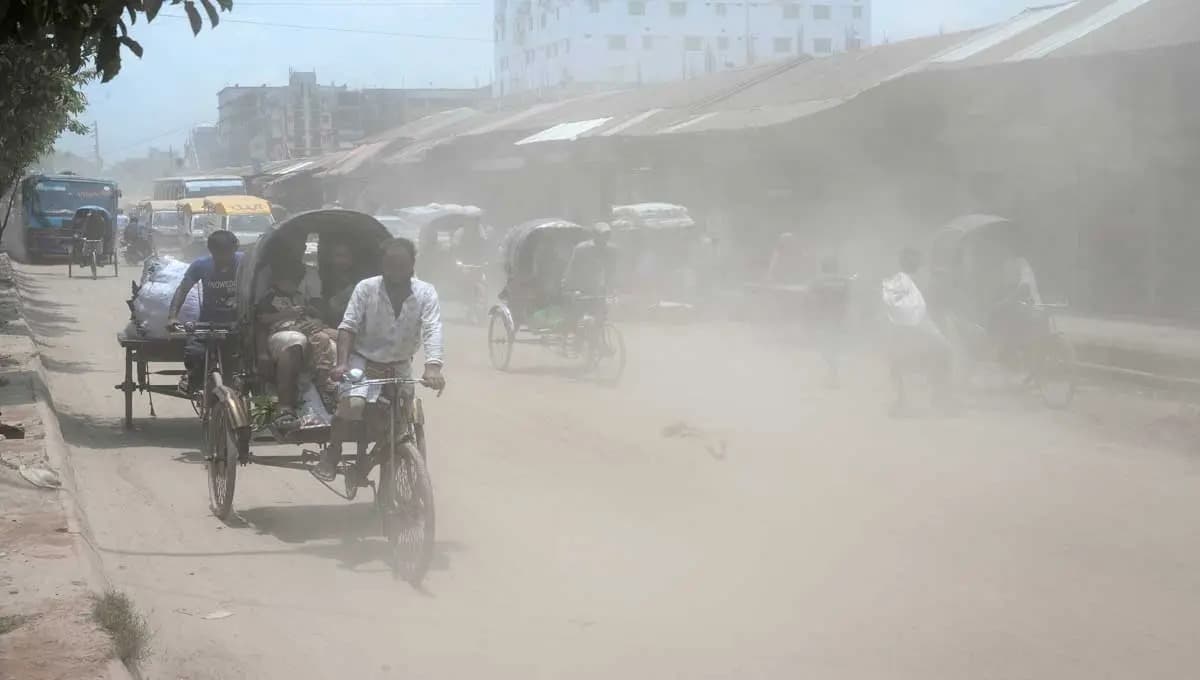
The air we breathe is meant to sustain life, not shorten it. In Bangladesh, however, toxic air has become a silent public health emergency, claiming lives every day while imposing a staggering economic burden. Air pollution, particularly from fine particulate matter (PM2.5), causes life-threatening illnesses, including asthma and other respiratory diseases, especially among children. Prolonged exposure also increases the risk of cardiovascular diseases, leading to premature death.
A recent study by researchers at Jahangirnagar University estimates that PM2.5 pollution kills around 242 people every day across Bangladesh's six major cities while costing the economy nearly US$23 billion annually. These alarming figures underscore that air pollution is no longer merely an environmental concern; it is a public health crisis demanding urgent policy intervention.
According to the study, Dhaka records the highest number of PM2.5-related premature deaths, with an estimated 68,703 annually, followed by Chattogram with 11,202. Rajshahi records 2,827 deaths, Khulna 2,625, Sylhet 1,488 and Barishal 1,395. Behind these statistics are thousands of families who lose loved ones to diseases that are largely preventable.
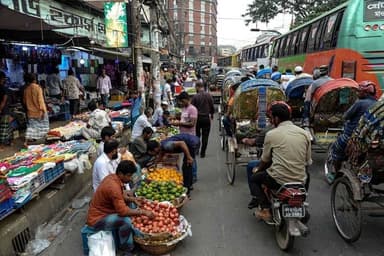
Air pollution in Bangladesh's cities stems from multiple sources. Toxic emissions from rundown vehicles, emissions from industries and brick kilns, dust generated by year-round road excavation, and construction materials left exposed on streets all contribute to deteriorating air quality. Open dumping and burning of solid waste further compound the problem. At the same time, noise pollution has exceeded permissible limits, while rivers surrounding the capital have become so heavily contaminated that aquatic life can hardly survive. Thus pollution of all possible forms has been going on for years, making the city increasingly unliveable.
A sound solid waste management system can play a vital role in making a city clean, beautiful and liveable. Every day, around 6,000 tonnes of waste are generated in Dhaka, most of which is transported to the Matuail and Amin Bazar landfills on the city's outskirts. With waste generation increasing steadily alongside rapid urbanisation, the existing disposal system has become increasingly unsustainable.
Both landfills have now reached the limits of their capacity. Consequently, landfill authorities frequently resort to open burning to reduce the growing volume of waste, releasing thick clouds of toxic smoke and other hazardous pollutants into the atmosphere. Residents living near Matuail endure foul-smelling smoke that spreads across neighbouring areas, including Demra, Jatrabari and Sabujbagh, exposing thousands of people to dangerous air pollutants.
So, if the authorities are serious about combating air pollution, they can no longer rely on outdated waste disposal practices. Many developed countries have transformed waste into a valuable resource through integrated waste management systems that include source segregation, material recovery, recycling, composting and waste-to-energy technologies. These approaches substantially reduce the volume of waste sent to landfills while generating economic and environmental benefits.
The time has come for Bangladesh to embrace similar solutions. Investing in modern waste management is not simply an environmental necessity but a public health imperative. Modernising waste management can significantly reduce toxic emissions, ease pressure on landfills, improve urban air quality and create green jobs.
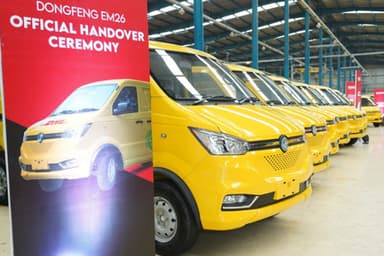
Moreover, the government must accelerate the transition to electric vehicles, enforce strict emission standards for industries and brick kilns, ensure factories are environmentally compliant, implement mandatory dust-control measures at construction sites, and strengthen environmental monitoring and law enforcement. Equally important is greater public awareness. Citizens must recognise their responsibility to keep their surroundings clean, reduce waste, avoid open burning, and plant more trees to improve urban air quality. In a word, clean air must become a national priority.