
The eviction drive to clear encroachments beneath several metro rail stations in Dhaka is a welcome step. Makeshift vendors occupied the footpaths and even access points of the stations, making it difficult for the commuters and pedestrians to move and walk smoothly. By evicting the illegal vendors, passengers' movement is now easier. The question is: how long will the spaces remain free of encroachments?
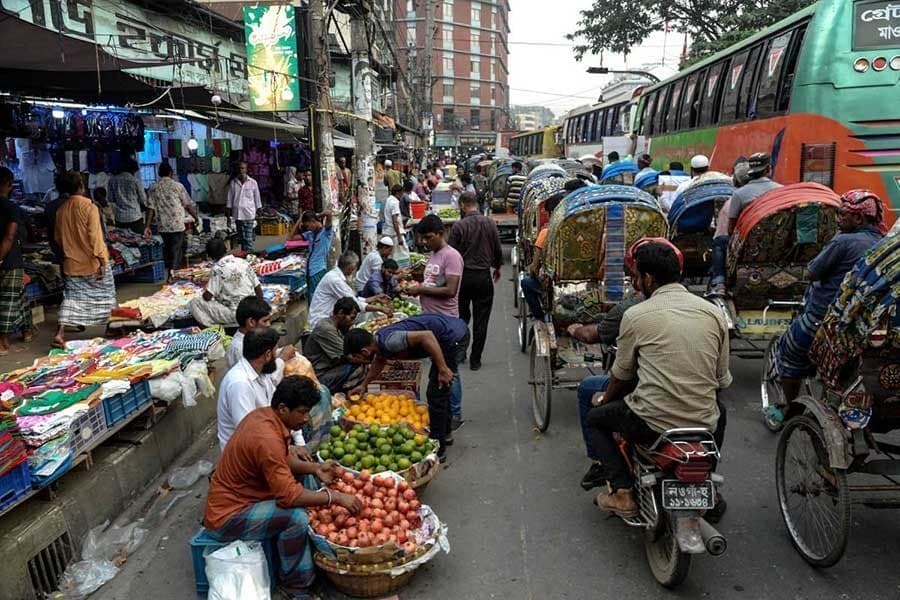
In Dhaka, as well as the rest of the country, almost all the footpaths and walkways are occupied by makeshift vendors and hawkers for long. Despite occasional drives to clear the footpaths, the vendors quickly reoccupy the spaces. They are backed by a vicious ring of activists from a pro-government political party, along with the staff of several government bodies and law-enforcement agencies. The fact is an open secret. The vicious ring is so strong that they do not care about eviction drives at all. Once the drive is complete, they quickly ensure the return of the evicted vendors. The net result is persistent occupation of footpaths by vendors, compelling pedestrians to walk on roads and streets.
Again, two sides of roads and streets are occupied by makeshift vendors in many parts of the city, making it challenging for vehicles to navigate smoothly. These vendors create undue congestion on the streets in the neighbourhoods and sometimes on main roads as well. Despite dedicated places, it has become a common thing to occupy the streets for vending. So, driving cars or CNG-run autorickshaws becomes difficult because the streets have been artificially narrowed.
A dangerous development has also occurred in this connection. It becomes impossible to ask the vendors to free spaces for vehicles. If someone asks to remove or even adjust the vending carts so that other vehicles can pass through, the vendors simply ignore the request. Instead, sometimes a group of vendors react aggressively. A number of pedestrians, especially women and children are regular victims of verbal abuse by these makeshift vendors and their patronisers.
Another serious problem created by these makeshift vendors is pollution of the surrounding environment. These vendors use various corners of streets and roadways to urinate. They are joined by rickshaw and van pullers and beggars. Thus, public urination becomes another major problem, although almost no one pays attention to it.
Again, only these vendors and hawkers are not responsible for obstructing footpaths, as many roadside shops also keep part of their stock on walkways and roadsides. Illegal parking of vehicles is also visible in many places.
A smooth walkway can reduce the demand for para-transits and help cut undue traffic congestion at various points in the city. On rainy days, people can walk with umbrellas if the walkways are free of obstacles. Walking daily for 15 to 30 minutes is necessary for good health. Unfortunately, in Dhaka, there is little room to walk smoothly. User-friendly footpaths can easily encourage office goers to walk. Many people who want to walk after office hours can also take advantage of the opportunity.
Some argue that occupying footpaths and road sides by makeshift vendors reflects a higher rate of unemployment in the country. Due to a lack of adequate jobs, many people turn to street vending. Though the argument is valid, it doesn't justify the encroachments of walkways and street sides as unsafe, unusable footpaths represent a serious and long-neglected failure of urban infrastructure and ultimately, a threat.
Moreover, a culture of rent-seeking has developed in the country over the decades, thanks to political patronage. Encroachment of walkways is part of rent-seeking behaviour, where a vicious nexus of political activists and police rule the roost.
asjadulk@gmail.com