


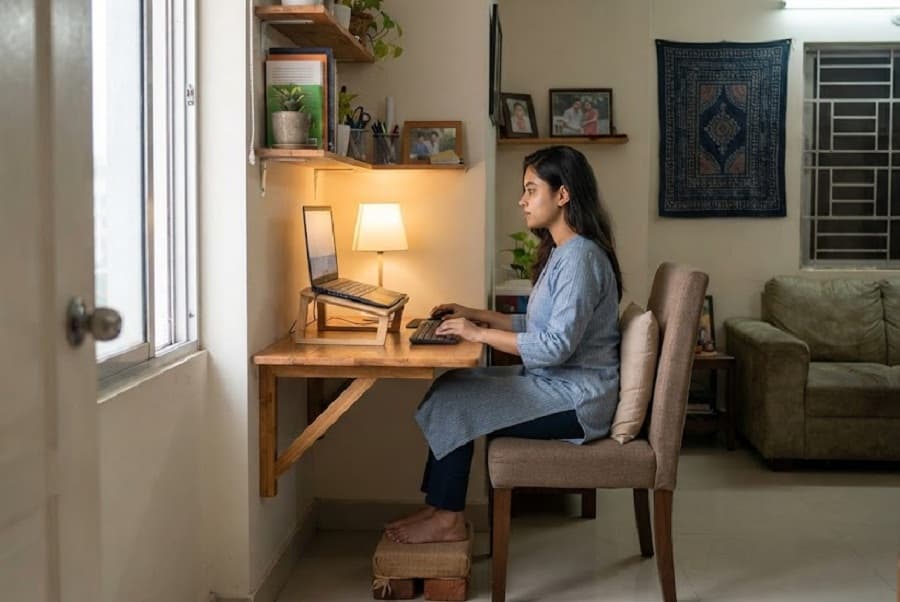
For a while, working from home felt temporary - a folding table in the living room, a laptop balanced on a pile of books, an arrangement everyone assumed would end the moment offices reopened.


Years later, hybrid schedules have quietly become permanent for a large share of Dhaka's white-collar workforce, and the folding table is still there.
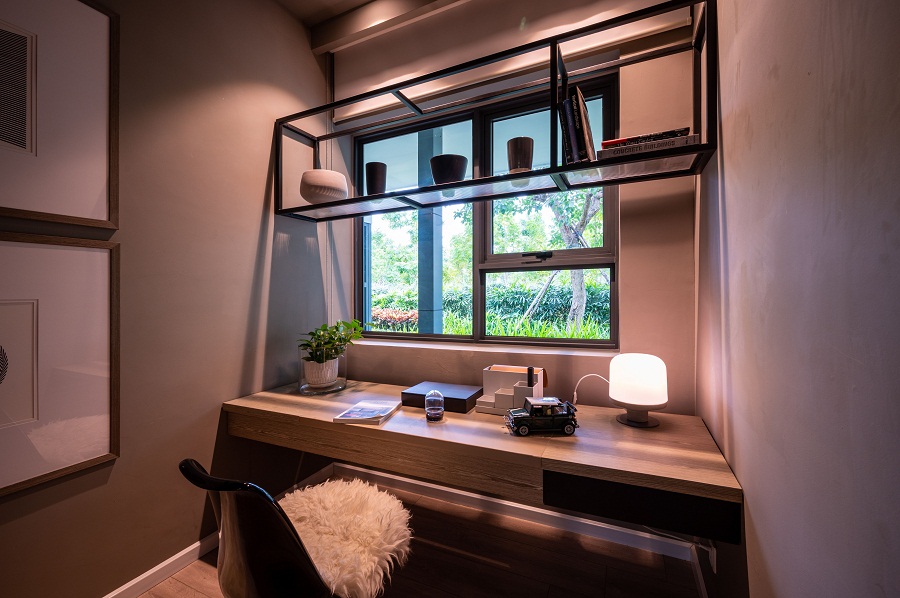
The problem is that almost none of our homes were designed with this in mind. Bangladeshi apartments are built around bedrooms, drawing rooms, and dining spaces, not the strange new category of 'the place where I take my 10 a.m. calls.'
The result is a very specific kind of tiredness that has nothing to do with workload.
It comes from working in a space that was never meant to hold focus, and from never quite leaving work even after logging off, because the desk is three feet from the dinner table.
Fixing this doesn't require a spare room. It requires treating a corner of an apartment with the same intentionality architects bring to an entire office floor.
Start with the footprint, not the furniture
Most Dhaka apartments offer 100 to 150 square feet of genuinely flexible space per resident, a fraction of what a Western home-office guide assumes.
That means the desk itself is the wrong starting point.
The better first question is where natural boundaries already exist: a windowless alcove beside a bedroom door, the dead zone behind a sofa, the width of a balcony grille. A narrow 24-inch-deep desk against a wall uses less floor space than most people expect, and wall-mounted or fold-down desks, increasingly available from local carpenters on request, can turn a hallway into a functioning office by evening and reclaim it by morning.
Vertical storage matters more than floor storage here: a slim shelving unit above the desk does the job of a filing cabinet without eating into walking space.
Lighting and ergonomics don't have to be expensive
Two cheap fixes solve most of the physical strain that comes from working at a dining chair for eight hours.
First, a desk facing a window uses free daylight and reduces the screen glare that causes eye fatigue. In contrast, a warm-white desk lamp placed to the side, not behind the laptop, removes the harsh overhead lighting most apartments default to.
Second, the top of a monitor or laptop screen should sit roughly at eye level, which usually means propping a laptop on a small stand or a stack of books and using a separate keyboard, rather than hunching over it directly.
A cushion on a hard dining chair, combined with a footrest as simple as a stool or a stack of bricks wrapped in cloth, addresses most of the posture complaints that would otherwise mean a visit to a physiotherapist.
None of this needs an imported ergonomic chair costing tens of thousands of taka.
Local sourcing versus imported convenience
The market has caught up faster than most people realise.
Local furniture workshops in areas like Dhanmondi and Mirpur will now build a made-to-measure desk for a specific alcove at a fraction of the cost of an imported flat-pack version, and with a turnaround of days rather than weeks.
Imported options still make sense for very specific needs. An ergonomic chair with lumbar adjustment, for instance, is a category where local alternatives remain limited. Still, for desks, shelving, and lighting fixtures, custom local carpentry is often both cheaper and better suited to Dhaka's non-standard apartment dimensions.
The real fix is psychological
The most persistent complaint from people working at home isn't the furniture at all; it's the sense that work never actually ends.
When the desk is also the dining table, or the laptop lives on the bed, there is no physical cue that tells the brain the workday is over.
This is where the smallest interventions matter most. A desk that faces a wall instead of the living room, a lamp that gets switched off at day's end as a deliberate ritual, a laptop that gets closed and physically moved off the dining table before dinner- these are not aesthetic choices; they are boundary-setting devices.
A 'work corner' doesn't need square footage to function as a psychological threshold. It needs consistency: the same spot, used the same way, every day, so that leaving it means something.
None of this requires a renovation or a five-figure furniture budget. It requires deciding that the corner of the apartment where work happens deserves the same deliberate thought as any other room - because for a growing number of us, it has quietly become one.
sajidahmed734@gmail.com