


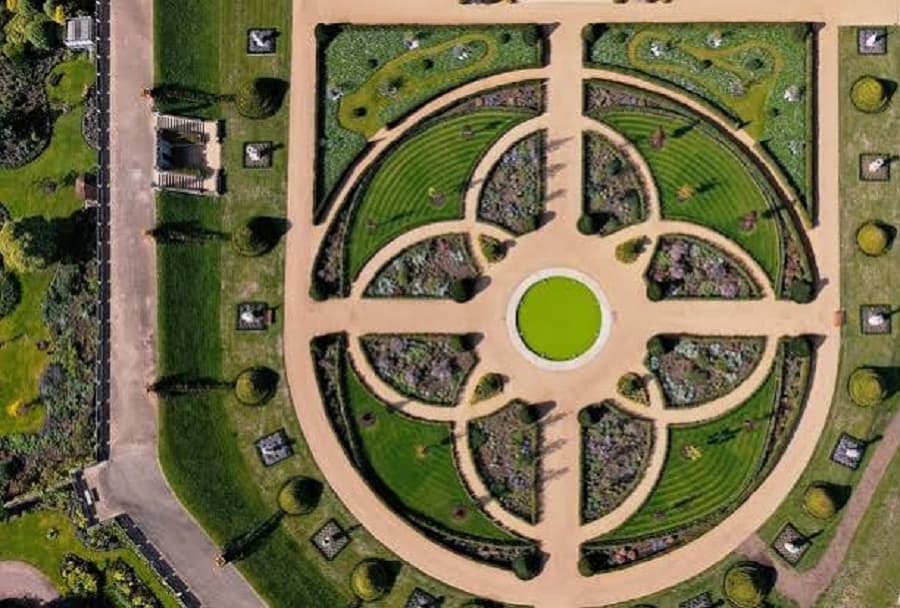
King Charles III has put his unmistakable personal stamp on British royal heritage once more, with a dramatic transformation of a historic space at Windsor Castle. Named the Venus Garden, the newly redesigned sanctuary beneath the royal residence's famous east facade marries regal pomp with ecological mindfulness, proving that traditional royal grandeur is firmly back in style.


The 200-year-old site, which has previously served as Charles II's bowling green, a vegetable allotment during the Second World War tended by the late Queen Elizabeth II and her sister Margaret, and formal rose beds under the stewardship of Prince Philip, has undergone an intense 18-month overhaul.
Reflecting the monarch's lifelong fascination with geometry and patterns in nature, the layout of the garden draws inspiration from the orbit of the planet Venus. Traced over an eight-year cycle, Venus traces a striking, petal-like geometric motif, often called the Rose of Venus, which has been translated into intricate perennial beds and crisp, evergreen hedge-lined pathways.
Beyond the geometric pageantry, the project underscores the King's passionate commitment to sustainability and biodiversity. The space features softer, naturalistic wildflower meadows dotted with trees, designed to act as a resilient haven for local wildlife and pollinators. Visitors will also encounter avenues of pear trees, classic topiary yew shrubs, and historic bronze and marble sculptures drawn straight from the Royal Collection.
Adam Scott, the gardens and nursery manager at Windsor Castle, noted that the ambitious scheme successfully reshapes a storied historic landmark for the modern era. The Venus Garden opens its gates to the public, offering sightseers a breathtaking glimpse into how contemporary royal stewardship continues to evolve historic British landscapes.