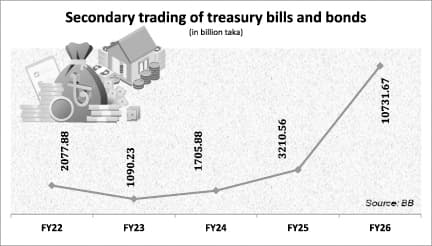
The big jump in secondary transactions in government fixed-income securities during the last fiscal year reflects both strength and weakness of the country's financial market. Bangladesh Bank statistics showed that the value of secondary trading reached Tk 10731.67 billion (or Tk 10.73 trillion) in
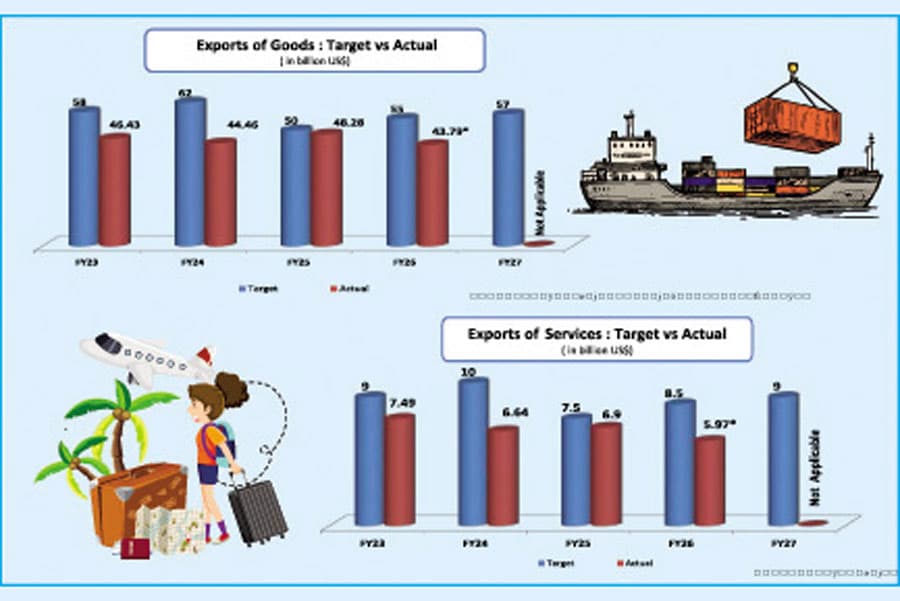
Though earnings from exports of goods and services are critical to the country's balance of payments (BoP), it is not possible to increase them significantly within a few years. The growth of exports depends on factors including the strength of export-oriented sectors, global demand, barriers to ma
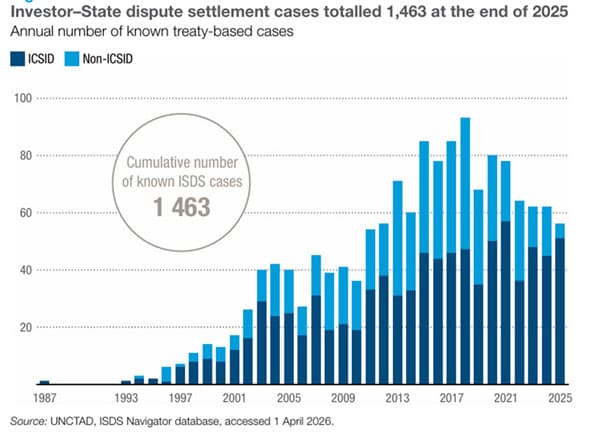
Globally, investor-state disputes have become a concern, especially for developing nations, as shown by the surge in investor-state dispute settlement (ISDS) over the last decade. At the end of 2025, the cumulative number of ISDS cases stood at 1,463, according to UN Trade and Development (UNCTAD).
We often look into our past in search of the meaning of the time spent, the bonding and happiness we shared with our loved ones and of our endurance to reach where we stand at present. Our passion to catch lost times may even make us forget our present. We weave stories of our past as we trace it d
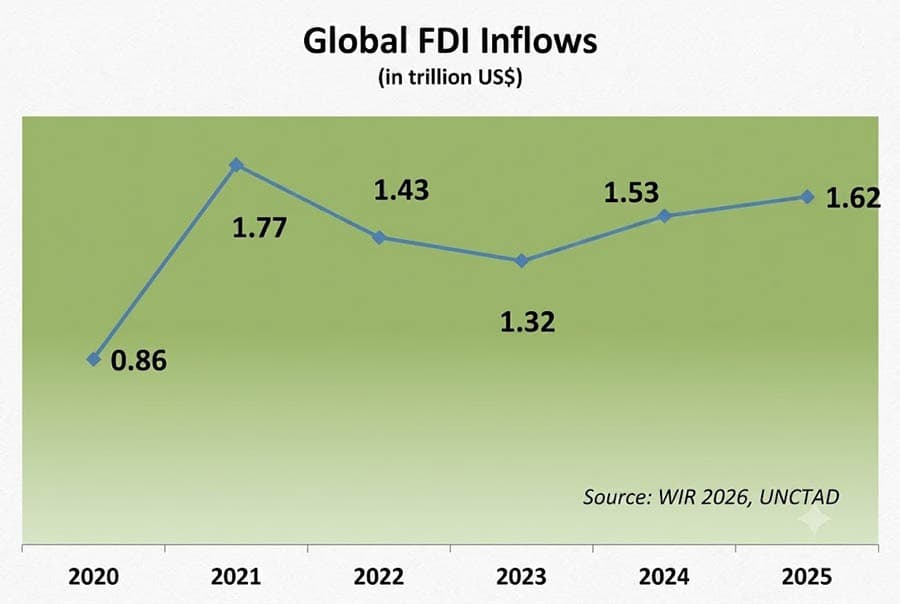
Global inflow of foreign direct investment (FDI) jumped by six per cent in the last year ending two years of decline, according to the World Investment Report (WIR) 2026 that is just released in Geneva on Tuesday morning. The amount of global FDI stood at $1.62 trillion in 2025 which was $1.
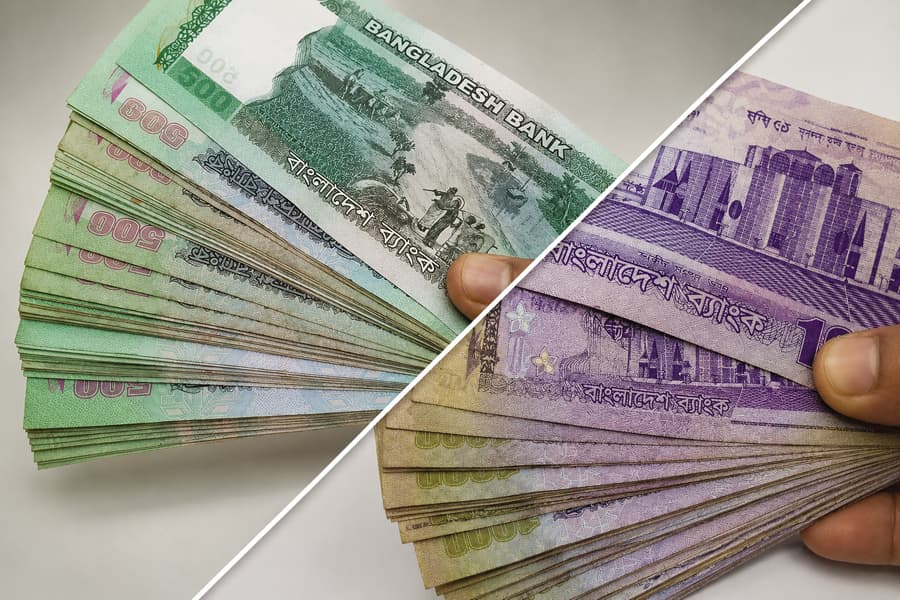
It was 51 years ago that the Bangladesh government, for the first time in the country’s history, demonetised the Tk 100 banknote. The decision to invalidate the banknote, the highest-value note at the time, was driven by the urgency to curb the spread of fake notes and black money. The formal
The news that Bangladesh-linked funds in Swiss banks swelled further last year sparked debate and speculation in the country. Though there is no clear evidence that the money is stashed away in Bangladesh, several media outlets labelled it an illicit transfer from the country, and some blamed the Y
The rapid expansion of artificial intelligence (AI) across different areas in economy and trade has pushed countries onto a complex trajectory. To attain optimal gains from trade, wider use of AI now appears unavoidable. Countries are gradually using AI in trade facilitation, a set of measures to e