


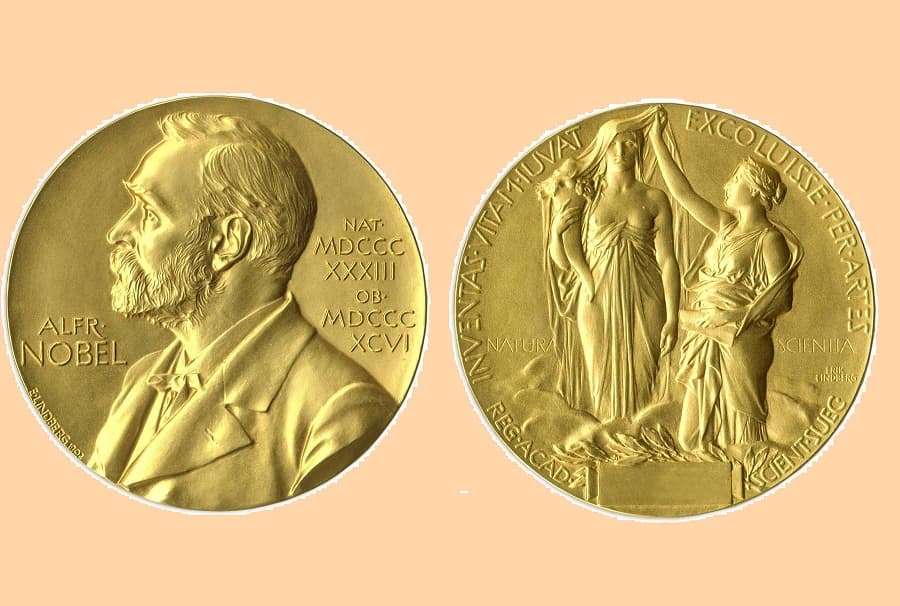
It's been a hundred years since scientists opened the mysterious box of quantum theory. The questions have only grown stranger. This year, the Nobel Prize in Physics goes to three researchers—John Clark, Michelle Deere, and John Martinez—for their groundbreaking work on quantum tunnelling.


It sounds like science fiction, yet it powers much of the technology we use every day. Experts believe their work could pave the way for the next major leap in computing and communication.
The three will share a $1.2 million prize, though their real win might be knowing they've brought us closer to understanding the most unusual aspects of nature.
The Nobel Prize in Physics was first awarded in 1901 to Wilhelm Conrad Röntgen, who discovered X-rays. Since then, more than 200 scientists have received the prize for reshaping our understanding of the universe. Early pioneers such as Marie Curie, Max Planck, and Albert Einstein laid the foundation for modern physics.
Later prizes honoured inventions like the transistor, the laser, and the discovery of the Higgs boson. Established through Alfred Nobel's will, the award is presented annually by the Royal Swedish Academy of Sciences. Quantum physics is the study of how tiny things, like atoms and particles, behave. It shows that energy and matter do not always follow standard rules. Sometimes, particles act like waves. Sometimes, they can be in two places at the same time. This strange behaviour is what makes quantum science unique.
Quantum ideas are used in lasers, chips, and medical scanners. Although it may sound confusing, it helps us understand the world at its most fundamental level and lays the foundation for many modern technologies, including those discovered by Einstein, Planck, and Bohr.
Quantum mechanics is famously bizarre. It describes particles that can be in two places at once, that seem to talk across vast distances, and that break all the neat rules of classical science.
Meanwhile, at King's College London, physicists and artists are collaborating to make the invisible world of quantum physics more tangible.
In one gallery, copper sculptures twist like frozen lightning bolts, echoing the shapes of spacetime. In another, a kinetic sculpture captures two black holes colliding, trembling in slow motion. These installations aren't just for beauty—they're tools to help people visualise ideas that usually live only in equations.
Quantum computing, still in its infancy, has the potential to transform how everyone handles information. While regular computers use bits that flip between 0 and 1, quantum bits—or qubits—can be both at the same time. This unusual property enables them to process information at incredible speeds, solving problems that today's computers cannot handle.
It opens the door to breakthroughs in clean energy, unbreakable digital security, and the creation of new materials and medicines designed atom by atom.
Imagine a future with superconductors that waste no energy, or solar panels so efficient they change how cities are powered.
Quantum chemistry could create cleaner factories and safer drugs. These are no longer distant dreams.
The building blocks—superconducting qubits—are what Clark, Deere, and Martinez have spent their lives improving. Their work makes quantum computers more stable, reliable, and ready for practical use in the real world.
Right now, it's a race. Governments, tech companies, and startups are all investing billions to lead the next quantum revolution.
While artificial intelligence dominates the headlines, many researchers quietly believe that quantum technology could be even more transformative.
One day, the two might combine—machines that not only think, but also understand the building blocks of existence.
Still, the quantum world keeps its secrets. Even those who study it every day admit they barely grasp its full depth. And maybe that's the beauty of it. A hundred years after it first shook the foundations of science, quantum mechanics continues to puzzle, inspire, and surprise.
raiyanjuir@gmail.com