


If the tensions centering Taiwan manifest into a conflict, then the adverse impact on the global economy would be devastating. The potency of this impact has been felt somewhat during the pandemic, as the semiconductor supply chain was disrupted, when the global economy of today's ultra-globalised world based on technological connectivity felt a jolt. It is estimated that the semiconductor shortages of the past two years have led to global revenue losses of more than US$500 billion.
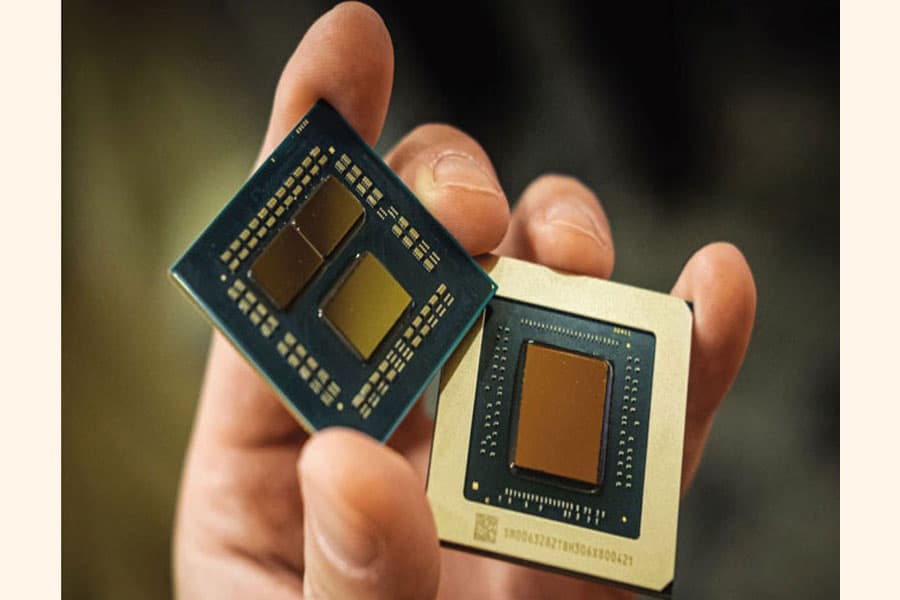
Given the pivotal and unique role that Taiwan plays in the value chain of this highly essential product, which is mainly a crucial material for advance technology of today and the future, any conflict in, around, and/or with Taiwan of any sort would distort the value chain irreparably. Moreover, Taiwan continues to advance in the field of manufacturing these semiconductors, also known as microchips, underscoring its dominant skillset in manufacturing them. Such skillset are truly in shortage across the globe, and would be in shorter supply in the future, mainly because the demand for semiconductors seems to be increasing at a higher pace than the development of its manufacturing skillset worldwide.
Taiwan's contract manufacturers together accounted for more than 60 per cent of total global microchip revenue last year, according to data by Taipei-based research firm TrendForce. Each year, nearly a third of the new computing power we rely on is fabricated in Taiwan. It has left the entire world's digital infrastructure dependent on a small island that China considers a rogue province and that the US has pledged to defend.
Any loss of access to leading-edge chips from Taiwan would be devastating; especially, for significant segments of economy of countries that depend on advance technologies for their economic ecosystem. There are few realistic options to mitigate scenarios in the event where Taiwanese production goes offline or is severely impeded. Domestic manufacturing presents immense investment, equipment, time and skill challenges. There are no alternative suppliers in the near-term at the potential scale required. To counter China's involvement in key aspects of the semiconductor complex global supply chain, the U.S. is taking unprecedented steps to halt the production and development of advanced semiconductors in China.
The recent U.S. CHIPS and Science Act is one example of making massive investments to increase production elsewhere, directing US$280 billion in spending over 10 years, including US$52.7 billion in grants to boost domestic chip production. It is the largest single-year percentage increase in overall federal funding of basic scientific research in 70 years, as well as the U.S.' biggest foray into industrial policy in 50 years. The EU is considering its own Chips Act that aims to double Europe's global chips market share to at least 20 per cent by 2030. In addition to this, the US has introduced in 2022 a range of unprecedented technology export controls. They are intended to secure U.S. technological supremacy, slow China's technological advancements, especially in the military and dual-use sphere, as well as make it harder for China to acquire and manufacture its own advanced semiconductors and chip-making equipment.
Turning unilateral export controls into strategic, plurilateral and/or multilateral pacts will give them a much better chance of overall success, and will likely be the U.S.' major focus and challenge in 2023. In January 2023, the U.S., Mexico and Canada announced a trilateral semiconductor forum during the North American Leaders Summit meant to adapt government policies and increase investment in semiconductor supply chains across North America. The U.S. proposed in March 2022 the Chips4Alliance (C4A) as a "democratic semiconductor supply chain" alternative that would include Japan, South Korea, and Taiwan, all of which excel in segments of the industry. Although these partners generally do not disagree with the U.S., many have deep ties and investments in the Chinese semiconductor sector, and see little incentive to pursue broad-based decoupling. While Japan and Taiwan are likely to join the alliance, South Korea has been ambivalent.
U.S. measures described above have already provoked a range of expected consequences. They have most immediately impacted Chinese semiconductor companies, as they will be unable to access U.S.-origin chip designs, equipment, tools and expertise. Just before the legislations were announced, Chinese imports of chip-making equipment from major trading partners - including the U.S., Japan, South Korea and the Netherlands - fell in November 2022 to US$2.3 billion, a 30 per cent decline from September 2022.
The U.S. exports controls are also likely to create inadvertent consequences too. Twin supply chains are likely to arise from splitting the world's advanced semiconductor supply chain, which is expected to lead to higher costs for manufacturers, businesses and customers globally, and possibly diminished innovation capacity and overall efficiency. Some Japanese firms have already begun to reorganise their supply chains in order to access both markets. There is a risk that the controls lead to foreign competitors diversify away U.S. technology in their supply chains in order to keep a foothold in the Chinese market, which could result in a diminished U.S. industry with less clout.
The U.S. will need to somehow persuade its partners and allies to enforce the controls in the near term, but it may be difficult to stop the embargo from crumbling over in the long term. Demanding that allies and partners give up on China's vast market without providing appropriate inducements, such as enhanced access to the U.S. market makes the U.S. appeal a challenging calculus. Finally, stricter U.S. controls could backfire in the long run by turbocharging China's home grown chip industry.
China has already began a multibillion dollar investment strategy in 2014 to dominate the chip making sector by developing domestic capacity and skilled manpower to 400 thousand engineers and technicians by 2030. Beijing's response to the US controls and subsidy policies has been restrained denouncing it as "tech bullying". China signalled that it was working on another US$143 billion support package for its domestic chip industry to be rolled out in early 2023.
China's cutting-edge technologies are also more applicable in third world markets. Regions like South Asia, Middle East, and Africa depend on Chinese trade and Chinese technology for ensuring affordability of modern technology for its citizens, with ease of adaptation. Also, Chinese lending to purchase these technologies is rising, while U.S. financial aid to the regions is shrinking. Economies and enterprises of all stripes will have to analyse their supply chains, opportunities, challenges, and the threats to determine how they may be affected. Bangladesh is no different.
Over the past five decades, Bangladesh and the United States have developed a complex relationship that spans economic and security ties as well as transnational issues like climate change. Bangladesh has established a successful and deep set of working relationships with China too. While, Bangladesh continues to cooperate with the US on multiple fronts, it continues to support China's One China Policy. Japan and the EU remain key players for Bangladesh's socio-economic development.
Over the past years, Bangladesh has already entered the smartphone manufacturing and assembling market with successful results. However, semiconductor chip manufacturing is still an emergent sector. According to Trading Economics, the average monthly salary for labour in Bangladesh is just US$101, compared to US$135 in Myanmar, US$170 in Cambodia, and US$518 in China. The low labour cost is a competitive advantage for Bangladesh's emerging semiconductor manufacturing industry.The state minister for ICT formed a task force for this sector. The committee will work on making policies by considering the potential of this sector, and study what facilities can be provided for domestic and foreign investors. They will also look into the issue of manpower creation for this sector.
Bangladesh earns up to US$5 million annually by designing semiconductor chips, barely scraping the surface. India earns 60 billion USD annually, illustrating a chance of successfully tapping into the market with high returns. Bangladesh's current home appliance market of about $2.5 billion is likely to reach $10 billion by 2030. An estimated 20,000 students graduate from CSE from numerous universities around the country, creating a pool of sufficient eligible workers. Bangladesh looks to ensure its manpower export across the globe for which it needs to develop skilled manpower in sectors where there is high demand for certain skillsets. Bangladesh government continues to try and improve its vocational training sector. The semiconductor manufacturing skillset training with a multi-stakeholder framework approach could put Bangladesh ahead of the curve both in building the domestic industry, as well as enhancing its capacity in exporting skilled manpower globally.
simonbksp@gmail.com